
Non-traditional students balance school and family
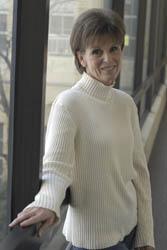
She has 17 grandchildren and five children, works part-time, is a rhetoric associate for USU and is taking 15 credits.
Sita Bell has earned a 4.0 every semester except for one.
Bell, a senior in American studies, is a re-entry, or non-traditional, student who said her college experience has been a journey she won’t forget.
She cried as she said, “It’s been a dream.”
Born in 1948 in Holland, Bell, who will be a first-generation college graduate, said her family sailed to America when she was 6 years old.
“The Dutch government was paying people to leave because there was no housing because everything got bombed out,” Bell said. “So my father took advantage of that.”
Due to the disadvantage of not knowing the English language, Bell’s father took a job as a dishwasher upon arriving to America. With five children, later 11, to feed on a small budget, Bell said her parents had no extra money for education.
“There was this blue-collar mentality I grew up in, and I was not encouraged to go (to college),” she said. “I wanted to go, it was deep inside, but I knew I couldn’t. I didn’t think I was smart enough to go to college.”
Even after getting married and having children, Bell said there was a “gnawing that I just couldn’t get rid of.”
Now with so much schooling completed, Bell said she is grateful to have broken the social limitations placed upon her at childhood. After taking four semesters of Spanish and getting a 4.0 in all her classes, Bell said her views about herself changed.
“When I first started Spanish, I would sit there at night and just be giddy because I’ve got this homework and I’m going, ‘This is so cool. I’m learning this,'” she said. “I started to think maybe I can do this. I mean, if I can learn a language at this age, I can actually see that I can do this. Before I was just taking the classes to learn. I never really had a degree in mind because I didn’t think I would ever go that far.”
In December 2007, Bell will graduate with her bachelor’s degree and said she is waiting to hear about acceptance to graduate school. Having these goals, Bell said, has helped her focus on day-to-day tasks that college presents.
“I just keep going like a plow horse, just plod along. You see your target, you keep going no matter what and move things out of your way,” Bell said.
Now when people call her an overachiever in regards to her 4.0 grade point average, Bell said being an overachiever is an oxymoron.
“If you have the ability to achieve it, then you’re not overachieving,” Bell said. “I know my capabilities now, I know what I can do, and I push myself right to the limit.”
Because Bell said she tends to participate a lot during classes, her biggest fear is getting a negative reaction from her classmates.
“I don’t want the students to think I am this know-it-all old lady because, you know, I am learning along with the best of them,” she said. “I’m just so impressed with how smart these students are.”
Evelyn Funda, associate professor of English at USU, said re-entry students are more likely to come knocking on her door than traditional students.
“They make a reason to come by. It’s not that I seek them out; they tend to seek me out,” Funda said. “I think they recognize that education goes beyond the 50 minutes of class time.”
Besides bringing life to the classroom, Funda said re-entry students tend to have slightly different priorities than traditional students.
“For some traditional students, the goal is always the grade,” she said. “The grade (for re-entry students) is not the end. They almost always have the fire in their eyes. They’re hungry for knowledge.”
Funda said she is very conscious of trying not to treat re-entry students any different from traditional students, and Bell said she finds no special treatment due to her situation.
“There’s no senior citizen discount,” Bell said. “They see my enthusiasm for learning and that helps them be open to help me, and they are very willing to go the extra mile for me. But they don’t seem to give me concessions.”
Patricia Stevens, director of the Women’s Center, said applying to be a re-entry student is not much different than applying as a traditional student. However, Stevens said a different SOAR program is offered in the summer, and more applicable workshops are becoming available to re-entry students.
The Women’s Center, which houses the Reentry Student Center, offers scholarships to students who have been out of school for five years. The center also offers peer facilitators who Stevens said have already received scholarships through the Women’s Center.
“The (re-entry) students can come in and talk to (peer facilitators) about their experience and how they acclimated to the climate on campus,” she said. “And also they are talking to someone who is in the process of doing what they want to do. We encourage them to come in.”
A re-entry student association was created two years ago for students, which Stevens said offers workshops with topics such as succeeding at math or learning good study skills.
“Looking at the difference the scholarships make in their lives and their enthusiasm about being able to come to school makes it really worthwhile,” Stevens said. “We take so much for granted, and access to education is one of those things we take for granted. Many of these people could not be here without the money and support that they get from the Women’s Center.”
For more information concerning the Reentry Student Center, call 797-1728.
“It’s an interesting restriction we put on ourselves,” Bell said. “That you don’t think you can move beyond it, you think that’s your place and is where you will always be, and I constantly felt like I needed to fight to move beyond it, and I feel like I have finally done that.”
-britg@cc.usu.edu