
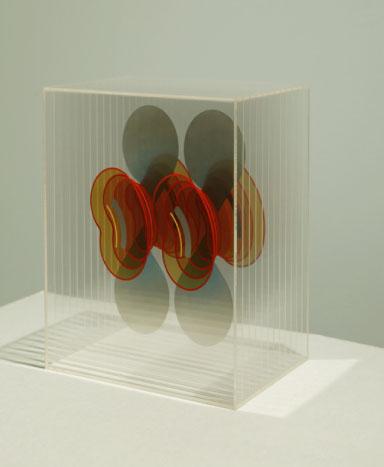
University artwork travels to California
A collection of art from Nora Eccles Harrison Museum of Art has made its way to California to be part of the Getty Research Institute initiative “Pacific Standard Time: Art in L.A. 1945-1980.”
Victoria Rowe Berry, the executive director of the museum, said she has known about the initiative since the Getty Research Institute secured image rights from the museum and photographed several pieces of art.
Berry said this is the first big connection the museum has made to the L.A. art scene, and the Nora Eccles Harrison Museum of Art has been collecting Western art for 30 years — including art from Utah, California, New Mexico as well as the Pacific Northwest.
The museum has loaned out 13 pieces to other venues as part of the Getty Research Institute initiative and has shared images from its art catalogue, Berry said.
“There are 60 venues, and in almost every venue there is someone that we have in our collection. This is big,” Berry said. “I doubt we’ll see anything quite like this again.”
Deb Banerjee, a curator at the museum, said she went to six of the “Pacific Standard Time” venues in four days. She said she was excited to see the connection to USU.
“Every time I turned around a corner, I’d see work from one of our artists,” Banerjee said.
She said the Getty Research Institute initiative did an incredible amount of detective work and research to put together their exhibits and find little known works by prominent artists.
Berry said the work the institute has done is invaluable to students on campus. Since the museum is located at a university, its curators focus on research and student projects.
Research has produced letters from family, history about artists’ lives and notes from the artists themselves. These pieces of information can bring new meaning to old works and help students understand the meaning of the artist’s work, Berry said.
The Getty Research Institute has condensed works of art included in the initiative exhibits as well as catalogued information about the pieces.
“Having 18 or so volumes that talk about the artists — why they made the art — that is a resource that is going to be phenomenal to help students understand it better, and for us to understand it better,” Berry said.
The exhibit gives students many tools to learn more about art, Berry said, and it is important to look back at the period between 1945-1980, which is showcased.
She said looking at the past provides a more complete understanding of current artwork. By looking at the information the Getty Research Institute has provided, students can make connections about the world around them, she said.
“Where did it come from?” Banerjee asked. “How did it grow? What is the precedence for what is happening — not just in the art world, but the visual world around us? Film, television — it all came from somewhere, they were all influenced by things.”
Rachel Middleman, a professor of art history at USU, said the amount of information and interpretation on the work involved with the initiative has increased exponentially since the Getty foundation started the project.
She said it is crucial for young artists to understand the recent history of contemporary art and how it fits into the world of art today.
In terms of history, Middleman said art in the West is starting to compete with artistic hubs like New York City. The initiative helps art in the West gain more visibility, she said, and artists in Los Angeles and other parts of the West have made groundbreaking and innovative advances.
“People should appreciate it and see it as inspiration,” Middleman said. “You don’t have to live in New York to do art.”
The Getty Research Institute began research 10 years ago, Berry said, and its leaders wanted to look at what was happening in California during the post-war boom.
Research shows that many artists escaped the traditional network of art in New York City and went west, Berry said. Some artists were drawn toward Hollywood, where they could be involved in theater and set design in addition to other art.
Researchers and curators quickly got on board with the $10 million Getty project.
“It was very exciting for scholars and curators to look at this time period and look at what was unique that was happening in California,” Berry said, indicating why financial support was so strong for the project.
Students who want to see art from the Nora Eccles Harrison Museum of Art that was loaned to the Getty Research Institute can see it catalogued in the museum lobby.
Pieces from “Pacific Standard Time: 1945-1980” provided by the Nora Eccles Harrison Museum of Art will be featured in an on-campus exhibit, fall 2012. Those interested in other pieces from the Getty initiative can download a free smartphone application that details pieces in the exhibit.
– marissa.shields@aggiemail.usu.edu