
REVIEW: ‘Letters to Sam’ teaches life lessons
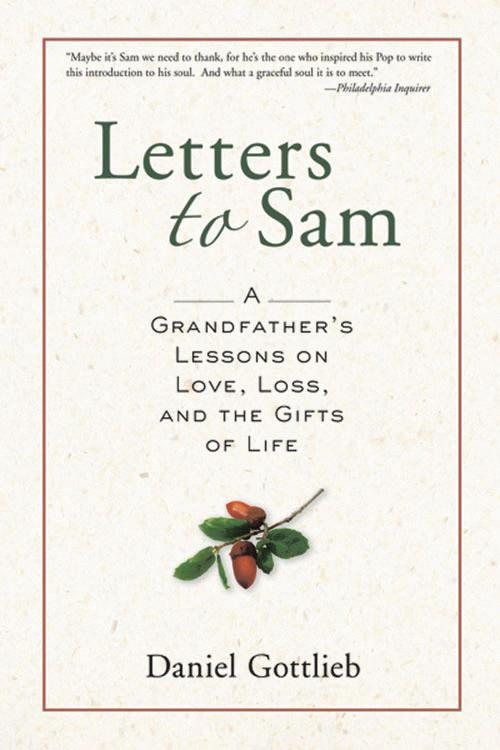
If you’re looking for a tear-inducing read for the upcoming holiday break, “Letters to Sam” is the book for you. Author Daniel Gottlieb, a quadriplegic psychologist, learns his grandson has been born with autism, a developmental disorder that affects the brain’s normal development of social and communication skills. Due to Gottlieb’s physical condition, he feared he wouldn’t live long enough to share the life lessons he had always wanted to share with his grandchildren.
This book is a compilation of letters he wrote for Sam about life, trials and love. Gottlieb doesn’t sugar-coat the dark parts of life and the struggles his grandson will likely face living with such a disorder, but his advice and compassion also highlight the joys and purpose of living.
Gottlieb’s wisdom surpasses solely the relationship of grandfather and grandson and reaches a crucial space where all of humanity can relate to his wisdom. His trial was paralyses and Sam’s was autism, but every human can relate to battling some sort of adversity in their lives.
“Sometimes situations call for us to act strong and brave even when we don’t feel that way,” he wrote. “But those are few and far between. More often, the payoff is better if you don’t pretend you feel strong when you feel weak or pretend that you are brave when you’re scared.”
Gottlieb wrote he believed the world would be a safer place if everyone who felt vulnerable could wear it on their sleeve, noting they have a problem and are doing the best they can.
He also had a strong view I found touching. Though he has quadriplegia, he’s not a quadriplegic – and though Sam has autism, he is not autistic.
“Because of our labels, some people will be afraid to approach us. Others will be cautious about talking to us or trusting us,” he wrote. “We look different and act different. But we can also teach people, as Norma taught me, that no matter what happens to our bodies or our minds, our souls remain whole.”
Though I introduced this book as a tear jerker, it’s also an incredibly empowering read. I remember I read the book because of my shrink’s recommendation as I was dealing with some emotional healing and I recommended it to my grandmother after my step-grandpa passed away. The truth, as confirmed in this book, is that everyone suffers from pain. The obstacle is to overcome it healthily in the end.
“We need to have faith the pain will pass. After all, pain is an emotion and no emotion stays forever,” Gottlieb said. “When you feel deeply hurt, you have everything you need in yourself to repair the damage. You want compassion, understanding and nurturing in order to heal. But most of all, you need time.”
I think everyone should have that final line tattooed somewhere visible on their body or written boldly on a sticky note on their desktop – “You need time.”
Gottlieb had detailed the many ups and downs and the seemingly impossible obstacles he has overcome, but somehow managed to provide hope for his grandson, who would surely encounter many rough patches as well.
Another message I strongly related to involved exposure. Anyone who’s read my columns knows over the past year I have exposed quite a bit of my own personal history. In publishing “Letters to Sam,” Gottlieb also exposed his very personal emotions and some embarrassing experiences he’s dealt with in his less-capable body.
“Exposure causes shame, exposure can heal it too,” he wrote. “And when that happens, it is a very freeing experience.”
As he explained, often we wish to keep all our flaws, failures and eccentricities hidden from those around us. But inevitably, sharing our dark spots only gives light to the brighter whole.
While Gottlieb wrote this book pre-emptive of his imminent passing, he managed to include some brave insights into the reality of mortality.
“Death is not your enemy,” he wrote. “Knowing your life has an endpoint will help you appreciate every moment you are alive.”
He explained that death helps one understand the precious gifts of life. He said the reason death is such a difficult concept for many is due to an unbelievable drive for survival.
“When we stop fighting against death, we are able to wake up to our lives,” he said.
Returning to the need to accept both the good and bad in our lives, he wrote, “Often when we look for answers, we automatically go where the light is better. But sometimes we need to go to the dark.”
I deeply recommend this book. Whether you put it in your Amazon cart now or later, just do me a favor and put it on the to-do list. You won’t regret it.
– Natasha Bodily is a super senior majoring in journalism. She worked as a model in New York City for five years and loves to write in hopes of inspiring and helping others. To read more of her writings, go to www.tashahope.blogspot.com. Emails can be sent to natashabodily@gmail.com