
Food safety can be easy for college kids
When it comes to the kitchen, students should remember the three C’s and S. No, that doesn’t mean cookies, candy, carbs and spaghetti, the easiest college dinners available. It stands for clean, cook, chill and separate.
According to Brian Nummer, a food safety extension specialist at USU, making sure food is prepared and kept safe is pretty simple.
Clean
“The biggest thing is you want to keep the kitchen clean,” Nummer said, emphasizing that students shouldn’t overuse sponges without switching them out or thoroughly cleaning them on a regular basis.
“A sponge sometimes has more bacteria than your toilet. Your stinky, smelly sponge is often contaminated because it stays moist and allows bacteria to grow and grow until it eventually dries out,” he said. “One recommendation I would give students is to put it through the dishwasher every time you start it.”
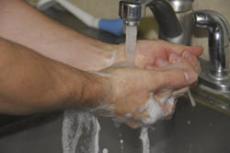
Also, it is recommended that whenever food is prepared, hands and surfaces should be washed with hot, soapy water. Using clean paper towels instead of repeatedly used rags is also a good idea to wipe up spills and prevent cross-contaimination.
Cook
Although Nummer hasn’t been in USU dorms, he once lived in a college dorm of his own and noticed problems there. He didn’t have cooking facilities, so he used a hot plate and admits that if students use hot plates or microwaves now and they don’t work well, they won’t have fully cooked foods. This could be dangerous if students are cooking meats and other foods.
According to the United States Department of Agriculture, the only way to know for sure if meats are cooked thoroughly is to use a thermometer. Ground beef may turn brown before it reaches a temperature that will kill bacteria. Regardless of color, a hamburger cooked at 160 degrees Fahrenheit and measured with a thermometer throughout the patty is safe.
Chill
Nummer also had more suggestions for students, including not leaving leftovers out all night and making sure dorm refrigerators are keeping food cold enough. To make sure of that, Nummer said inexpensive fridge thermometers can be purchased at cooking stores or Wal-Mart. Refrigerators should be kept below 40 degrees Fahrenheit.
“Get food into the fridge. Leaving pizza out all night so you can eat it in the morning is really not a good idea,” he said.
According to the USDA, perishable food should never be kept away from refrigeration for more than two hours. According to its Web site, even if there isn’t any meat on pizza, bacteria can still be present and may double in number every 20 minutes.
For students who want to bring leftovers from home and have a long drive ahead of them, the USDA suggests they pack perishable items, that have been refrigerated beforehand, into small containers and placed into insulated coolers with ice. The temperature inside the containers should be below 40 degrees Fahrenheit, and when the student arrives to the dorm or apartment, the food should be refrigerated immediately.
Separate
Make sure raw foods do not come in contact with cooked food, Nummer said. An easy way to do this is to put cooked foods on higher shelves and raw foods on lower shelves in the fridge. This prevents raw meat from dripping onto other foods and leftovers.
Also, never place cooked meat on the same plate or container which was used when it was carried to the grill.
And this all means…
Following these simple steps can prevent students from getting food-borne illnesses which, in some cases, can be deadly. Food-borne illnesses are rare, but Nummer said when someone has one, it doesn’t matter how rare it is. They can be very serious.
Most people will experience flu-like symptoms if they contract a food-borne illness. When someone gets the 24-hour flu, it’s more often than not from something he or she has eaten, Nummer said.
A person may throw up, have diarrhea and cramps for up to a day to a day and a half if they’ve eaten unsafe food, Nummer said. For the most part though, food-borne illnesses are preventable.
For more information about food safety for college students, check out the USDA Web site.
-mnewbold@cc.usu.edu