
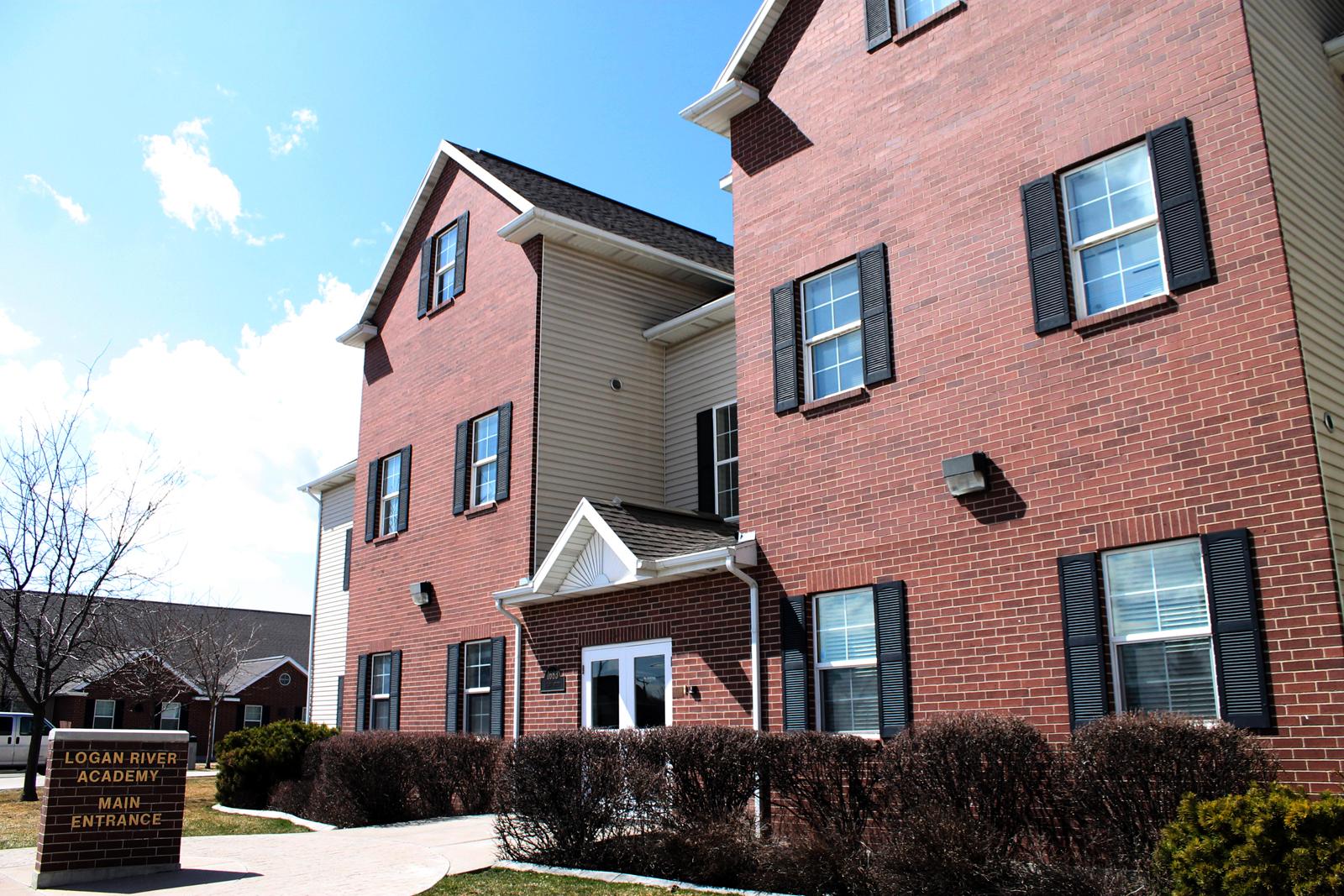
A different kind of education
While the majority of Cache Valley high-schoolers attend Logan High, Sky View or Mountain Crest, teenage students at Logan River Academy have a unique educational experience that goes beyond the classroom.
As a residential treatment center for a variety of students ages 12 to 18, some of which who have had challenges including drug addictions and behavioral problems, the facility gives teenagers the opportunity to sort out problems in their lives and prepare for a fresh start.
“We’ve got nursing staff and professional licensed counselors who do psychotherapy,” said Jeff Smith, one of the owners of Logan River Academy. “We have a fully accredited school which provides for their education as well.”
The majority of the staff are affiliated with USU. Approximately 20 to 30 percent of staff are students at USU and 60 to 70 percent are graduates, Smith said.
Student life at Logan River Academy is divided into three categories: academic, clinical and residential, according to Jack Pay, a junior majoring in physical education.
Pay, the swing shift manager at LRA, has worked at the academy for more than three years.
The academic school year consists of three semesters, including summer. This allows students to catch up on classes and schoolwork so they can graduate when they become seniors, Pay said.
Logan River Academy follows the State of Utah Curriculum, Smith said, so the education transfers both into and out of the school.
“Our teachers are trained specifically to deal with our kinds of youngsters,” Smith said. “Several of our teachers have special education credentials. They’re all certified and they’re used to dealing with kids that may have behavioral issues.”
The clinical aspect of student life consists mainly of therapy sessions and working with the students’ behavioral and psychological issues.
“Therapists work with coping skills, family relations, relations with their peers, ways that they can improve work in their treatment goals, things that are specific to the individuals and working on things they need to improve to be successful outside of here,” Pay said.
A major emphasis is placed on treating the issues holistically, Smith said. The therapists and students work closely with the family, contacting them weekly at least. The goal is to not only help the students to improve, but to make sure the environment they go back to when they leave Logan River Academy is best suited for their continued progression.
The final aspect of the Academy is the students’ residential lives.
Students are separated into different dormitories based on gender, level of privileges and whether they are there for traditional or psychological reasons, said Mike Martinez, a USU alumnus who majored in history and works as developmental supervisor at the academy.
There are various activities students are allowed to do on campus during certain times, such as television, games, studying and gym, Pay said. However, students are not allowed to spend much time alone unless they attained a behavior level sufficient to be able to do so.
Privileges are awarded on eight levels, based on students’ behavior and progression. At the lowest level, students are allowed very few privileges and must ask permission for even simple things such as going to their rooms or getting out of their seat in the cafeteria. However, they can quickly move up the levels, which allow them to attend dances, play co-ed games, occasionally be unsupervised and use the Internet. The eighth and highest level is the transition program, called Tavasi.
One privilege students can earn is to go to off-campus activities such as movies and restaurants around town and sporting events at USU.
“I know they’ve done a lot of stuff at USU because Bill works here – Wild Bill – and so he’s been able to get a lot of things like tours of the Spectrum and tours of the football stadium,” Pay said.
Due to the nature of the institution, students are supervised by staff at all times.
“We have a staff who are trained to do three things with the students,” Pay said. “The first thing is they need to be able to model what the expectations are. The second thing is they need to be able to teach them why these expectations are important – not only here, but why it’s important outside of here.”
Staff are also trained to be able to give consequences to students who do not follow these expectations, such as writing apology letters and taking away privileges.
For serious breaches in conduct, students go to a place called development, Pay said. This separates the students from regular dorm life for a period of time, placing them in a more structured environment with more staff and therapy assignments.
Despite the therapy, strict schedules and rules, students at Logan River Academy can lead close to normal lives while they are there and the program helps them to be able to have normal lives once they leave.
“It’s frustrating because people have this idea of treatment center students as the worst students in the world,” Martinez said. “But I feel like they are just normal kids that are just dealing with a lot more than I ever had to deal with or that I feel like other people have to deal with.”
Martinez said although there are definitely huge differences between life at Logan River Academy and life inside homes, they try to make students feel like they are living everyday lives, that people shouldn’t treat students like they are different or worth less than other people.
“I just want people to understand that they’re just everyday kids dealing with problems and we’re just here to help them deal with those problems,” Martinez said.
– zollinger.heather@gmail.com