
Bleeding Blue
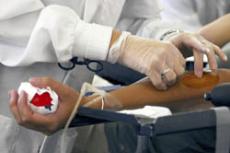
Fluorescent bandages and a mascot named “Bob the Blood Drop” mark the annual Blood Battle held in the Taggart Student Center International Lounge.
Volunteers hope to pump 1,000 units of blood out of Utah State University students and faculty in the Student Services-sponsored event.
“We’re committed to saving lives everyday,” said Rob Fox, Red Cross donor recruitment representative for Northern Utah.
The week-ong competition pits USU against the University of Utah in a battle to obtain blood donations – a clash which USU has won the last three years, Fox said. The winner is determined by the percentage each school increases in donations compared to the previous year. Last year, USU received 885 units and the goal for this year is 1,000, Fox said.
Leah Enzler, Service vice president, said she is “exceptionally pleased” with the turnout.
“It’s been absolutely amazing to see how service-oriented the students have been,” she said.
While the Blood Battle is mainly about saving lives, Enzler said she likes having “a little friendly competition.” The winning school will be presented with a trophy provided by the Red Cross at the USU-Utah game in September.
Second-time donor Jared Romero said he donates blood because he would want someone to donate for him, should he ever need a transfusion.
Romero, a freshman majoring in physics and math, said he likes helping to save lives, though his experience Tuesday didn’t go perfectly.
“It wasn’t flowing at all,” Romero said, but the freebees did help. “I like free T-shirts.”
According to the Red Cross Web site, donors must be healthy individuals who are over the age of 17, weigh a minimum of 110 pounds and haven’t donated blood within the last eight weeks.
Fox said each donor has a short examination with one of 18 medical professionals before being directed to one of the more than 10 beds. Donors are questioned concerning their medical, travel and social histories to determine if they are healthy candidates for blood donation, he said.
“For some people, it’s therapeutic,” Fox said.
After approximately 1 pint of blood is drawn, it is sent to laboratories where each unit is sampled and then sent out to hospitals around the state. It is used to meet the “local need first,” Fox said.
Fox, who has donated about 15 pints of blood, said giving blood has no adverse health effects and, as of Tuesday morning, no one had passed out, though “it’s early in the week still.”
Seventy hours of volunteer service are needed per day, Enzler said, and she estimated more than 200 students to serve by the end of the week.
Volunteer Stasha Wheeler said helpers are needed to recruit donors and hand out refreshments and T-shirts. Students are welcomed to sign up at the volunteer table in the International Lounge, but the biggest way students can help is to donate blood themselves, she said.
“If you’re afraid of needles, just look away,” Romero said to students fearful of donating blood.
With eight mobile blood operations around Utah along with donor centers, Fox said the Red Cross tries to receive 466 units of blood a day to meet the state’s need.
“Everybody needs to be a blood donor,” Fox said.
mof@cc.usu.edu