
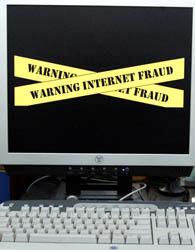
Students falling for scams
With identity theft being the fastest growing problem in the United States, statistics show college students are not as leery as they should be when it comes to their money and personal information.
According to the Federal Trade Commission, young Americans between the ages of 18 and 29 are a primary target for identity theft and account for nearly a third of all identity theft cases.
In a 2003 speech, former Secretary of Education Rod Paige said empty pockets and diminishing savings accounts can cause students to look for money from sources that may seem reputable, but are actually quite the opposite.
“Not only is this age group particularly vulnerable, they are also often broke and looking for money quick,” Paige said.
The scary truth is, according to the FTC, someone can offer “free” scholarship money via e-mail, but if the recipient accepts the money and cashes the fraudulent check, he or she can wind up owing a bank thousands of dollars that the person doesn’t have. The FTC’s report says too often, college students get in a hurry to obtain funds and overlook protecting their identity.
Department of Education Inspector General John P. Higgins Jr. offers a strong warning to students on how to protect themselves. “Protect your Social Security number and other personal information,” Higgins said in a recent press release. “Don’t let identity thieves rob you of your educational future.”
Bob Bayn, security coordinator for Information Technology Services at USU, said e-mail scholarship scams are not common at USU, but it is important to keep students aware of the issue so that problems don’t arise, as they have for colleges and universities across the country.
“Be very skeptical,” Bayn said of advice he’d offer to students. “Don’t believe unsolicited offers for anything that seems like easy money.
“Maybe healthy skepticism should be laced with a little bit of paranoia because scams are common, cheap to employ and very difficult to track back to the responsible party,” he said.
Bayn offers these tips to students for using online purchasing services responsibly: Don’t click on links in e-mail messages to go to legitimate business Web sites, he said, noting students should use bookmarks or type in the Web address themselves because it is easy to make al ink that looks like it is going to a familiar place, but really doesn’t.
Bayn explained that one recent problem at USU is that student computers have been hacked into and then used by others to send spam, or to host services unknown to the owner of the computer. Recently, Bayn said a student-managed USU computer was compromised and taken over as a fake Ebay phishing site, so students should ideally use a secure password on their computers at all times.
“Often it is very hard to tell if an online source is credible,” Bayn said. “Most scams rely on ‘social engineering’ to get the victim to believe that they are dealing with familiar services in legitimate ways. The technology isn’t as tricky as their cover story.”
Internet scams are not the only threat to the financial status of USU students. Get rich quick schemes are also something that students should be looking out for, such as the 12DailyPro pyramid scam that was uncovered this year. The pyramid money investment program seemed to many investors as a sure bet to make quick cash.
The number of Utahns saying they were scammed by the 12DailyPro Internet scheme has to risen more than 8,400. Utah Consumer Protection Director Francine Giani said 12DailyPro’s pattern in Utah seemed to wind its way through the state’s typically large, close- knit families. “By and large, it has been family members who have gotten hooked and then got other family members involved,” Giani said.
USU junior Chase Whitaker was one such victim to this nationwide scam that claimed investors could double their investment each month.
“I was looking to make money quick and this looked like a sure-fire way,” Whitaker said. “Luckily, I only lost around a hundred bucks.”
Most college students agree that textbooks from a campus bookstore are far too pricey and have looked for other alternatives. But while there are many good resources for buying used textbooks online, students should research options before buying from unknown sources.
McKenzie Anderson, a USU business student, said she found a great deal on a textbook online, but after purchasing the book, having the money withdrawn from her account and waiting for several weeks, the book never arrived. Anderson said she has unsuccessfully tried to contact the company since the beginning of the semester and believes she will not receive her money back from the fraudulent purchase.
According to a 2005 Better Business Bureau/Javelin study, roommate theft is a more commonly reported problem on college campuses, due to the accessibility of personal information. The study said family and relatives along with friends and neighbors make up half of all known identity thieves. According to information from the FTC, some good ways people can protect themselves from perpetrators and identity thieves is to buy a paper shredder, keep personal information personal, don’t leave junk mail or credit card applications lying around and destroy anything that could hurt if it ended up in the wrong hands.
The FTC cautions students to look and listen for these tell-tale lines:
“The scholarship is guaranteed or your money back.”
“You can’t get this information anywhere else.”
“I just need your credit card or bank account number to hold this scholarship.”
“We’ll do all the work.”
“The scholarship will cost some money.”
“You’ve been selected” by a “national foundation” to receive a scholarship – or “You’re a finalist” in a contest you never entered.