
Tasteful Teaching
From bartending to ethnic cuisine, this man knows how to cook up a good class.
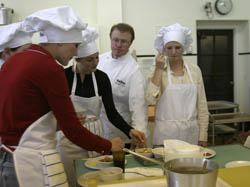
Erik Burlile, the current culinary program administrator at Utah State University is working on his Food Science degree while beginning his fourth year teaching a variety of cooking classes.
Before coming to Utah State University, Burlile was part of the adjunct faculty at Lake Tahoe Community College, where he taught a summer class called Gourmet Back-Country Cooking.
Although he has no degree yet, Burlile completed a three-year apprenticeship program with the American Culinary Federation at Harrah’s Hotel and Casino in Tahoe, Nev.
He then began working as a professional chef at Harrah’s Tahoe, which allowed him to travel and visit other Harrah’s locations, restaurants and bars.
Burlile said he enjoys all cooking, and believes a big reason people cook is the tie with food and making people happy, especially family.
“Whatever’s in season is my favorite thing to cook at that time,” Burlile said. “That means everything changes flavor.”
Burlile’s schedule is packed between teaching, taking classes and caring for his family. He and his wife have been married about five years and are nowexpecting their second child.
Originally from Cache Valley, Burlile spends his time cooking, brewing beers and wines, being with his family and doing outdoor activities, such as skiing, climbing, hiking and camping.
“I’m spread so thin you wouldn’t believe it,” he said, after listing several classes he teaches this semester.
The classes include everything from Culinary Basics and History of World Cuisine to Beverage Management, also labeled as USU’s bartending class.
“What appeals to me about the brewing is the food science,” Burlile said. “I’m just so enamored by food science. I dream about food science. It’s fascinating to me, all these things occurring for specific, defined reasons.”
Marissa Slater, one of Burlile’s sophomore students majoring in dietetics said, “I really like him, I am not that good at cooking so he has a lot of patience. You can tell he really likes his job.”
The culinary arts/food service management major requires students to minor in their choice of three business degrees.
As professor of the year in the department last year, Burlile emphasized the importance of the business aspect of the cooking profession.
Burlile said his lectures are only about theory and therefore only a quarter piece of the puzzle. All of Burlile’s classes this semester, except Beverage Management, contain a separate lab section for hands-on learning.
“The trick is applying it. It’s really important for me to get the students to understand how the theory connects to the application and how it works. I really enjoy teaching, it’s just a blast for me,” Burlile said.
“I actually really enjoy him,” said family and consumer science sophomore Adell Simmons. “He has a great sense of humor and answers questions well. He’s very knowledgeable about the subject.”
Because this is a dry campus – no alcohol allowed – there is no age requirement to take the bartending class.
In fact, Burlile said, most of the culinary arts students are required to take the class with their core competencies, and only a small handful of them are actually interested in the class for its bartending purposes.
“Because it’s such a conservative area, it’s one of those hush-hush subjects that you never hear about,” Burlile said. “I don’t have a problem with that at all. I think it’s great.”
Burlile said his training as a student allowed them to do tasting and pairing, where they would drink the alcoholic beverage and pair it with food almost every night.
“That’s unfortunate that we can’t explore that aspect here because it’s really leaving out a valuable component in alcohol training. It’s relying on the students to go out there and do it themselves,” he said.
Burlile said his advice to all of his students is to “practice and taste.”
He said it is very important to taste, constantly.
“Even if you do not like brussel sprouts, taste them. You are cooking for a customer and if they want brussel sprouts, you must cook and taste brussel sprouts,” he said.
Burlile plans to receive his degree in food science and hopes to become accredited with the American Culinary Federation, which would really “raise the bar” for this school, he said.
-amking@cc.usu.edu