
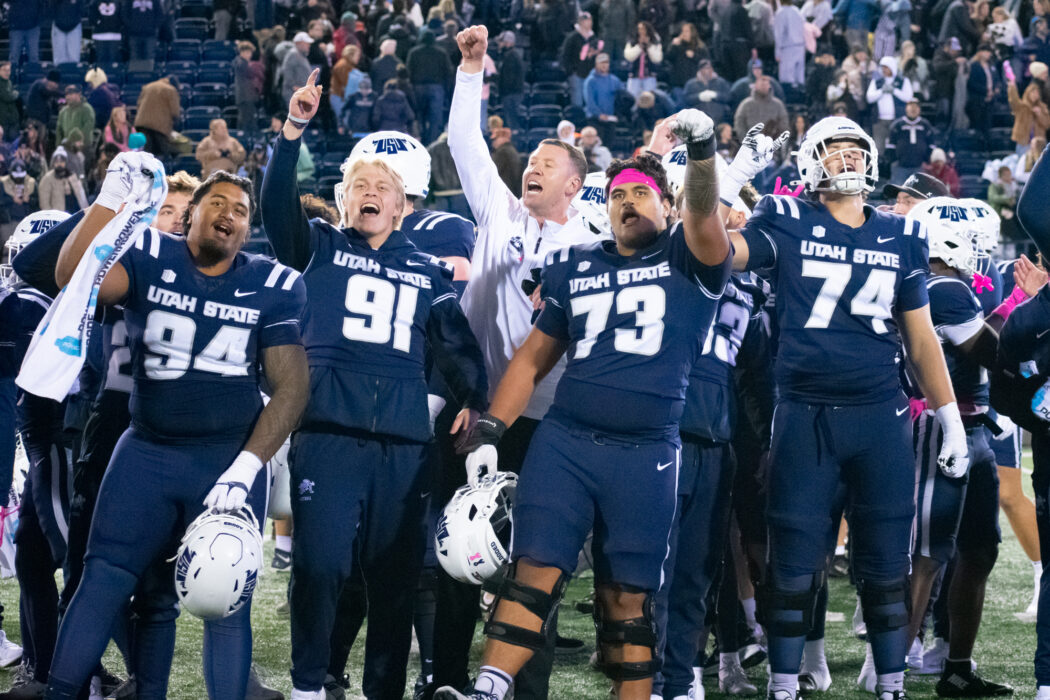
Community service: An emphasis for Utah State Athletics
Community service has taken center stage for Utah State University Athletics. They ranked first in the country in community service and development as of Sept. 12, as measured by the NCAA Community Engagement Impact Challenge.
The Aggies were first in the Division I rankings, ahead of the University of Dayton, Providence College and others.
The competition, put on by the NCAA in collaboration with Helper Helper, is designed to encourage student-athletes to serve in the community and also celebrate the impact student-athletes make in their communities.
“Both Helper Helper and the NCAA do different challenges throughout the year, three or four times, and they recognize schools who are leading in terms of local community impact and community service,” said Isaiah Jones, associate athletic director of Aggie engagement in an interview with The Utah Statesman. “They take different snapshots throughout the year. They do the early one when school starts, they do another one in December, then they do a big challenge during March Madness.”
The next update on the challenge leaderboard is anticipated in mid-December.
The challenge measures both student-athlete participation percentage and average hours served per student-athlete. This allows for competition between schools with varying sizes of athletic departments and programs.
“The teams finishing like us, one, two and three — that means that we have 340-plus student-athletes and that over 90% of them are participating in community service,” Jones said.
The community service hours are tracked through a Helper Helper platform that has the roster for each team a school has. This allows for hours to be tracked both by individual athletes as well as by teams. Athletes and teams can also see service opportunities around the valley through the Helper Helper platform.
Though there is some recognition by the NCAA at the conclusion of the competition for the top programs, the primary motivator for the competition is the coaches within the athletics department.
“The coaches really do set the temperature — set the culture,” Jones said. “I don’t think it’s an accident people like Manny [Martins] and soccer or Rob [Neilson] and volleyball or Kristin [White] and gymnastics … they’re all champions.”
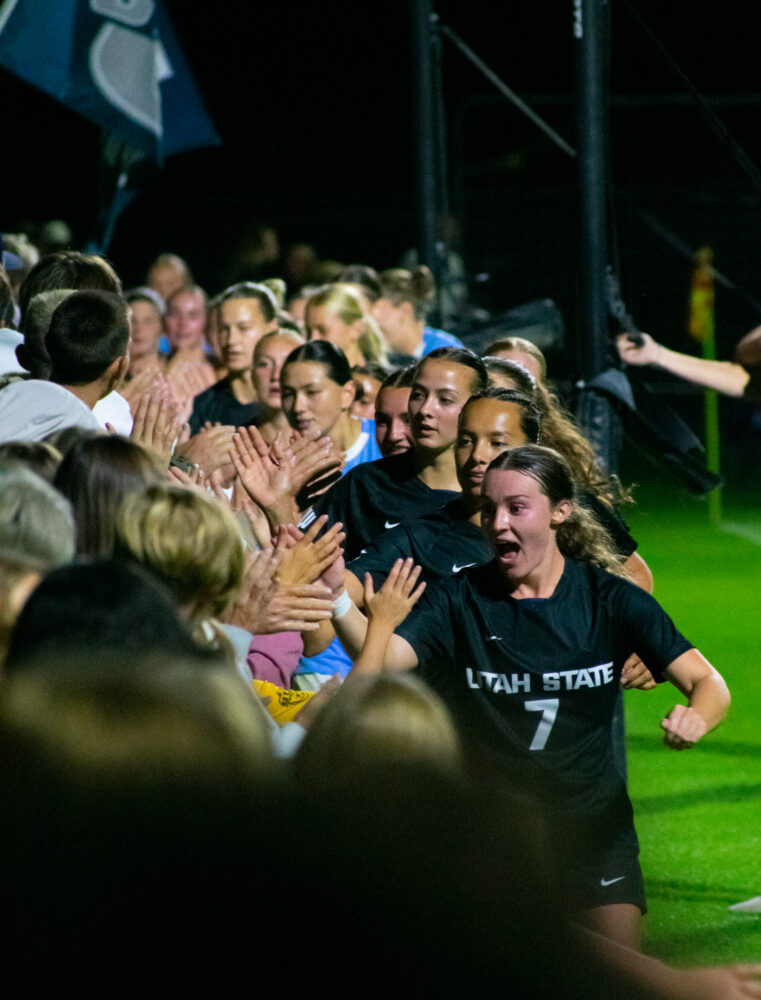
The USU Women’s Soccer Team high-fives fans after winning a soccer game against Weber State on Sept. 11.
Though the Aggies have been involved in the community and the competition in prior years, finishing as high as No. 13 in the competition, there’s a renewed emphasis on that effort this year. This uptick in community involvement largely comes from an increase in engagement from the Utah State Football team. This focus, again, has come from the top down.
“They were about 45% participation in community service prior to [Bronco Mendenhall] getting here, and now they’re closer to 100% of their team is participating in community service,” Jones said. “So, they’re number one, and then our women’s soccer team is really competitive as well.”
Mendenhall has long had a mindset of “culture comes first” in regard to building winning football programs, and he’s been no different during his young tenure at Utah State. Part of building that culture has typically included giving back to the community.
“I’m appreciative to be here. I’m looking forward to being part of the community, not above the community,” Mendenhall said in a press conference earlier in the season. “Currently, it’s the most service hours in all of Division I sports are happening at Utah State, and Utah State Football is leading that charge. What we’re giving back, I think, will end up permeating the community.”
According to the Helper Helper website, the 2024 challenge included 70,034 student-athletes involved in 210,288 community service hours, with an estimated economic impact of $7.04 million nationwide.
The University of Miami won the 2024 competition with 5,331 service hours for an average of approximately 10.9 hours per student-athlete.
With many months remaining in the competition, Utah State is looking to maintain its spot at the top and finish the year as the new champion.
“We’re really pumped to just keep pushing forward,” Jones said.