

Aggie Meal Share program to be formally recognized
Editor’s Note: This article was updated on April 13 to reflect accurate information.
A new USUSA resolution could formally establish Aggie Meal Share as a recognized program at Utah State University.
For several years, USU Dining Services has facilitated an informal end-of-semester meal donation initiative where students with a meal plan can donate up to five of their unused meals, which can be used to support other USU students in need.
The monetary value of those five meals is transferred to the organization hosting the program that year, explained Alan Andersen, executive director of dining services. In previous years, these organizations have included the Student Nutrition Access Center, also known as SNAC, the Val R. Christensen Service Center and Swipe Out Hunger.
“It’s not our program, so we don’t dictate what they do with the money. We are just willing to support what they’re trying to do,” Andersen said.
In a previous year, Andersen said more than $8,000 was given to the Val R. Christensen Service Center from students donating a few of their extra meal swipes. According to USUSA President Brandon Sorensen the money can be converted to dining hall meal vouchers for students struggling with food insecurity.
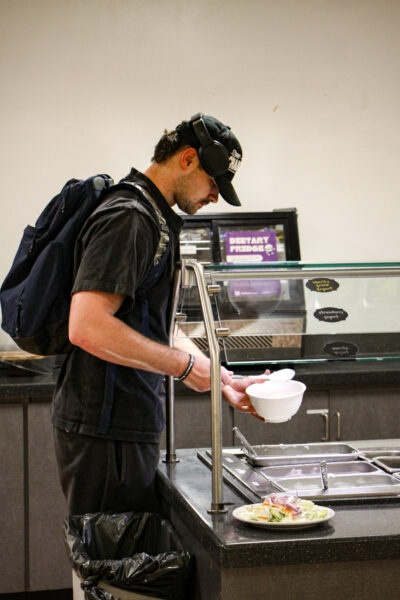
Sorensen said he hopes this resolution will make this program more official and long-lasting.
“The program is already there, but there’s not a lot of structure to it or awareness of it right now,” Sorensen said.
Sorensen said he wants USUSA to work with dining services to promote the program more. One suggestion he had was to display posters by the entrances of the two dining halls, the Aggie Marketplace and the Junction.
“There’s so many people that I think this could be beneficial for, but they just don’t know it’s there,” Sorensen said.
According to Sorensen, other universities — like Boise State University and Idaho State University — have successfully established similar programs.
“There’s students with extra meal swipes that just essentially go to waste, but they could really be put to a better use,” Sorensen said.
Andersen mentioned many meal swipes end up unused.
“One of the meal plans has 110 meals a semester, which amounts to about six meals a week,” Andersen said. “The average student only ends up using about four meals in a week.”
According to Andersen, these unused meals are factored in when determining meal plan pricing.
“Since we know students aren’t going to eat all of their meals, we’re able to make the plans cheaper,” he said.
Andersen said dining services is willing to support the program when organizations ask them to.
USUSA College of Engineering Senator Kaylee Shelton said she knew she wanted to be a co-sponsor of this resolution.
“Food is a huge portion of making sure students are successful in their lives, especially in academics,” Shelton said.
According to Shelton, many students struggle with food insecurity, and this is one way students can help each other without spending additional money.
“I think that it’s so important to be looking out for your fellow students because it just builds a better community,” Shelton said.