

Column: Photography still matters 200 years later
Approximately 200 years ago, a man named Joseph Nicéphore Niépce created what is widely considered the first photograph — an image etched on a pewter plate. This would widely change how people see the world for years to come.
Niépce created this photo using a camera obscura — an early type of camera that uses a dark box or room to project an inverted and reversed image through a small hole or lens — and a polished pewter plate coated in bitumen of Judea, which is an asphalt derivative of petroleum. He used a long exposure, around eight hours, and when he came back for the day, he had created “View from the Window at Le Gras.”
When Niépce created that first photograph, it was novel. In the two centuries since that first image, photography has evolved through processes like daguerreotype, cyanotype, wet plate collodion and film, before arriving at the digital systems we rely on now.
We’ve come a long way since 1826 — or 1827, depending on who you ask. Now, we all carry cameras in our back pockets. Hundreds of photos can be taken in a matter of minutes. Last weekend, when I was out with friends, I had four different cameras in my purse — but still didn’t take any photo I felt was aesthetic enough to post online. The technology has changed dramatically, but the reason behind why we take the photos has not.
This raises the question: With the sheer number of photos being made every day, why does photography as a concept and art form still matter?
For me I think the answer lies in a simple truth: A photo is proof that something existed. #PicsOrItDidntHappen.
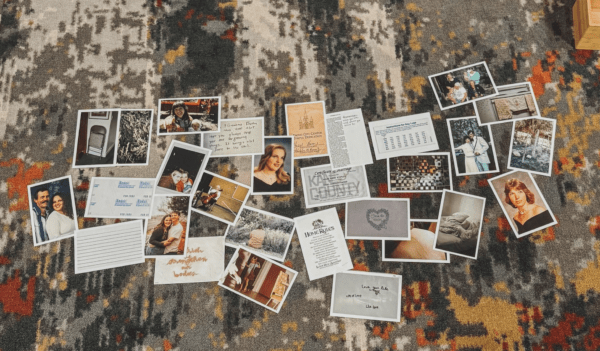
I’m pursuing a BFA in photography, and much of my work currently lies at the intersection of identity — particularly as women. Working within my family archive, I have recently been looking back over photos of my mother, grandmother and myself in an attempt to process the ways my life looks different from theirs.
I am the first in my family to attend university — the first to leave the small town in Southern Utah, where my family still lives. The life I am building looks different from the lives my mother and grandmother lived at my age — and maybe even different from what they may have imagined for me.
The images I work with — both in the archive and in what I make now — don’t resolve that tension, but they do make it visible. These images show that my life is still connected to Sally Brinkerhoff’s and Joeie Harris’, even though my path leads a different direction. The photographs from the past remind me that their choices are just as valid as mine and that our choices have impacts far beyond our own lives. The photographs I make now prove that my choices matter in the same way — not because my choices are better than theirs but because they are connected to them.
This is why photography still matters. Even 200 years after “View from the Window at Le Gras,” photography is no longer novel, but it gives us a way to document and process the things going on around us — to understand where we came from and where we could go moving forward.