

TSC custodians petition for changes under ‘mismanagement’
Custodians at Utah State University have recently spoken out about working conditions and mismanagement at the TSC. Many are petitioning TSC leadership to change new policies they describe as “unfair” and “unsustainable.”
TSC director Ray Cheatham sent an email to custodians on Aug. 4 alerting them of changes for the upcoming year. Cheatham originally accepted a request for a Sept. 22 interview before instead directing The Utah Statesman to USU spokesperson Amanda DeRito on Sept. 18.
Cheatham announced custodians would now begin working two hours earlier and take on Sunday shifts. Employees said the changes came with insufficient notice and disrupted established schedules.
“Coming to work two hours early, especially for a college student or a parent, puts a huge wrench in your day and in your schedule,” said Maddie Seamons, a part-time TSC custodian.
Seamons added that some employees had accepted the job partly because they were guaranteed Sundays off.
“Because we still have the same amount of workers, now we have to work a weekend more often than before,” Seamons said. “For me especially — and I have several coworkers who are disabled — we need the weekends to rest.”
One of the five demands in the union-backed petition calls for hiring two additional part-time employees to help cover the increased workload, a task employees say Cheatham has been neglecting.
According to DeRito, the TSC will “always hire as needed.”
“Ray will be assessing schedule adjustments before hiring additional staff,” DeRito wrote in an email to the Statesman.
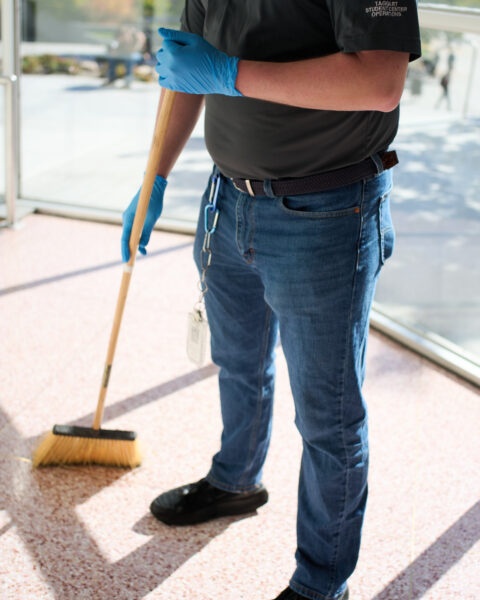
A custodial employee sweeps the floors on Oct. 15 in the TSC.
Earlier shifts complicated deep cleaning and noisy tasks in bathrooms and offices that were already in use. Some employees said this has made cleaning the building completely and effectively more difficult.
The transition also creates a financial burden for custodians, some of whom now pay $250 per semester for parking passes that allow them to park at 3 p.m.
Cheatham also announced in the email that beginning in January, employees will follow an industry standard specialty team cleaning system.
“There are many benefits of using the system including the mastery of specific skills, improved quality control, minimized disruption when team members are out, and fewer equipment needs,” DeRito wrote.
Custodians worry the specialty-team system will slow cleaning because each team must wait for another to finish its assigned task. They ask in their petition to repeal this change as well.
The new 11:30 p.m. end time and schedule adjustments intended to limit overtime and comp time have added to employees’ concerns.
“The Fair Labor Standards Act requires that if you make an employee work more than 40 hours a week, you start paying him overtime,” said JD Schallenkamp, a full-time TSC custodian. “Ray, at first, is making the statement that he’s going to make sure that he will schedule each week so that each employee only works 40 hours a week, but he’s also reserving the right to have us work more than 40 hours a week.”
According to DeRito, USU policy encourages supervisors to keep overtime and comp time to a minimum when possible, and requests for them should be approved before they occur.
The petition asks for the reinstalment of comp time and overtime as well as a return to the original 5 p.m. to 1 a.m. schedule.
Employees said raising concerns with Cheatham heightened tensions. After writing a 13-page report on their concerns and getting signature support from all TSC custodians, custodial supervisor Juan Alonzo presented it to Cheatham in August. Alonzo, Schallenkamp and Seamons said he reacted angrily.
Alonzo, who has since quit, said he decided to leave as a result of Cheatham’s “micromanagement” and the stress it caused employees.
“I told him it was going to affect everybody’s life one way or another because they’ve been working these schedules for years,” Alonzo said, “and his answer was, ‘Well, if we lose people, we lose people.’”
Alonzo and other employees alleged Cheatham’s tendency to monitor custodians over TSC cameras contributed further to work-place stress.
“The way he spends the time looking at my employees, I think to the point of being creepy,” Alonzo said.
One custodian, Aria Weight, said her co-workers informed her that Cheatham was allegedly attempting to identify her partner through the cameras.
“From what I know, he was asking a lot of invasive questions, and then also looking at the cameras, trying to find out who they were, because I think he knew that they delivered the letter for me,” Weight said.
Weight said her Hypermobile Ehlers-Danlos syndrome, a genetic condition affecting mobility, was worsening. She said she informed Cheatham of her Americans with Disabilities Act coverage and verified her condition with a letter from her doctor before hearing from her supervisor that Cheatham was attempting to label her as an absentee.
Outside of demands made in the petition, custodians also expressed frustration with where funds are going throughout the TSC.
According to DeRito, roughly half of the building’s funding comes from student fees, and roughly $500,000 goes toward custodial labor and supplies. She added they “try to update equipment where possible.”
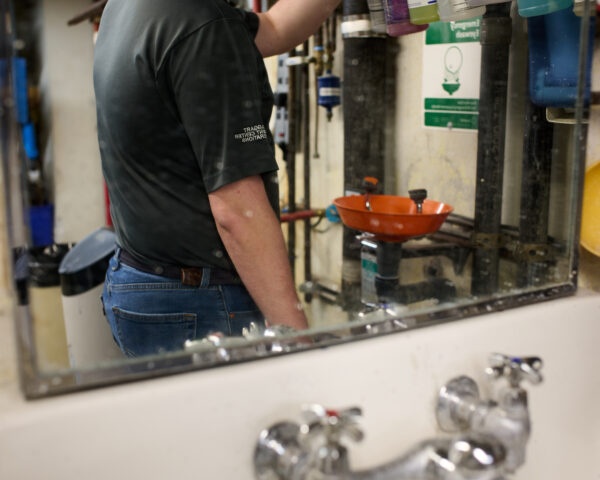
In the Taggart Student Center, a custodial employee grabs cleaning chemicals to prepare for their shift on Oct. 15.
Some custodians said despite their budget, custodial equipment is not updated to their standards and pay is not sufficient for the work expected of them.
When custodians like Weight, Schallenkamp and Seamons brought their concerns to Human Resources multiple times throughout August and September, they said little was done to address them. They then approached the United Campus Workers of Utah.
“We are prepared to take action if this petition’s demands aren’t met,” said union organizer Brexton Olesky-Lee.
Olesky-Lee said once they reach 500 signatures, they will approach the TSC with their proposals.
“The petition is one way of providing feedback, and we want employees to know their perspectives are being heard and considered. At the same time, operational decisions are not made through a vote or petition,” DeRito wrote.
Overall, custodians said their main priority is to create the cleanest and safest TSC environment possible but feel limited by their lack of consideration in workplace decisions. The final demand in the petition asks custodians to be given a meaningful voice in the processes that impact their jobs and their fellow Aggies.
“I think it’s very important that workers, especially students who work at the TSC, feel safe and heard,” said Student Events executive director Creed Jones. “We, meaning students on campus, but also administrators, need to take these claims really seriously.”
You must be logged in to post a comment.
There are no comments
Add yours