

Student input guides 2026 Campus Safety Walk
A group of students and university administrators spent their Monday night on the lookout for possible safety risks on Utah State University’s Logan campus. This event, known as the Campus Safety Walk, took place on Nov. 9 and spanned almost the entirety of campus.
The purpose of the walk, according to USU’s risk manager Jarrod Larsen, is to get real-time feedback on places around campus where students may feel unsafe or scared while walking at night.
“Particularly, we’re looking for lighting issues and landscaping issues, like when the bushes might create hiding spots or things that look kind of unexpected,” Larsen said. “We also look at camera coverage to see if we’ve got security cameras in main areas where students are walking.”
He added getting administrators to experience campus after hours was also a large part of why the walk was started, though the only ones present this year were Larsen, Officer Shane Nebeker and K-9 officer Sage.
The Campus Safety Walk occurs almost annually, Larsen said, and he accompanies the group every time it occurs.
“I like to walk around campus with you guys so that we can document things that administration never ever sees, because I don’t know how often they’re all on campus at 7 o’clock at night, and so they don’t really see all the concerns that you guys might have,” Larsen said.
The USUSA Logan Vice President Kylie Back and her committee are in charge of organizing the walk.
“It’s one thing to just be like, ‘Okay, we need to fix all these things,’” Back said. “It’s another to go and walk through and see it all.”
This year, Back said she and her committee planned the route around feedback from students. At events throughout September and October, including Sage’s birthday party on Sept. 10, she said her committee received over 114 responses from students highlighting places on campus they feel could use a safety boost.
“The biggest thing students raised was ‘feeling like they’re going to get hit by scooters,’” Back said. “That one and lights were obviously ranked the highest.”
Back said she and her committee used this information to plan their route through areas like the Aggie Commons, the walkway outside the Mehdi Heravi Global Teaching and Learning Center, and areas behind the Daryl Chase Fine Arts Center.
AJ Brannan, the director of initiatives for the USUSA Logan Vice President Committee, said they also made it a point to survey areas utilized by non-traditional students who may not have been able to give direct feedback. One of these areas is Aggie Village.
“Most residents there are non-traditional students that are both married and possibly have children.” Brannan said. “If there are these dark spaces and people have their children, that worries me as just a person here at the university.”
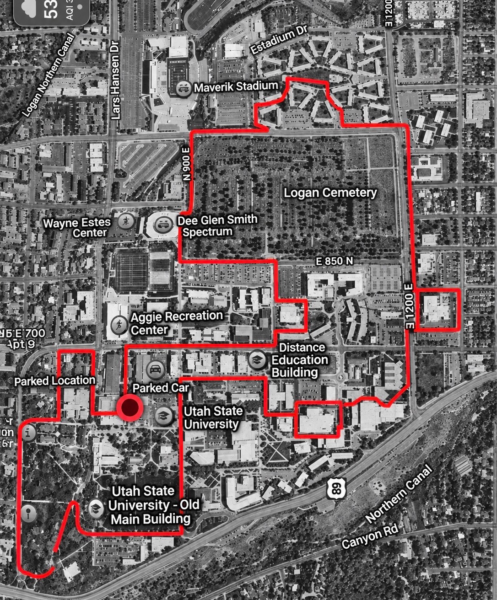
On their journey, students and administrators took photos of places where they felt some safety measures could be made. From there, Larsen said he will compile the data and share it with Facilities, IT and the Department of Public Safety.
“I think one part on our end is getting this information to them, but then also on our end is communicating back to the student body,” Brannan said. “We’ve pushed these concerns forward, and now it’s out of our hands.”
Once the information is shared with the university, Larsen said it will likely get addressed, but it may take a few years. The committee emphasized that while it may take time to see results, creating a safer campus for generations of students yet to come is worth it.
“They did it last year, and campus hasn’t changed so much, so why go through it again?” said Gabe Cortez, the USUSA vice president’s administrative assistant. “It’s one of those things where we can walk through and find new things with a new set of eyes.”
Larsen said since their establishment, these walks have initiated many important changes on campus.
“In the last 10 years or so that we’ve been doing this, we’ve been able to really accomplish a lot of things with lighting and landscaping,” Larsen said.
One of the biggest accomplishments to come as a result of the walk, according to Larsen, is the installation of more light fixtures and the switch from mercury vapor lights to LED lights.
“Almost all of these exterior lights on campus have been replaced with high efficiency LED lights that do a much better job at lighting the area and keeping light pollution down,” Larsen said.
While data from this year’s walk has already been compiled, Back said concern for student safety on campus doesn’t end when the walk is over. If students want to bring a campus safety concern to the university’s attention, she said they can fill out a myVoice form or email her directly.
Back and her committee emphasized they are committed to creating the safest learning environment they possibly can for their fellow, and future, students.
“It’s making it so students feel like they — from the get-go, getting to campus — are comfortable to walk around,” Back said. “It shouldn’t be something that’s super nerve-wracking and scary.”
You must be logged in to post a comment.
There are no comments
Add yours