

Study break? Spend time with a shelter dog
College students looking for a break from classes and studying can find respite with a four-legged companion through the Cache Humane Society’s Doggy Day Trip program, which gives community members the opportunity to take shelter dogs on outings throughout Cache Valley.
Located on the west side of Logan, the Cache Humane Society is a nonprofit animal shelter that provides care and temporary housing for homeless dogs and cats while working to find them permanent homes.
Liz MaKieve, the front-desk assistant administrator at the Cache Humane Society, has worked at the shelter for three years. MaKieve has a long history of working with animals and joined the Cache Humane Society after leaving a position in California.
“Those skills I learned perfectly transferred to shelter life. I honestly prefer it because it feels like I’m making more of a difference,” MaKieve said. “I found something that I’m really passionate about. I tell people I have found my dream job. As hard as some days are, I still really enjoy what I do. I love the people I work with. I don’t see myself leaving anytime soon.”
MaKieve began her career at the shelter as a dog kennel technician, helping clean and feed the dogs. She would also manage meet-and-greets and adoptions for visitors to the shelter. Although MaKieve doesn’t work with the dogs as frequently as she used to, she is now in charge of the in-house volunteer programs.
In addition to overseeing educational volunteer programs and summer camps, MaKieve manages Doggy Day Trips. According to MaKieve, the Doggy Day Trip volunteer program was created with the intention of giving those who cannot have a dog an opportunity to spend time with one.
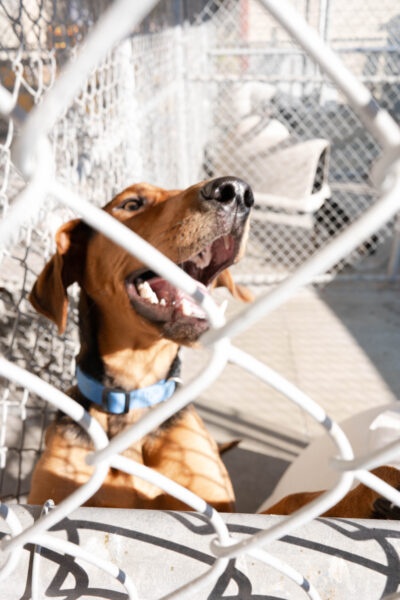
This large dog at the Humane Center leaps up to greet guests.
“I rent, and we can’t have a dog. I know we have a lot of USU students that are in student housing or just have apartment restrictions. They just can’t have a dog, so this kind of benefits both parties,” MaKieve said.
MaKieve said the Doggy Day Trip program offers flexible hours. Volunteers can come anytime during the week to spend time with a dog. In order for volunteers to participate, they must fill out a questionnaire available on the Cache Humane Society website. Volunteers then need to attend a 15-minute orientation with MaKieve.
“We go over everything you need to know, the ins and outs, do’s and don’ts of the day trip itself. They can take dogs out that very same day, or they can come back whenever it works best for them to take the dog out. There’s no commitment really required to stay in the program. If you come once and never again, that’s okay,” MaKieve said. “If you’re dedicated and you want to come every day, every week, every month, that’s cool. We’ll always have shelter dogs, and they’ll always need to get out, so it kind of works for everyone.”
MaKieve said the program contributes to the dogs’ overall well-being.
“It helps with real-world skills that these dogs are going to need when they get adopted and go into their forever home, so riding in a car, walking on a leash, going down a busy sidewalk, or walking on trails — just kind of being able to be a dog out in the real world and kind of getting away from the stressors of shelter life can really help them decompress and better handle that stress coming back into the shelter,” MaKieve said.
MaKieve explained the program has also led to more dogs getting adopted at the shelter because of the connections that form between the dogs and the volunteers. Many of the volunteers are also first-time dog owners who aren’t really sure about adoption but can use the volunteer program as a way to learn more about what it really means to take care of an animal.
Andrew Broadhead, a first-year at Utah State University, expressed interest in the program after learning about its purpose.
“I never had dogs because my mom is allergic,” Broadhead said, “but I really like animals and taking care of them and supporting local organizations that help animals.”
Broadhead hopes to one day own multiple dogs, but due to their living situation, they don’t currently have the opportunity to. Broadhead said they are interested in the program due to its benefits not only for the dogs, but for the students as well.
“For the dogs, it gives them a space to release their energy and interact with humans, and for humans, it’s helpful too. I have found a really good way to relieve stress is with therapy dogs, I guess. I’ve never interacted with them, but just being upset and then petting an animal or having them in your lap is the best combo,” Broadhead said.
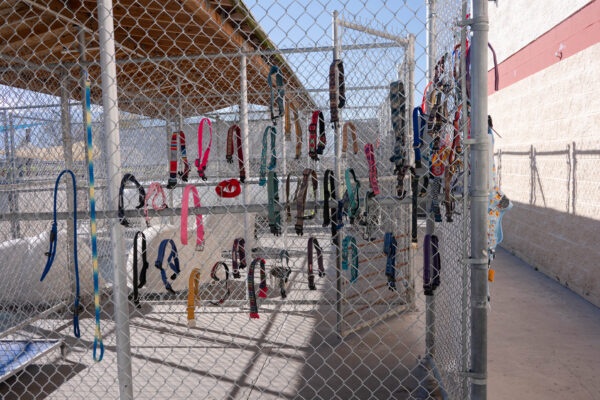
Dog collars near the entrance of the dog holdings. Volenteers come and take the dogs for walks. (The Utah Statesman/ Lola Probasco)
Broadhead said time constraints could prevent them from volunteering, but a partnership between the Cache Humane Society and USU would encourage them to get involved. Alongside time and availability, MaKieve acknowledged that weather has a big impact on the need for volunteers.
“The winter gets hard. The dogs can’t stay out for very long because it’s so cold, so they have to stay inside, which requires more cleaning, and everyone’s a little more pent up. When kids go back to school, you see a drop-off there, too. When the summer is over, we don’t have as much free time as a family,” MaKieve said.
MaKieve ended by highlighting the value of volunteers and how helpful they can be in a stressful environment like an animal shelter.
“It’s not just playing with puppies and kittens all day. A lot of shelter work is cleaning and preventing the spread of sickness,” MaKieve said, “so while it is rewarding, it’s also very labor-intensive. It can sometimes break your heart because you care so much about it, so I guess my one takeaway is to be nice to shelter workers, volunteer when you’re able to, and take breaks when you need because you will burn out and not even see it coming.”
You must be logged in to post a comment.
There are no comments
Add yours