

A new avenue to develop film in Logan
A generation spoiled by digital immediacy is suddenly itching to wait. Though most people leave the house with a quality phone camera in their pocket, many artists, like local photographer Jason Haywood, are returning to the basics.
Haywood shoots mostly with film and helps process other photographers’ film in his own darkroom. He recently installed a drop box in Caffe Ibis where customers can leave a roll of film, pay via Venmo and get their pictures back a few days later.
Haywood initially purchased film development equipment to simplify his own photography process, but when he made a post offering to develop film for people in the area, he said the response was immediate.
Haywood has been shooting film for almost 10 years.
“When I was maybe 16, I got my grandpa’s camera, and I just thought it looked cool. Just an old film camera from, like, the ‘50s, and I started taking pictures of my girlfriend,” Haywood said. “I was just taking tons of photos of her. I didn’t really know how film worked, but it felt so cool to mess with something so old and have something so modern come out of it.”
For Haywood, one of film’s main appeals, especially in the era of AI and digital ease, is that it’s limited.
“You can take out your phone and just take a million pictures within an hour, but film there’s only so much of, which I think adds to the beautiful artistic process. It’s finite. There’s friction between you and the finished product,” Haywood said.
Film photography captures images by exposing the film strip to light through the open camera lens. An inverse image or negative is recorded on the strip, and the picture is made visible through chemical development in a dark room. For Haywood, these extra steps aren’t inefficient — they’re what make the medium great. He compared the process of shooting and developing film to the hand-drawn animation styles still practiced by certain studios.
Since opening the drop box a few weeks ago, Haywood has seen a big boost in business. He plans to take a trip out of the country to purchase new development equipment and hopes to rent a property to expand his film lab and photo studio, potentially with the owner of local outdoor consignment shop Naomi Market.
“That’s the dream goal,” Haywood said. “But for now, it’s just, get more film and get more people shooting film.”
Haywood said while interest in film photography has grown significantly, not having a local film developer was a significant obstacle for Logan photographers.
Hannah Wetzel, a barista at Caffe Ibis, shared those concerns, saying they were worried about using a retailer like Walmart to develop their photos.
“I had a disposable camera that I used for my birthday because my friend got it for me, and it’s been sitting on my nightstand for forever,” Wetzel said.
Wetzel had heard stories about low-quality development or people that never got their film back from large retailers like Walmart and didn’t want to lose their photos.
“I’ve always wanted to do more film, but it’s just really hard to get it developed. I was like, ‘I’ll just stick with my digital if it’s that much effort,’” Wetzel said.
Wetzel got their photos back from the drop box today.
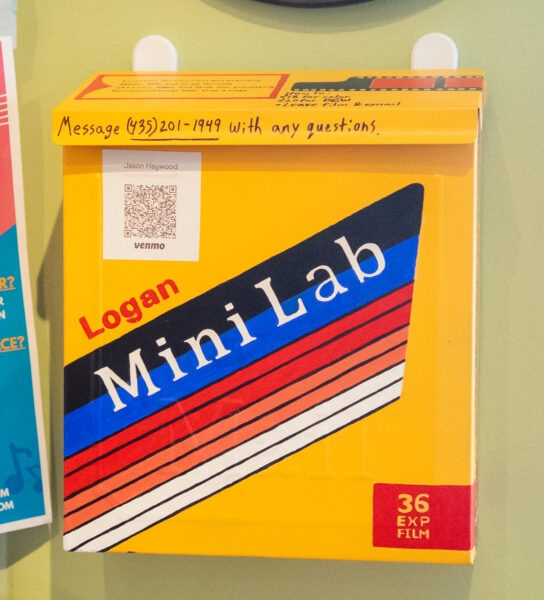
A camera film drop box is seen inside Caffe Ibis on Feb. 12.
“He did incredible work,” Wetzel said. “People have the opportunity to stop and to chat with him when they pick it up. I just think spaces like that are so important, and I’m glad that I work in one.”
Riggs Stewart, director of Caffe Ibis explained why they chose to work with Haywood.
“It’s just a fun thing for the cafe to support as many artists as we can,” Stewart said.
Stewart said the cafe is a center point.
“I’ve already got the customers. I already have the foot traffic, so I just want to add more availability for artists to show off their stuff,” Stewart said. “People don’t just want coffee. They don’t want just a snack. They want to have an atmosphere, and they want to see and view things that are handmade.”
The cafe displays art from local artists on the walls and is always looking for new ways to support local artists without creating an overly competitive environment, according to Stewart.
“I have a digital camera, but I wasn’t able to use my film camera, and it felt terrible. Now suddenly, I’ve got a guy who makes it easy to use. It’s not this complicated thing anymore,” Stewart said.
Haywood encouraged people who are interested in film photography to try it. If those interested don’t have access to a film camera, he suggested getting a disposable and keep the flash turned on.
“Your first roll is probably going to have some goofy shots,” Haywood said. “That’s another cool thing about film is that you can only do it better by doing more.”
You must be logged in to post a comment.
There are no comments
Add yours