
Adjusting to dark, cold evenings
Say goodbye to long summer evenings and hello to an extra hour of sleep. Students have been feeling the effects of the time change even though it has been more than a week since the time fell back one hour due to daylight saving time change.
“I haven’t changed any clocks besides the one on my phone that changes automatically,” said Anthony Israelson, a sophomore majoring in economics and international business. “Every time I get in my car to drive somewhere, I look down at the time and think, ‘Oh crap, I am an hour late,’ but then I remember the time change.”
Confusion due to the time change has led to some students showing up late to events.
“The time change has made me late for a few things,” said Estefan Cespedes, a junior majoring in accounting. “I was supposed to go help my grandma clean her house the other day and ended up being an hour late because I got mixed up thinking a clock’s time hadn’t been changed when it actually had. My grandma wasn’t too happy about me being late.”
Even though the time change has been confusing for some people, sleep-deprived students have enjoyed the extra hour of sleep when the time changed.
“I loved having an extra hour of sleep,” said Israelson. “It was probably the highlight of the whole year.”
To some students, however, the time change has been a nuisance to their sleep.
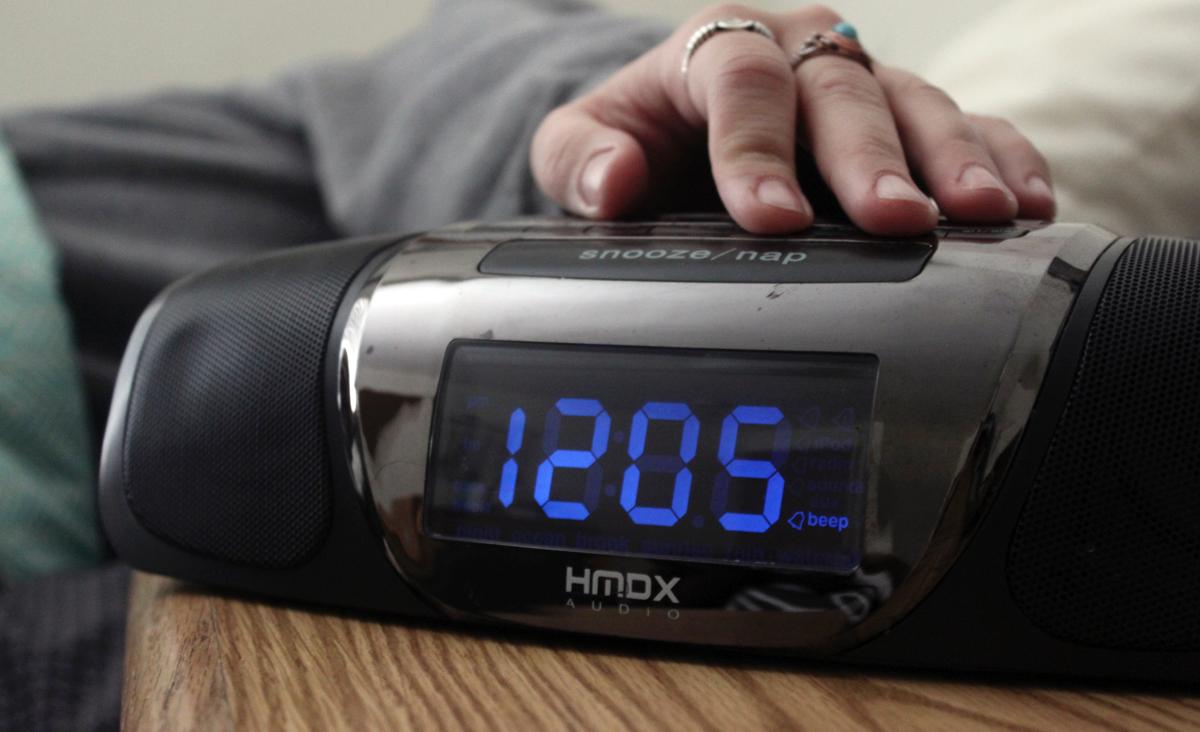
“It can be inconvenient adjusting to a new sleep schedule,” said Raegon Erickson, an undeclared freshman. “I woke up before my alarm went off for the first three or four days after the time change, but now my sleep is back on schedule.”
The sun setting earlier is leaving students tired and less motivated earlier in the day.
“Since it gets dark earlier at night, by the time I get home it feels later than it actually is,” said Erickson. “I lose motivation to go out and do things.”
Some think the lack of motivation earlier in the day due to darker evenings is hurting productivity in their daily lives.
“When you get done with track practice, it sucks because it’s already dark and freezing outside,” said Israelson. “You don’t feel like going out and doing anything productive.”
Some think there has been a degrading mood around campus since the time change.
“Everyone’s overall mood ha
s seemed to decay in the last couple of days,” Estefan said. “I have heard a lot of people complain about their days getting cut off so short and feeling tired all of the time. I have also heard of a lot of people getting depressed at this time of year. I don’t know if this is a causation of the time change or just a correlation between the change and it getting colder outside. Both things seem pretty depressing to me.”
An Australian study said depression seems to be heightened during daylight saving time. The study, published in 2008 in Sleep and Biological Rhythms, found a higher likelihood that men would commit suicide during the first few weeks of the time change than at any other time of the year.
“The darker days have slightly made me feel more tired and not totally depressed but not as upbeat,” said Estefan.
The brain knows the time on the clock has changed, but the internal clock still has to readjust to the time change. Some think the change is worth having longer, sunny evenings in the summer.
“While my body is adjusting to the time change in the fall, I usually get really hungry an hour before my lunch break because I am used to eating at that time, but the adjustment time is worth it,” Estefan said. “I really like the switch in the spring. Even though you lose an hour of sleep, it is nice to have sprung ahead an hour to longer days.”
Students have methods to keeping themselves happy and positive during the time change.
“I like to exercise, like going to a zumba class at night to help wake me up and keep me from getting depressed,” Erickson said.
– haileehousley@gmail.com