
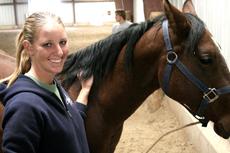
Animal science major equals hard work
The animal science major allows students hands-on experience and gives them so many opportunities to be involved in clubs, said adviser Tami Spackman.
The animal, dairy and veterinary science program was formed in 1977 and now consists of 250 students in the program – 200 undergraduate, 23 graduate and 18 in the dairy herdsman program, according to the ADVS Web site.
The ADVS major has recently made some changes but offers the same programs and resources, Spackman said.
Spackman said the major contains four emphases: equine science and management, biotechnology, bioveterinary science, and animal and dairy science. The students in each of these emphases work with many animals.
“We work with domestic animals,” Spackman said. “Beef cattle, sheep dairy, horses and swine.”
Students work with different animals depending on their emphasis but have many options for what they can do after graduation, Spackman said.
Animal and dairy science majors begin their freshman year with introductory animal science classes. The sophomore year consists of four chemistry classes, junior year has biology, and senior year includes mainly ADVS classes.
“I think the College of Agriculture is the best ever and the animal dairy and veterinary science major is the best in the college,” said Julie Ung, senior in animal science.
Ung is an ambassador for the College of Agriculture and said she is proud of her college and the tradition that lives in the college and her major.
Students are required to do an internship along with the required classes, Ung said.
“I want to be a director of a zoo one day, working more with exotic animals than livestock,” Ung said.
With animal or dairy production and management, state and federal agricultural agencies, animal product processing and other career options, there are really endless possibilities for animal and dairy science majors, Spackman said.
All of the degrees are four-year degrees, but the bioveterinary science emphasis can prepare a student for veterinary school in three years, Spackman said.
Ung said although she has loved animals since she was little she never wanted to be a doctor or a vet and that is why she chose the animal science program at USU.
“At Utah State I found animal oriented classes and I’ve loved it,” Ung said.
Students in the bioveterinary science emphasis still take introductory animal science classes, chemistry and biology, but are required to take classes that emphasize things such as animal histology and applied animal nutrition.
The purpose of this emphasis is mainly to prepare students for application to veterinary school, Spackman said.
Biotechnology emphasis students take introductory biotechnology classes and continue with the chemistry and biology courses. Students also take classes such as animal gene mapping, according to the ADVS major sheet.
Spackman said this emphasis prepares students for work in research and graduate study in biotechnology and related fields.
Equine science deals heavily with horses and has most of the same introductory classes, according to the major sheet. The senior year includes classes such as equine evaluation, horseshoeing and poisonous range plants.
Career opportunities for the students who emphasize equine science depend on the skill level of the student, Spackman said.
For each emphasis area, there is a corresponding club that students both in the ADVS major and outside of it can participate in.
The Animal Science Club is open to all majors on campus and provides students with exposure to animal agriculture and opportunities to travel to operations across the country, according to the Web site.
The Equestrian Club allows students to care for horses and participate in collegiate competitions.
Gwenllian McIntyre, a sophomore in economics and a member of the Equestrian Club, said she loves taking care of the horses and is glad she can be a member of the club without being an animal science major.
The mission of the Dairy Club is to educate members and the community about the dairy industry and also provide recruitment opportunities for the College of Agriculture.
The animal science major has also seen accomplishments in research by students and faculty, according to the ADVS Web site.
Ken White, professor of reproductive and developmental biology, received the Researcher of the Year Award for his work in cloning a mule. Undergraduate Researcher of the Year John Brinkerhoff, a junior majoring in bioveterinary science, also helped contribute to this project. Facilities provided by USU allowed this research to take place.
There are nine ADVS sites off of the main campus that are for research and student use, according to the ADVS Web site.
For more information, students can look online to view the ADVS major sheet and the classes students need to take for the major.
-breea.lee.h@aggiemail.usu.edu