
Club experiments with rocket technology
With rockets that can reach up to 10,000 feet, the sky really is the limit for the USU Experimental Rocket Club.
The club has been around for many years. Chris Liou, president of the club and a senior majoring in aviation maintenance management, has been a member since 2008.
“What makes me come back is the rocket itself, just building it and designing it and firing it,” Liou said.
The club has around ten members and meets on Fridays from 6:00 to 8:00 p.m. in TECH 109. Most of the members are engineers in their first two years of college.
“They get so busy when they become juniors and seniors,” Liou said.
Building rockets uses many different types of skills, so many different people can participate and help out.
“One thing I really enjoy is the different fields it uses,” said Josh Jensen, a sophomore majoring in electrical engineering. “There’s electrical, there’s mechanical, there’s aerospace – it’s just how wide a field it is.”
The club’s main purpose is more than just building rockets. They experiment with different rocket technologies and try to come up with something useful that hasn’t been done before.
“We build rockets,” said Russell Babb, a freshman majoring in aerospace engineering. “We experiment with different types of things, like the kerosene-nitrous oxide motor. We’re doing different things than has been usually done with kerosene-nitrous oxide.”
The club participates in a competition every summer to display what they have worked on in the past year. However, they have been unable to compete the past few years.
“Before, they were in the competition and they were pretty successful,” Liou said. “We didn’t have any rocket last year or the year before just because we didn’t have enough members. I was a new president, so I had no idea how to recruit.”
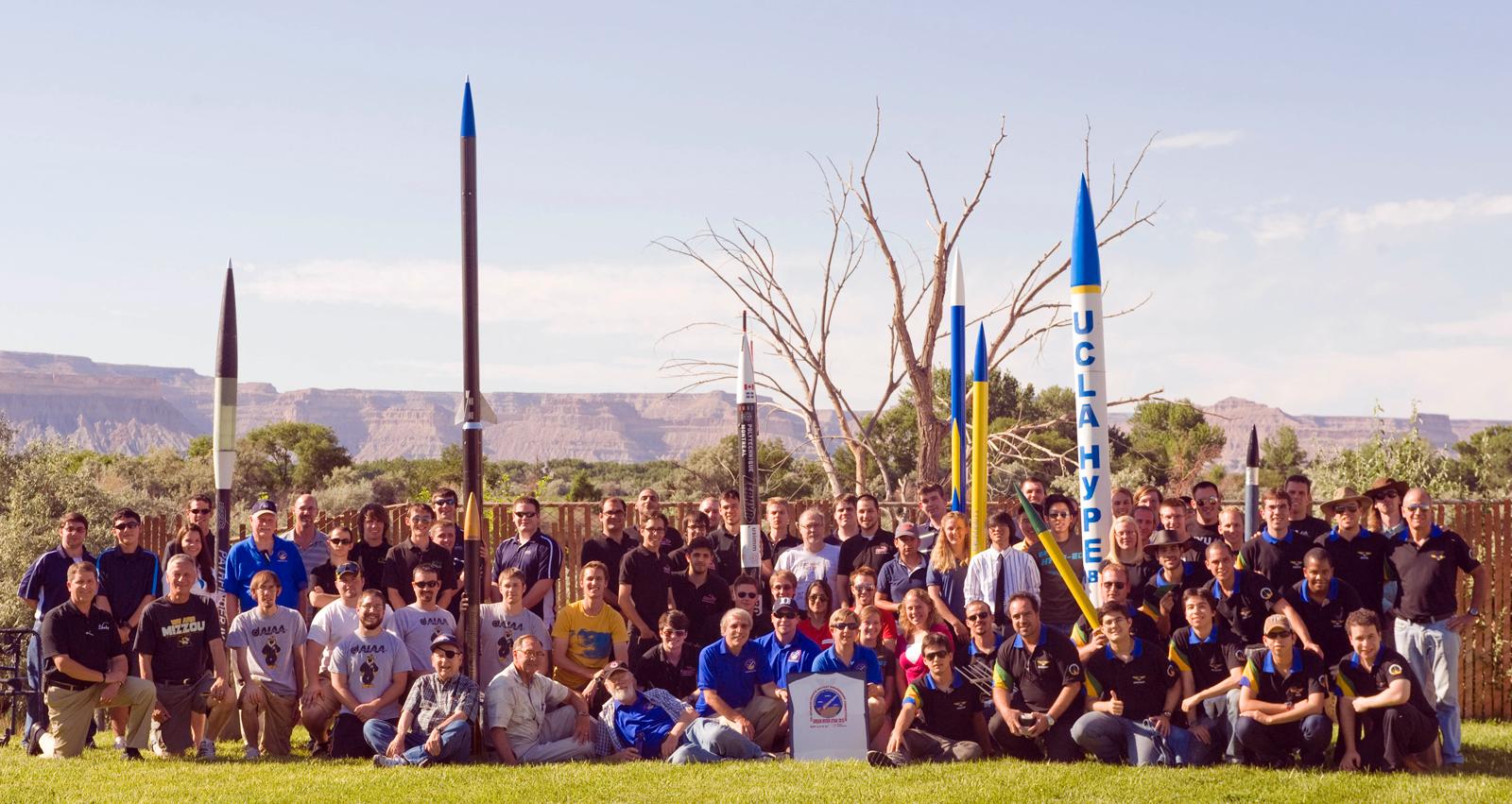
This summer they will be going to Green River, Utah to demonstrate their current project: a rocket with fins that flip out to help the rocket on its way down so the rocket only needs one parachute.
Aside from the main rocket, the club is building a smaller rocket for Liou’s senior project. This rocket will have remote control wings attached to it so it can glide down safely.
“We’re trying to figure out how to control the rocket after it’s hit the plateau,” Babb said.
Making experimental rockets allows members to be able to build and launch a rocket without having to be ready to do so professionally.
“In experimental sample rockets. It’s not like commercial rockets where everything has to be right,” Liou said.
Testing experimental rockets may not seem like the safest activity, but these students make sure they are kept away from danger.
“When we launch the rockets we do it in the jet testing cell, and so we stay pretty safe,” Babb said. “We have like eight inches of glass between us and the rocket, plus all the insulated walls. It’s built to be able to handle jet engines exploding in it and keep the people safe inside. It’s a controlled explosion – that’s what a rocket is.”
They use the testing cell to experiment on different aspects of each rocket, especially how the parts react to being launched.
This year, one engine has burned through and one has exploded. Members of the club enjoy the explosions as well as successfully building parts of the rockets.
“You learn a lot with failures,” Babb said.
Another aspect club members enjoy is the flame when the rockets are launching.
“It’s nice to see a big huge flame coming out of the end of the nozzle – it’s supersonic,” Liou said. “How often do you see a supersonic flame? That’s pretty fun.”
The club helps members to have new experiences they can’t get anywhere else. Working with real equipment in a more relaxed setting gives them the opportunity to learn those skills without the stress of a work environment.
“I like what we do here,” Liou said. “Teaching people the basics of rockets, and teaching them how to use their hands and build something that they’re passionate about.”
– zollinger.heather@gmail.com