
COLUMN: Temporary Tattoos in the TSC
Peacocks, butterflies (or are they dragonflies?), flowers, and swirl upon swirl of intricate curves and patterns of vine-like lines run across the backs of hands and into the fingers like climbing roses.
For the brave, the patterns extend into the palms leaving the hand unusable while the dying mehandi sets. Other patterns curve around the toes and across the foot up the ankle. These tattoos also cover backs, bellies, wrists, arms and legs. I even saw a butterfly light down on someone’s neck.
Mehandi, the traditional Indian hand painting, has been around for, well … no one really knows so let’s say a really, really, long time. Most people around here probably know it as henna, but the Indian name is mehandi. Mehandi is an herb, which in tattooing purposes, the leaves are ground into a powder and then mixed with water to make the dark paste. Many times other herbs like eucalyptus are mixed in to give added benefits to the temporary beautification.
Yes, mehandi has health benefits. The paste cools the skin, helping to calm the nervous system, not to mention the relaxation of taking a break, since the application usually takes awhile.
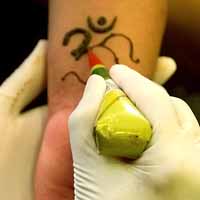
The mehandi paste is applied using tubes with thin nozzles similar to the way cakes are decorated. After the intricate design is completed the paste is let to dry. Once dried, then the paste is moistened with a simple mixture of lemon juice and sugar, at a ratio of 1 to 1. This sets the mehandi, allowing the magical mixture to dye the skin. Moistening the paste multiple times and leaving the mehandi on the skin longer will leave a darker stain that will last longer. Another factor is body chemistry.
My favorite factor determining the darkness of the design is the accompanying legend: The darker the color, the more your husband (or significant other) loves you. They say husband because the beautiful decorations are usually saved for weddings. The bride will traditionally have her hands and feet decorated by her friends and family the night before the wedding. The mehandi is then usually left on overnight. Other times when mehandi is traditionally worn are for festivals and the annual fast when women forgo food and drink for the wellness of their husbands.
In these modern times, mehandi is applied not only for tradition, but also as what it is – beautification. People, including males, wear it whenever they want, a lot like a tattoo … only temporary. Students here at USU were given the chance to participate in this Indian art Wednesday in the TSC outside the auditorium. The Consortium for Indian Culture (CIC) wanted to give others a greater awareness of the Indian culture and also make experiences available. CIC had a stack of about 100 designs from which people could choose to have replicated on their skin. Some people brought their own designs. A popular theme was Polynesian flowers for the Luau Saturday night.
“Art is something that has more language,” said Ram Swaminaphan, CIC president.
He said it says more and speaks more deeply.
CIC will be sponsoring a huge benefit event “Utsav ’04” which will be held in the Kent Concert Hall March 30. Tickets are available in the TSC Ticket Office. All proceeds will go to benefit the Center for Persons with Disabilities and an orphanage in India.
Michael Sharp is a junior majoring in German and minoring in photography. Comments may be sent to him at michaelsharp@cc.usu.edu.
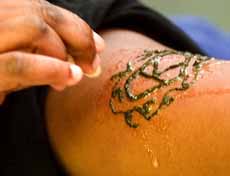
Lemon juice drips off this custom design to help moisten it. The juice helps the paint to set. (Photo by Michael Sharp)
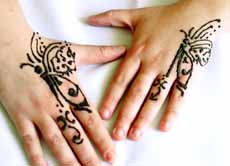
Amanda Banner displays her hands, which have been adorned with butterflies. (Photo by Michael Sharp)
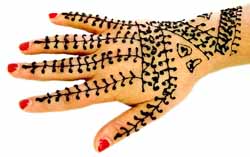
(Photo by Michael Sharp)
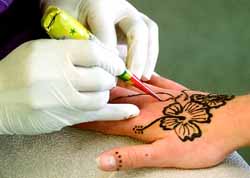
The flower design was one of the most popular choices. (Photo by Michael Sharp)