

Community Art Day explores Hispanic traditions
Inside the Utah State University Nora Eccles Harrison Museum of Art, the glow of paper candles and rows of marigold cutouts greeted visitors during Community Art Day. This month’s theme, inspired by Día de los Muertos, brought families and students together to learn about the Mexican holiday through hands-on art and cultural displays.
Though attendance was modest, the event drew a mix of museum regulars and first-time participants who wandered between the ofrenda display and the art tables, where guests could paint sugar skull jars to take home.
Shannon Erickson, director of learning and engagement for K-12 and community programs at the museum, said the event has been a long-running tradition.
“It’s on the second Saturday, and it has happened rain or shine, even during COVID. It’s never been canceled,” Erickson said.
Erickson said this month’s early celebration of Día de los Muertos was chosen to coincide with the museum’s event schedule while honoring a long-standing Hispanic tradition.
“The altars, or ofrenda, are tributes to those who have passed on,” she said. “They include water, food, air and fire — those four things had to be there.”
Nearby, a colorful altar stood near the entrance to the main gallery. Coordinator of exhibitions and collections for the museum Chloe Camp oversaw the ofrenda’s design and setup. She said the museum aimed to keep the display authentic while adapting it to fit the indoor gallery setting.
“Because we’re an art museum, we have to alter a little bit. We can’t do real candles, so we do the fake candles,” Camp said. “We can’t do real flowers, so we made paper flowers and butterflies, which are all symbols of Day of the Dead.”
Camp said creating the altar required extensive research and help from colleagues.
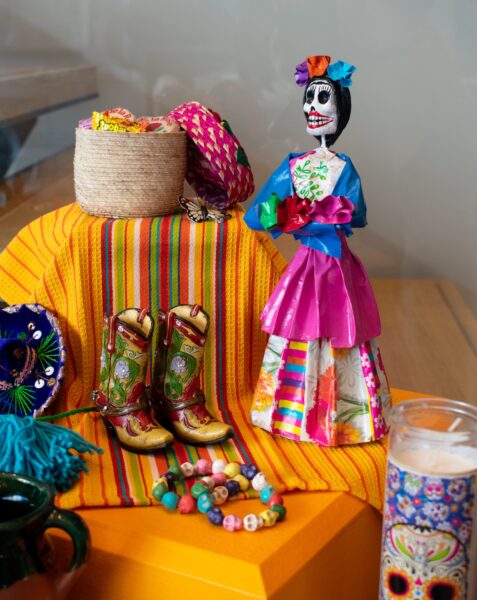 Elise Gottling
 An art display for Community Art Day at the Nora Eccles Harrison Museum of Art as shown on Oct. 11.
“We tried to include the classic elements,” she said. “The papel picado symbolizes air, the candle symbolizes fire, the plate of salt represents earth and the water represents life.”
The museum simplified the structure to three tiers, symbolizing the earth, heaven and the underworld, to make it easier for visitors to view and understand. Camp said the display is part of an ongoing tradition that the museum plans to continue each year.
“This is, I believe, our fifth year doing it,” Camp said. “We plan to keep it an ongoing tradition. It brings people together to think about their loved ones and this time of year a little bit differently beyond just Halloween.”
In the nearby Wanlass Center for Art Education & Research, visitors painted skulls on glass jars, adding lights to mimic the glow of candles. Erickson said the project aimed to connect creativity with reflection.
“We’re painting sugar skulls on a jar that they can drop a light in. It provides the light in the traditional sugar skull decorating tradition from Día de los Muertos,” Erickson said.
Erickson said future Community Art Days will continue to pair hands-on activities with partnerships across campus and in the community. Upcoming events include “Signature Search” on Nov. 8, a collaboration with the Cache Humane Society, which will feature adoptable dogs and donation drives for the shelter.
In December, “Symbols of Home” will partner with the Logan Library, followed by “Weave It Together” in January with Jump the Moon, a local nonprofit focused on inclusive artmaking. February’s “Love Our Air” will feature clean air poster contest winners, and in March, visitors can “Create a Cryptid” with Stokes Nature Center.
The final event of the academic year, “Pour It On,” will take place in April in partnership with the Mount Logan and Cache Symphony orchestras. From May through September, Community Art Days will move to the Cache Valley Gardeners’ Market each month.
“We try to make sure everyone feels welcome,” Erickson said. “It’s for anybody — 0-99.”