

Covey Leadership Center hosts adaptability workshop with Jerrod Calhoun
Utah State men’s basketball coach Jerrod Calhoun told students resilience and adaptability start with everyday habits, not highlight-reel moments, during a campus leadership workshop on Oct. 2.
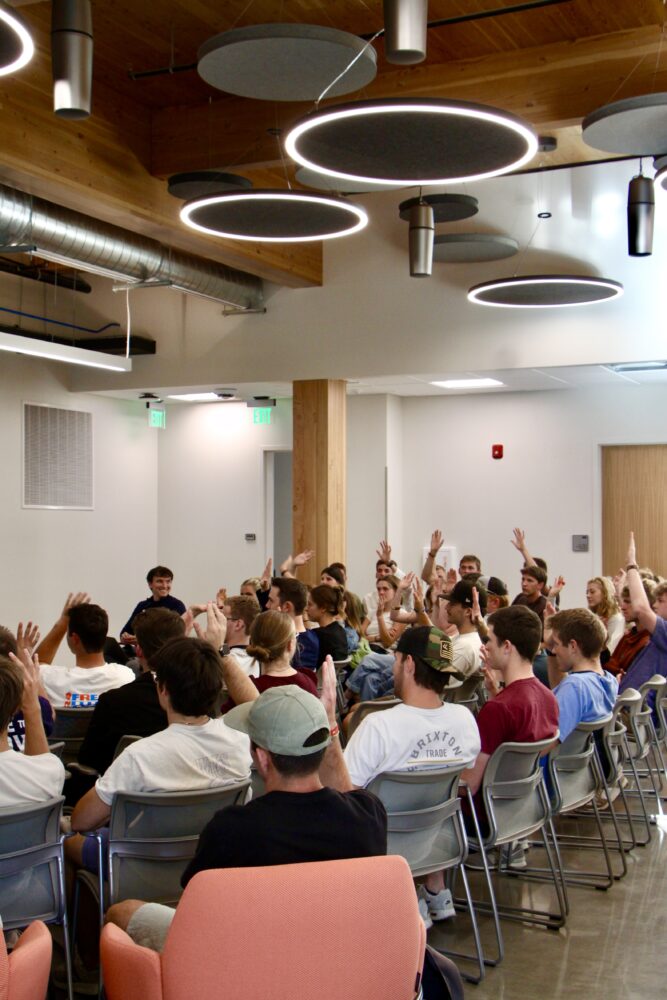
The Stephen R. Covey Leadership Center hosted Calhoun for the Learning Staircase Series in the Carolyn & Kem Gardner Learning & Leadership Building. The session, advertised as an Adaptability Workshop, drew students for an hourlong conversation on routines, communication and leading through change.
“Jerrod Calhoun pledged $150,000 of his own money to support Utah State players. That’s how much he believes in this program,” said Bret Crane, executive director of the center. “With him, it isn’t just about adaptability. It’s about people — meeting people with vision and motivation.”
Calhoun’s message keyed into simple, repeatable behaviors.
“I think it’s routine. When I’m out of routine, I’m out of whack,” Calhoun said, explaining sleep, exercise and preparation determine how he shows up for practice and games. He encouraged students to “master the day” by planning what they want to accomplish and sticking to a consistent personal cadence.
Audience questions ranged from in-game adjustments to off-court growth.
“How do you keep your mindset and your team’s mindset the same when you’re playing a small game versus a team like UCLA?” an audience member asked.
“I think it starts and ends with your best player,” Calhoun said. “If your best player sets the example every day, it’s more powerful than the coach.”
Calhoun emphasized standards don’t change with the opponent. The focus is preparation, trust and poise.
“How do you train your players to be adaptable in a game, but then also, how do you train them to be adaptable in their daily lives?” an audience member asked.
Calhoun emphasized clarity and accountability shape culture.
“You have to be honest with people. You have to be direct. That begins with basic team standards: being on time, speaking up and holding one another to what was agreed upon. Coaches model the same behavior they expect from players,” Calhoun said.
Calhoun also addressed setbacks and how teams respond when things go wrong.
“Adaptable groups don’t dwell on problems. They diagnose, plan and move forward together. That process matters just as much at a Tuesday practice as it does with the game on the line,” he said.
Routines help stabilize emotions after losses and keep success from breeding complacency after wins. Calhoun said consistency in the locker room is important.
“From the perspective of working in sports, how did you best leverage your opportunities as an assistant into coaching positions and beyond?” an audience member asked.
“Say yes to uncomfortable jobs, staying curious and learning across programs with different resources and expectations. Do the small things well: organize the day, preparing and communicating clearly with players and staff. Those habits traveled with me from one stop to the next,” Calhoun said.
Throughout the discussion, Calhoun returned to the relationship between leadership and followership. Coaches set standards, Calhoun said, but player-led teams are the ones that last through adversity.
“Leadership is about getting others to follow,” Calhoun told the crowd, adding the most persuasive example is often a teammate who consistently does the right thing when no one is watching.
When asked what his own routine looks like in-season, Calhoun said it’s built around movement and planning.
“You got to get at least 45 minutes of exercise. Trying to be balanced, trying to read, trying to walk today for 15 minutes before practice. But I would say the first thing that you should do is tell yourself that you’re going to have a great day,” Calhoun said.
Define what success looks like, establish daily processes and communicate directly.
“Have your beliefs, have your values,” Calhoun said. “If you’re clear about those, you’ll be okay.”
The center plans to continue inviting campus leaders to speak on adaptability, integrity and communication in future sessions, according to Braylen Carlson, head of leadership experience at the center.
Calhoun’s bottom line for the room was simple: Routines build resilience. Whether it’s a pregame walkthrough or a midweek class project, Calhoun said, the standard stays the same.
“When your best people set the tone and everyone owns their role, you give yourself a chance in every situation,” Calhoun said.