
Dancing shoes come to USU
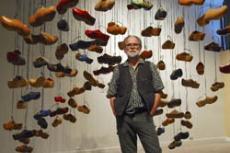
A new kind of sculpture involving musical Dutch wooden shoes, Klompen, is on display at the Nora Eccles Harrison Museum of Art this week, and is planned to stay permanently.
Klompen’s creator, Trimpin (who only uses his last name) is a Seattle based sculptor, musician and composer. He and was on campus this week to install it and also to give a lecture Thursday evening.
The piece originated 20 years ago and has toured through many countries including, Amsterdam, Holland and Switzerland said Victoria Rowe, museum director. Now it will permanently reside on USU campus.
The sculpture is on display in the basement of the museum in its own 25 feet by 25 feet room, where a visitor can walk all the way around it, Rowe said.
For only one quarter a visitor can experience the percussive tunes the shoes make, which lasts only 40 to 60 seconds. Each tune is different and not all of the 120 wooden clogs are used for each song.
The museum is open Tuesday through Friday from 10 a.m. to 5 p.m. and Saturday from noon to 4 p.m. Admission is free and accessible to persons with disabilities.
Klompen is not Trimpin’s only successful sculpting adventure, in fact most of his ideas started with the idea of a random number generator. He wanted to do more with the results from a generator and build something to show the results with.
His first attempt involved 24 bobbing, wooden chickens and a typewriter. The chickens would move randomly and the patterns they created were expressed with the typed letters.
He later found more creative ways to express these results. One involved having the chickens play 8 record players all at once. Another included old wood blocks and cowbells set up like a xylophone to musically display the results.
Trimpin received inspiration for his musical sculptures from his childhood experiences.
He would be at a bonfire with friends and he said he could hear choirs and other music coming out of the fire. He asked his friends if they heard it and he said they just looked at him and said, “What?”
He also played many brass instruments while growing up and once, his father had him play a trumpet duet in the woods near their house. Trimpin said initially he thought it was a stupid idea to play in the forest but afterwards he realized what he had experienced which were, “the sounds coming from all over and listening to the nature,” Trimpin said. “That’s kind of the influences that I had, which are still not completed yet.”
Trimpin also has worked with projects involving drops of water dripping on to different structures to create different sounds. He works alone and does not usually have a staff around him. Trimpin has commissioned many works of art, one including a guitar sculpture created for the Seattle Experience Music Project. The guitar sculpture includes 650 to 700 guitars suspended from floor to ceiling and 32 of them can play on their own and tune themselves. Of those playable guitars, they can all play tunes from the beginning of music, to folk, to bluegrass, to rock ‘n roll, to punk, he said. The guitar sculpture has been on display for 7 years now and each of the guitars play for 8 hours a day each day, and only one of them just recently broke.
His most recent project was with the quartet Kronos where he designed four instruments and the quartet came and played them. Some of Trimpin’s instrumental projects have involved: bowing and plucking a piano; suspending horns from the ceiling; a fire organ, run completely off of gas flames; and rickshaws with multiple instruments attached.
For students who may have missed Trimpin’s lecture and would like to learn more from him, they can. Trimpin plans to come to the USU campus for about three weeks in fall 2008. He will be working on a project with students, which they will come up with, Rowe said.
“I’m learning a lot when I’m working wiht students,” Trimpin said. One of the ideas is possibly using farming equipment for new sculptures, she said.
Many art groups may be helping with the project next fall including, landscape architecture, art, theater and music. Many other departments may also possibly be involved because the plans are all tentative, Rowe said.