
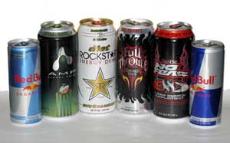
Drink it up
Energy drinks promise their users a boost in mental and physical performance, but they can have some negative side effects and be very expensive.
Utah State physician James Davis said those who use energy drinks should be aware of what they are drinking and how it affects them.
“It’s doping for the everyday person,” he said. “The idea that ‘I will somehow performance-enhance by using this.’ Worst-case scenario, it will hurt you. Best-case scenario, it will do nothing.”
Davis said for what they give you, energy drinks are very over-priced.
“A Jolt or a Dr. Pepper is more cost-effective,” he said. “A regular Pepsi will give you more energy than most energy drinks because it has calories.”
The QuickStop sells an average of 140 cans of energy drinks each week and there is another vending machine in the TSC that is devoted entirely to them.
One of the more popular energy drinks is Red Bull. According to an e-mail sent by Patrice Radden, a representative for the company, “Last year, more than 2.5 billion cans of Red Bull Energy Drink were enjoyed worldwide.”
Radden said Red Bull, “Improves performance, increases concentration and improves reaction speed, stimulates the metabolism and increases endurance.”
The most active ingredient in most energy drinks is caffeine, which, according to Radden’s e-mail, “is a well-known stimulant that has been shown to significantly improve reaction speed and general attentiveness.”
Davis said that is only half true.
“It can enhance performance, but there are also side-effects of caffeine,” he said. “You get shaky, your coordination changes and your vision could get blury. That’s not what you want to happen when you’re playing sports.”
Radden said Red Bull’s claims are not without merit.
“Numerous scientific studies in the fields of sports medicine, internal medicine and psychology confirm the claims made for Red Bull,” her e-mail said. “All scientific studies are peer-reviewed, published and can be found in public databases. These studies indicate that Red Bull produces a significant increase in both physical performance and cognitive functions.”
Davis said the human body is made of three basic components: protein to build, carbohydrates for energy and fat to store. He said these three things are interchangeable.
“Glucose is the currency for energy,” Davis said. “Anything else, your body must convert to glucose. That process takes time. Anything you eat within 30 minutes of an event is like an I.O.U. None of that sugar gets in your system. It takes a while.”
Davis volunteers some of his time for the hockey team as a team doctor.
He said he sees some of the players drinking energy drinks during intermissions and laughs to himself because the players won’t get anything out of those drinks until long after the game is over.
Energy drinks have more than just caffeine and sugar in them. Most will also have many B-vitamins.
Davis said these help the body, but they can be found in almost anything.
“A good diet supplies all the things we need,” he said. “That’s all advertising hype. Marketing has made exercising very popular. It used to be the shoes that made you good. Now it’s the drink.”
Some energy drink brands offer their products sugar free. Davis said these products are a waste of money.
“They’re basically just caffeine and water,” he said. “It’s really expensive urine. It goes right through you.”
Davis said most energy drinks will have niacin in them to dilate blood vessels which make drinkers feel flushed.
“It gives you a rush, but no immediate energy,” he said.
There are other drinks on the market, like Gatorade, that don’t tout themselves as energy drinks but as fluid replacement, Davis said.
“They’re not as good of water replacement as water,” he said. “Gatorade has glucose in it, so it can use that energy immediately.”
Davis said he would recommend fluid replacements, but not energy drinks.
“They have no benefit,” he said. “They’re way too expensive. They’re not a cost-effective source of nutrients or caffeine.”
-bhhinton@cc.usu.edu