
Get squashed this winter
For anyone looking to stay in shape over the dreary winter months, there are plenty of sports that don’t require running outside.
These options include indoor favorites such as basketball and racquetball, but also lesser-known choices like squash.
That’s right, squash is more than a vegetable or what the Hulk does to his enemies. It’s also a racquet sport and its players make up for what they lack in numbers with dedication.
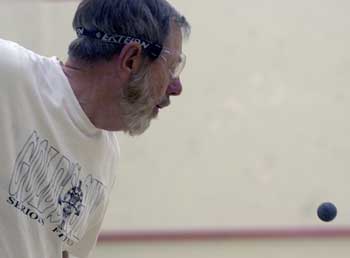
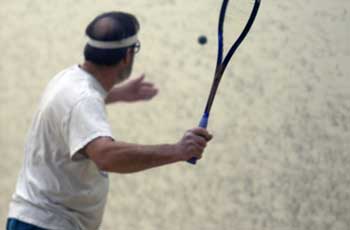
Charles Romesburg, a professor on campus in the environment and society department, has been playing squash for 25 years.
“I used to play racquetball and before that I played handball,” Romesburg said. “I like squash because you can control the ball better, letting you set your opponent up more. It’s more like a chess match.”
Romesburg said at the age of 67 he may have slowed down a bit, but still enjoys the game.
The courts may be similar, but racquetball and squash are different games
Like racquetball, the object of the game is to hit the ball against the far wall.
The player or team to let the ball hit the floor twice before hitting it back to the wall loses the volley.
Also similar to racquetball, points can only be scored by the player who served to start the volley.
If the other player wins the rally, they serve to start the next volley.
The player serving must be standing in one of two squares on opposite sides of the floor. After serving from one square, the next serve needs to be in the other.
In squash the ball is smaller and much less bouncy. This leads to more running and strategy for squash players.
A squash court has three red lines along the wall.
The highest line is higher on the far wall and get lower as it approaches the back wall. If the ball hits above the line, the rally is over.
The other two lines are only on the far wall. On the serve, the ball needs to hit above the second line, which is usually about 7 feet above the ground.
The lowest line is above the “tin,” a sheet of metal that if the ball touches, the play is dead. The 19-inch-high tin makes a loud noise when hit by the ball.
Despite the game’s British origins, there are opportunities to play in Logan.
There is a squash court in the Sports Academy. The only other court in the valley is in the Fieldhouse on campus.
According to Romesburg, the court in the Fieldhouse is a converted racquetball court so it’s “not quite big enough.”
While squash is growing in popularity worldwide, there are few players here on campus.
According to a representative at the Fieldhouse, there are only a few groups of regulars that play. For those interested in trying squash, the Fieldhouse has racquets and a ball available for rent for a dollar.
Romesburg encourages players to reserve the court so that the people in charge of the court will know it’s being used.
-steveshinney@cc.usu.edu
(Callie Grover)