
Library mentor program takes off
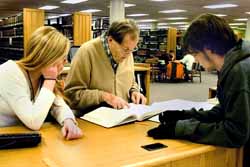
The new reference mentor program lessens the intimidating experience of the libraries by offering peer-to-peer help, said the head of Reference Services on Friday.
The peer reference mentor program is new to Utah State University this semester, said Flora Shrode, head of Reference Services, and offers students the opportunity to receive help with the library’s resources from other students.
“We wanted the help of students to reach others,” Shrode said.
The peer mentor program consists of five students who work in both the Science and Technology and Merrill libraries at the reference desks, Shrode said. The mentors work alongside the librarians and offer help to students, whether it is answering reference questions or locating library resources, Shrode said. The mentors are trained to help the students with a variety of questions.
“It’s great, [we are] three weeks into it, and it makes us [librarians] think through what our purpose is,” said Shrode of the new program.
The library can seem overwhelming, Shrode said, and the librarians may add to the intimidation of the library experience. Some students show hesitation approaching the reference desk, Shrode said. However, with student mentors available, approaching students feel more comfortable asking for help from their peers.
“I know how utterly frustrating it is to do research or to find anything in the library,” said one peer mentor, Jenny Pecora, a sophomore in English literature.
The peer mentor program is an asset to the USU student body, Pecora said. Because there are so many library resources unknown to most of the students the mentors are able to connect the students with the resources needed to make research more efficient and less overwhelming. One positive aspect about the new program is having students relate to other students, said Sara Anderson, a junior in molecular biology and peer mentor.
“Being a peer mentor, you can relate,” Anderson said. “You know what it’s like to not know what a call number is.”
The peer mentors want to connect USU students with the library’s most valuable assets – the librarians, Anderson said. The librarians are a resource to students and are here to help.
“That’s what our student fees pay for,” Pecora said.
The peer mentors work five days a week and have a training class once a week to discover and become familiar with the resources of the library and the library’s databases. Shrode said the goal of the program is to expand and include more peer mentors when the new library is completed. The mentors went through the application and interview process last December, and the five students were chosen from 22 applicants, Shrode said. The mentor program is a wage-based position in the library and Shrode said it may eventually include both pay and school credit.
The program began with the help of Joyce Kinkead, vice provost for undergraduate studies and research, and Linda Wolcott, vice provost for libraries, Shrode said.
-kcashton@cc.usu.edu