
Local experts pushing for emergency preparedness
We’ve all heard about it for as long as we can remember. “The Big One” is coming. No one knows when and no one really knows how hard it will hit, but experts have been saying that Utah is long overdue for a fairly large earthquake.
Whether it’s preparing for an earthquake or getting out of a home in a fire, there is a national trend pushing for emergency preparedness. Whether it has been spurred on by national disasters like Katrina or just a general feeling that “The Big One” will come soon, learning how to take care of yourself is becoming popular.
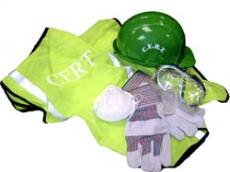
Judy Crockett, the dispatch coordinator for USU police and a Certified Emergency Response Team (CERT) teacher on campus, said becoming prepared is something that is spreading through Cache Valley.
“[CERT] is a national program, but it’s really taken off locally,” Crockett said. “All the little outlying communities are getting really gung-ho about it. I think we’ve got good people that are everywhere all throughout the valley that are ready to jump in and help.”
In any kind of disaster, Crockett said there is no way to know what is going to happen. From a tanker spill in the canyon to an earthquake, everyone needs to realize they have to be able to take care of themselves for at least a little while and every little bit helps, she said.
Mark Fishburn, the emergency response manager for the Cache Valley chapter of the Red Cross, said people have to be able to take care of themselves because help might not come soon in a disaster.
“In a disaster, those resources [paramedics, firemen, etc.] are taxed and may not be readily available,” Fishburn said. “Taking care of yourself and those around you is going to be key. It’s going to be up to you and those around you to take care of you until those resources come back online.”
But what exactly should people in Cache Valley be getting prepared for?
An earthquake is the most obvious natural disaster that people talk about. This is because northern Utah is due for an earthquake.
Scott Wright, a guest lecturer at USU in the geology department, said there is a seismic gap, which means there is no activity in a certain section of a fault for a long time. There may be activity to the north or south but none in that area. Wright compared it to stretching a rubber band.
“We know it’s about to go, but we don’t know when,” he said. “The more it rubber band is stretched – the longer a fault area goes without an earthquake – the more energy it stores. So when it finally goes, it can be big.”
The section of fault in Brigham City is the one that’s closest to USU that has gone the longest without much action, Wright said..
“That rubber band is stretched a lot and when it goes, it’s going to release a lot,” he said. Wright said he didn’t have the exact numbers with him, but the big earthquakes in Utah in the past have been around a 7 on the Richter Scale.
But forecasting exactly when “The Big One” is going to happen is a lot more difficult than some may think.
“They say within the next 50 years, but I’ve heard that for 10 years,” Crockett said.
Wright said people can be saying it will happen in 10 years for the next 300 years – that’s about as good a resolution as anyone can get. What he’s really saying is that there is not really any way to tell when.
He compared it to a football team saying that if a team wins the Super Bowl on average so many times, then goes a while with nothing really happening, then people start saying they’re going to get it soon. But there are so many other factors that go into it that make it difficult to say exactly when the team is going to win the Super Bowl again.
But earthquakes aren’t the only natural disaster Cache Valley and those in it are at risk for. Wright named several things from tornadoes to severe lightning storms and blizzards. Really, anything can happen.
Nationally, Fishburn said the most common disaster the Red Cross helps with is flooding. Locally, he said home fires are the biggest thing.
There really isn’t any way to tell what problem is going to hit and when. Fishburn and Crockett said there are a couple things people can have ready that will help no matter what disaster sweeps Cache Valley.
“Go to the basic common denominator of being prepared for a disaster: have a 72-hour kit,” Fishburn said. He said the Red Cross figures it will be around 72 hours before resources can get back online in a disaster, so it’s important for people to be able to rely on themselves for that long.
Crockett said it does take money to be prepared with a 72-hour kit, but it doesn’t have to take a lot. Many of the items that should be in a kit – like a flashlight, matches, non-perishable food, candy, etc. – students can pick up at the dollar store.
“I know money is tight for [students], but they’re just little things,” she said. “Go buy a six-pack of water and you are one step ahead.”
The first thing Crockett said students should do in a disaster situation is to get to a radio. With the emergency broadcast system, she said, they can get the word out so people know where to go to get more information or to get help. Fishburn said the Red Cross has contracted with local hotels, schools and churches to be able to set up shelters in one of those areas. People can go there to find out what is going on and to get help.
Both Crockett and Fishburn said the most important thing is just having people learn how to take care of themselves.
“If we can just do a little bit for ourselves. Even a little bit, anything would help,” Crockett said. “I wonder sometimes if we think ‘OK, the governments going to come help us.’ But they’re people too. They have families they need to take care of.
“Learn these skills, do anything to help yourself. And then you can go on and help others. Then it just kind of spreads from there.”
Fishburn said there is a lot of training out there that students can take advantage of. From the basic CPR and first aid classes taught by the Red Cross to taking a CERT class, there are many resources available.
“The best thing about CERT is you don’t have to wait for a disaster to use the skills,” Fishburn said. “If you don’t know how to use a fire extinguisher, that’s something that gets taught in the class. The medical knowledge is something you can use. If a child gets lost in your neighborhood, we teach search and rescue techniques.”
For those interested in taking a CERT class, contact Crockett at 797-0807.
-aedmunds@cc.usu.edu