

Logan’s Backcountry Squatters
Despite new legislative hurdles reshaping university policies, the Utah State University Chapter of Backcountry Squatters remains steadfast in its mission to create a welcoming and empowering space for women and non-binary individuals in outdoor recreation.
Kayley Bullock, president of the club, outlined the role the organization serves on campus and nationwide to build an outdoor community for women and non-binary people to feel welcome.
“Backcountry Squatters builds an inclusive outdoor community by providing opportunities for leadership, personal growth and professional development,” Bullock said. “This is accomplished through chapters that offer events for community, building DEI education and honing technical skills.”
Syd Lenssen, vice president of the chapter, emphasized the support and participation the club has been getting this year despite legislation changes.
“We’ve had a pretty good turnout for events,” Lenssen said. “We’ve had a lot of support, especially with that new ruling and people realizing, like, ‘Oh, yeah, this is important — women getting outside and having a space to feel comfortable.’”
Lenssen said the club is a great outlet for creating long-lasting friendships, and it makes the outdoors a less intimidating space to enjoy.
“This club has been so awesome for me and so many of my friends. A lot of us met through this club our freshman year,” Lenssen said. “It’s been really cool to see those relationships grow through the years, all because of Squatters.”
Lenssen outlined activities the club has done, including several craft nights featuring painting in the park, collages in the Natural Resources Building and friendship bracelet-making.
“We did a sound bath in Grand Canyon cave. We had this lady come up from Salt Lake and did a sound bath, and we did yoga,” Lenssen said. “Last weekend, we did a tailgate up at Beaver and made chili.”
The club has collaborated with others such as Aggie Blue Bikes, the USU Snow Club and the Students For Sustainability Club. They do more hiking and backpacking during the warmer seasons.
“We also did a backpacking trip in October that was so awesome,” Lenssen said. “We had like 17 girls come up to White Pine Lake, and we all hiked in and camped for a night.”
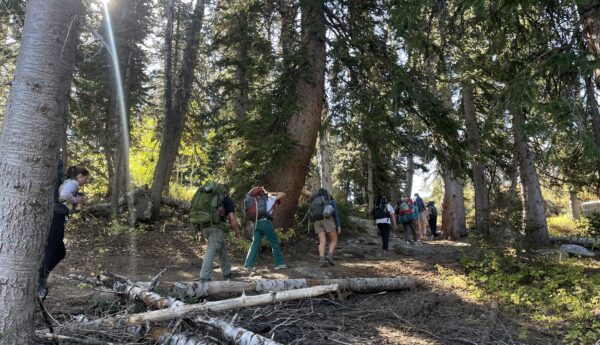
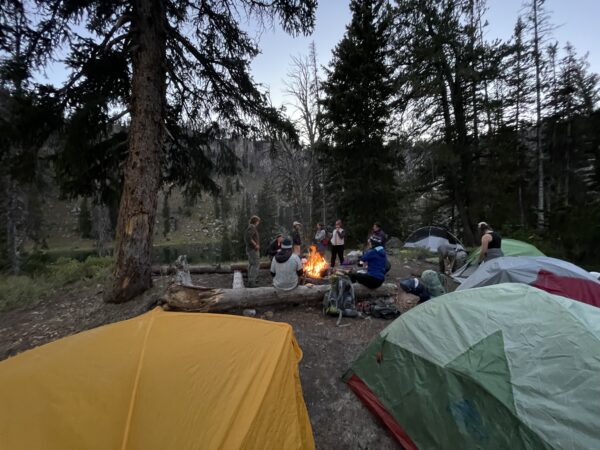
USU’s Backcountry Squatters’ backpacking trip from Tony Grove to White Pine Lake in October 2024.
While the club continues to advocate and create spaces for women and non-binary individuals outdoors, it’s facing new challenges than it has previously.
“We weren’t receiving any funding from the school anyways, so we’re not going to get dismantled,” Bullock said. “We’re not affected by that, but we did lose spaces that we had on campus, like Women’s Climb Night or trips through the [USU] Outdoor Programs.”
Cree Taylor, associate dean of inclusivity and excellence in the College of Humanities and Social Sciences, explained the process of the new legislation that has affected several clubs around campus. House Bill 261, or the Equal Opportunity Initiatives bill, was passed during the last legislative session.
“What the bill alleges is that diversity, equity and inclusive efforts were actually exclusionary and made people feel bad and weren’t needed and were wasting money,” Taylor said. “In that vein, they said universities cannot have DEI-official anything, so that had to go away. That’s why we use inclusive excellence now, and it also looks a little bit different.”
Because Backcountry Squatters is open to women and non-binary folk only, it can’t exist within the school’s parameters.
“They call it protected identity characteristics, so you can’t have any student resources or clubs or scholarships based on a protected identity characteristic,” Taylor said. “That’s why they closed the Inclusion Center — because the Inclusion Center was offering identity-based support, and the legislature said, ‘You can’t do that.’”
The Utah Statesman has previously reported on HB261 and its effects on students. To learn more about the bill, visit usustatesman.com.
Bullock said managing these changes has been difficult, as the club can no longer use any campus resources.
“We can’t use those spaces unless we pay for it, and we can’t afford to pay for it because we have to earn donations for our club,” Bullock said.
One of the main effects was on the club’s collaboration with OP.
“The Outdoor Programs was meeting with lawyers to make sure that they were doing this correctly because they were so taken aback by the bills being passed,” Bullock said. “It’s not like they don’t want to help support these groups — it’s coming from the state. The university likes these small communities that we have, but because it’s state legislation, it’s out of their control.”
Anna Rupper is an employee with OP but spoke with the Statesman as a student and member of the Backcountry Squatters. She discussed how OP has been affected by the legislative changes and what it means for the Backcountry Squatters.
“HB261 affected governmental programs from having gender-exclusive activities and events,” Rupper said. “They can no longer do Wild Women’s trips, and they can’t do certain collaborations with clubs. Anything that was specified towards a certain group, they can no longer offer.”
Before the changes, Women’s Climbing Night was held once per week in the ARC.
“They designated three hours once per week to women and non-binary people to come and learn how to climb,” Bullock said. “The rest of the time, it’s just open to the public, and most of that time is filled with men or other people, so it’s kind of hard to feel comfortable as a beginner when everybody there already seems so good.”
The club also hosted a backcountry ski trip every year through OP with the goal of helping women learn how to backcountry ski and feel comfortable in that space.
“The bill just took us back three steps,” Bullock said. “I felt like we were really going in a good direction where women really found their space and felt comfortable doing whatever, not even just related to the outdoor community — literally anything with womanhood. The step was taking us so far back — like, medieval.”
Lenssen said the last backcountry ski trip the club took before the legislation changes took effect had a massive turnout.
“We had like 25 girls come out and ski, and for a bunch of them, it was their first time,” Lenssen said. “We can’t do that anymore. I backcountry ski, but I don’t know if I feel comfortable enough to take a group of people out that don’t know anything. That’s kind of where the OP was really awesome to take over the leadership part of it.”
Rupper expressed her frustration as a club member, emphasizing the important resources OP was able to provide before their collaboration was discontinued. OP trip leaders have medical certifications and experience, which provided a way for the club to safely try new and different outdoor activities.
“It’s often hard to find a place to learn a new activity and be safe in the outdoors, especially as a newcomer and for friends that I know that are new to the outdoors,” Rupper said. “Being able to collaborate with the Outdoor Programs helped. There was good and safe leadership, and it provided a lot of gear and a lot of opportunities that would be hard to come by with just a student-run club.”
While the OP can no longer work with the club, Backcountry Squatters continues to get individual support. Bullock emphasized the male support the club receives, especially from members within the outdoor community.
“A lot of the male OP trip leaders and staff are also a really great support for us because they also understand that there are struggles for us women, and they also want to help promote our spaces and help us feel more included,” Bullock said. “The outdoor community in general is super inclusive, so we don’t want to shut down anybody that’s trying to get outside and learn to be happy.”
The goal is for the club to step in on campus and fill the space OP left behind as legislation prevents it from serving identity-exclusive groups.
“That’s kind of been our aim this year and especially this semester,” Lenssen said. “Just really go all in with creating these spaces for women because the state is literally shutting us down from doing it.”
The club posts about upcoming activities under their Instagram handle @backcountrysquatters_usu, and information about the nonprofit can be found at backcountrysquatters.org.
“We can still keep promoting women in the outdoors and connection and just keep building, growing and keep fighting,” Bullock said. “Keep fighting the system so that we can have our spaces and feel comfortable doing the things that we love outside.”