
Meet the Cazier Professor Lifetime Achievement Award nominees
After decades of teaching, mentoring and research, five senior faculty members at Utah State University are being recognized for careers that have shaped generations of students. This honor, known as the Cazier Professor Lifetime Achievement Award, chooses one outstanding staff member with more than 20 years of experience at USU to hold the title forever.
The Utah Statesman sat down with the 2026 nominees to discuss their careers and impact.
David “Andy” Anderson
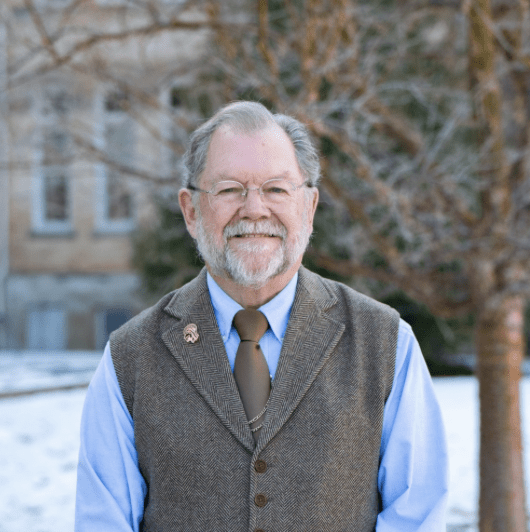 VIA USU.EDU
 Dr. David “Andy” Anderson
Nominee Andy Anderson, a principal lecturer and pre-health adviser in the Biology Department, has taught medically-related courses at USU for 43 years.
“I actually volunteered for the army,” Anderson said. “I didn’t have much direction until then, and the army trained me as a medical microbiologist at a place called Fort Baker.”
Anderson said his time in the U.S. Army helped shape his path into biology, and he received the GI Bill to help support him through his medical education.
“The student feedback is the real drive,” Anderson said. “I tell the students, ‘If you pay really close attention, you’ll see that everything is connected.’ Even to other classes that are even non-science classes — they’re connected as well.”
Anderson said he doesn’t plan on retiring anytime soon.
“I can, but the drive that I have is for students to wake up and see that it’s worth the trip,” Anderson said. “They need to know why they’re in these classes and why they’re even at Utah State University.”
James “Jim” Powell
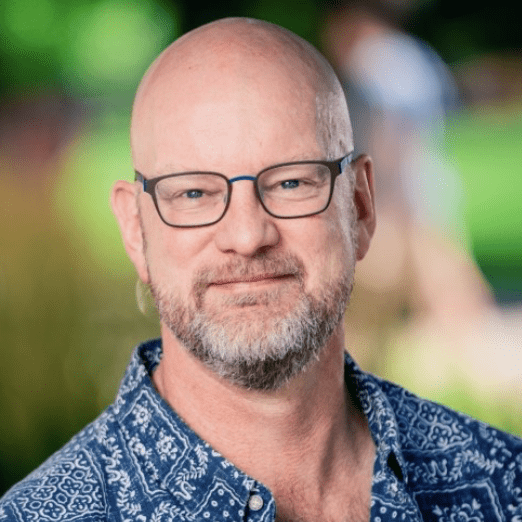 VIA USU.EDU
 James “Jim” Powell
Like Anderson, who discovered his passion through real-world experience, mathematics professor Jim Powell has built a career on connecting disciplines and expanding learning beyond traditional boundaries.
“I didn’t really realize what a unique, interdisciplinary atmosphere Utah State has,” Powell said. “It was not like the department heads were worried that I was wasting my energy teaching biology students, and if I co-supervised a PhD student in natural resources or biology, nobody batted an eye about it.”
Powell said as a child, he dreamed of becoming a mathematician, but he soon realized his interests spread far wider, inspiring his work with the Logan Forestry Sciences Laboratory and the National Science Foundation.
“I started studying with them, went into the field with them and helped with the lab research with them,” Powell said. “The more I did it, the more fascinating it was. There were all kinds of interesting questions that nobody had ever figured out how to address mathematically before.”
Claudia Radel
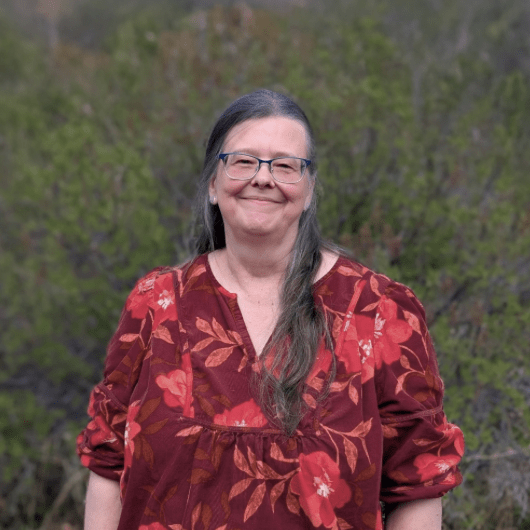 VIA USU.EDU
 Claudia Radel
While Powell’s work bridges mathematics and science, Claudia Radel’s career has taken an international approach, focusing on the intersection of environment, gender and development.
“I was probably growing up in a context of awareness about international and national environmental issues and challenges facing society,” Radel said. “I really kind of gravitated in my professional interest towards natural resource environmental challenges in the context of human well-being and socioeconomic development.”
Radel has spent consistent time in international countries helping teach, address and research problems related to climate change and community development.
“Being able to kind of think about the way we operate as a country and the way we run our economic systems or political systems or social systems with the comparison of having seen other ways that people organize these things helps me as an educator,” Radel said.
David Herrmann
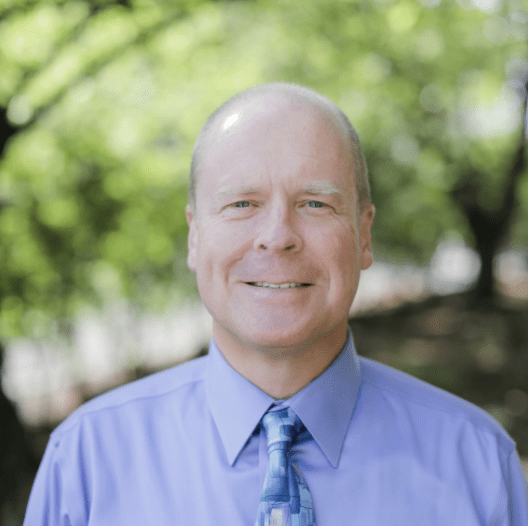 VIA USU.EDU
 David Herrmann
A similar emphasis on real-world impact can be seen in David Herrmann’s teaching, where students are encouraged to step outside the classroom and into global business environments.
“I came here and absolutely loved the classroom,” Herrmann said. “My whole philosophy in teaching is teaching by doing.”
To help students achieve this, Herrmann developed the Small Enterprise Education and Development SEED Program, which places USU students in developing countries to help aspiring entrepreneurs build their businesses.
“I think they’ve put close to 400 additional students through these three-month internships,” Herrmann said. “If I can put the students in a position like that, where they’re hands-on and they can see what’s happening, they can have a valuable learning experience.”
Ronald Gillam
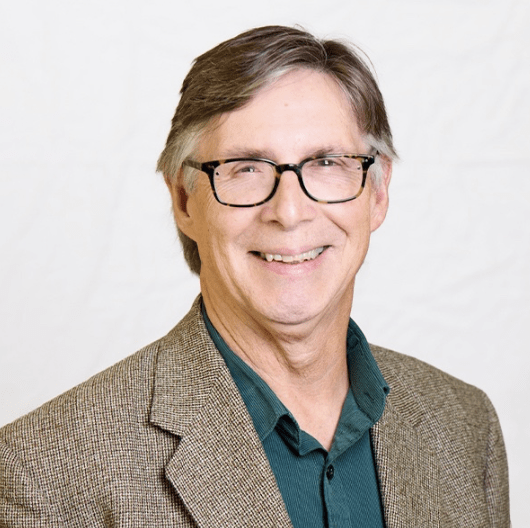 VIA USU.EDU
 Ronald Gillam
For Ronald Gillam, that impact is felt closer to home through research and direct work with individuals affected by communication disorders.
“I think my favorite part of teaching is the close relationships that you form with the students who work together in your lab, the close relationships you form with academic and research faculty that you collaborate with, and then seeing the kind of outcomes that your research has,” Gillam said.
Gillam created the Language, Education, and Auditory Processing (LEAP) Brain Imaging Lab at USU, a research lab focused on communication disorders.
“We’ve actually been able to acquire hearing aids for people who were not getting hearing aids because they didn’t have enough money for them,” Gillam said. “It’s pretty exciting to work with the people who profit from the research that you’re doing.”
Together, the nominees represent decades of commitment in educating that have shaped Utah State University. The winner will be announced April 1 at the USU Faculty Award Ceremony.