
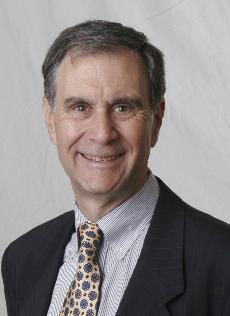
New USU VP named; to stress commercialization of innovative technology
The director of the Life Sciences Cluster in the Utah Governor’s Office of Economic Development (GOED) has been appointed to a restructured position as vice president for Strategic Ventures and Economic Development at Utah State University.
Ned M. Weinshenker, 63, with a doctorate in organic chemistry and broad experience in the start-up and development of multiple companies in the pharmaceutical industry, said he looks forward to furthering Utah State University’s co-leadership role with the University of Utah in developing opportunities for technology commercialization.
“This appointment marks the beginning of an exciting new era for the state’s two research universities,” said USU President Stan Albrecht. “It demonstrates USU’s strong commitment, as a leading research institution in the country, in developing intellectual discoveries and turning them into commercial ventures. It is Utah’s economy that will reap the benefits. We are very pleased that an individual of Dr. Weinshenker’s caliber will be heading up this work at such a critical period in our history.”
Weinshenker, whose appointment with USU begins July 15, will work from both a Salt Lake City and a university office in Logan. He will lead four units within the university including technology commercialization, the USU arm of the Utah Science Technology and Research initiative (USTAR), USU Innovation Campus and the Business Accelerator.
In his current position as director of the Life Sciences Cluster in GOED, he has had many opportunities to interact with university administrators and faculty over the past year in connection with the USTAR and Cluster initiatives.
“I look forward to this new opportunity,” Weinshenker said. “I am very enthusiastic regarding what I have learned about Utah State in the past year and what the university is poised to do. The potential for the future is extraordinary.”
He said he is particularly interested in building on USU’s strengths in personalized medicine, particularly in Alzheimer’s research and in nutrition. He said there is also tremendous potential for USU in microbial biotechnology research that could have significant national impact in terms of foods, bioremediation, waste management, bio-fuels and energy production.
He said USU’s future is bright, particularly in relation to commercial technology research opportunities, its world-renowned Space Dynamics Laboratory and the development of its Innovation Campus.
In all of the areas in which he will work, there is a strong correlation to life science disciplines, where his expertise lies. While in the governor’s office, he was responsible for galvanizing statewide resources in the life sciences for business development in biotech, medical devices and in pharmaceuticals.
Of particular interest to him will be to determine where there are gaps or overlaps between work currently under way by both USU and the U of U, especially as it relates to USTAR. The strength of the USTAR initiative, he said, comes from the state’s two research universities working in tandem and complementing each other’s research strengths.
The USTAR initiative is designed to help Utah keep pace in scientific research and technological advancements that directly translate to a stronger economy, high-paying jobs and increased tax revenues.
Conservative projections developed by the Bureau of Economic and Business Research suggest that in 30 years the USTAR investment will create 422 companies, 123,400 new jobs, and generate $5 billion in new tax revenues in Utah.
Although he was not at the ground level of the state’s USTAR initiative, he has worked at GOED to integrate the USTAR objectives with the Cluster initiative. He said USTAR has significant economic potential.
“USTAR is essential for us to stay competitive in the nation for world-class faculty and grant income,” he said. “Utah is not the only state committing to such support, and that is why it is absolutely critical that we support these areas that will help fuel economic development of Cache County and the entire state.”
He said personalized medicine alone covers a lot of ground from basic research to information technology infrastructure. There are numerous gaps that USU can help to fill from the early-discoveries stage to viable commercial endeavors.
“This is our chance to show the world that Utah has the expertise,” he said. “For now, my challenge will be to help bridge all these activities.”
At USU, the USTAR initiative will greatly enhance efforts already being taken to help commercialize faculty research, such as the expansion of USU’s research park, Innovation Campus, from 36 to more than 150 acres.
Weinshenker received a bachelor’s degree from the Polytechnic Institute of Brooklyn, a doctorate from the Massachusetts Institute of Technology in organic chemistry and a postdoctoral fellowship from Harvard University in the department of chemistry.
He was in senior management of several start-up companies in California including Alza Corp, Dynapol, Liposome Technology, Cyclex, Inc. and MBW Management Inc., a venture capital firm.
He was president and CEO of IOMED, Inc., Salt Lake City, from 1990-1998 and took the company through an initial public offering. More recently he was president and CEO of Pharmadigm, Inc., and MantiCore Pharmaceuticals, both of Salt Lake City. He is also on the board of Altea Therapeutics in Atlanta and is chair of the Leonardo at Library Square Foundation in Salt Lake City.