
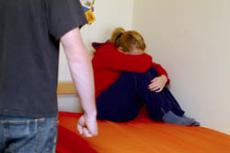
Students should look for sexual abuse warning signs when dating
October definitely means midterms and the Howl at USU, but students are also taking time to observe Domestic Violence Awareness Month.
Alpha Chi Omega and SAAVI (the Sexual Assault and Anti-Violence Information Office) are planning their annual “Painting the Town Purple” event by tying purple ribbons to the trees lining Main Street and 700 North in Logan.
Purple is the color designated for domestic violence awareness and this event is part of a national campaign, which the National Coalition Against Domestic Violence says is part of, “mourning those who have died because of domestic violence, celebrating those who have survived and connecting those who work to end violence,” as stated on its Web site, www.ncadv.org.
Domestic violence and assault are issues USU students could feel far removed from, but the patterns of abuse often start at this stage of life, during dating situations.
“If they are controlling, obsessive or jealous, isolate you from your friends or family, make all the decisions – get out. Break up,” said Utah Representative Scott Wyatt, who also serves on the National Advisory Committee on Violence Against Women.
Many women find themselves in an abusive relationship too late.
Wyatt suggested a way to detect an abusive relationship:
“If a girl is on a date, she should test the guy,” said Wyatt. “If he suggests going to a certain movie or place to eat, she should say, ‘I don’t feel like going to that one, how about this:____,’ just to see how he reacts.”
Despite warnings or preventative tactics, violent or abusive situations may occur. If students, teachers or community members have been raped or abused, there are many resources available.
The Women’s Center and SAAVI are on-campus resources that work in tandem with CAPSA (Community Abuse Prevention Services Agency) and law enforcement to help anyone who needs advice, counsel or even shelter.
Kathryn Monson, director of CAPSA, said they provide a 24-hour crisis telephone line and a 24-hour mobile crisis force to respond when needed.
Often times, women or men who are assaulted or abused are reluctant to report the incident because of fear of further abuse, economic situations, embarrassment or even guilt.
Wyatt said it is important for people to report to law enforcement or CAPSA as soon as possible.
“If you have been raped, you are covered in evidence and that evidence will disappear over hours and days,” he said.
Wyatt talked about cycles of abuse and strategies of rapists and said abusive people aren’t just abusive once.
To reinforce the need to report these crimes, Wyatt told of a serial rapist he prosecuted as Cache County attorney.
The rapist pretended he was a football player and interested in the LDS Church to get girls to come up to his room, after which he would assault the young woman, said Wyatt.
One of the first young women assaulted didn’t report to the incident to police, left town for a while, and when the rapist was finally caught, she read about it in the paper.
“After that, she came to the police and told her story and was one of our best witnesses in the case,” Wyatt said.
Not reporting a crime makes it so the same person can continue hurting others, he emphasized.
Last year, CAPSA reported 6,771 calls to their hotline, 321 victims sheltered and 494 requests from law enforcement to assist in domestic violence and rape situations.
Rachel Brighten, director of the SAAVI Office, said they just launched a new Web site, www.usu.edu/saavi, and are there to help anyone who finds themselves in these situations or knows someone that needs help.
The November 1994 issue of Glamour Magazine featured a cover story titled: “Why Rapists Go Free” and featured Logan for being notoriously weak on the prosecution of crimes against women.
Wyatt served as county attorney in Logan from 1995 to 2002 and said crimes against women became a campaign issue for him because the city had not done its job.
“Nobody decides at the age of 13 they want to be a rape prosecutor,” Wyatt said.
Today, Logan has a thriving network of volunteers and professionals ready to help when domestic violence, dating violence or assault occurs.
Phone Numbers: 24-hour campus hotline: 435-797-7273
SAAVI Web site: www.usu.edu/saavi
Campus Police: 435-797-1939
Emergency: 911