
The gift of life comes from you
Each day, many people sit on waiting lists hoping that soon their doctor calls telling them they have found a donor. But not everyone gets that call. According to OrganDonor.gov, a Web site to raise awareness about organ donation, 77 people will receive the needed organ donation giving them a second chance, but 19 people will die waiting for a transplant.
“The need for organs is so great that the amount of donations cannot keep up. We need more people,” Dr. John Worley, a general surgeon, said. The only way an organ can be given to someone on a waiting list is the donors have to agree beforehand that upon death, they will donate their healthy organs and tissue. Worley said most organs come from people who have died in accidents rather than disease or age.
Much of the body can be used to give a person a second chance at life. According to OrganDonor.gov, the organs of the body that can be transplanted at the current time are kidneys, heart, lungs, liver, pancreas and the intestines, all of which must be used within a few hours of death. Some of these organs can be donated before death, like a kidney, part of the pancreas and part of the intestines, but most of the time they are donated after death.
According to the Web site, tissue donation can include the corneas, the middle ear, skin, heart valves, bone, veins, cartilage, tendons and ligaments. These tissues, however, can be stored longer than the major organs.
Michael Murray, a sophomore majoring in math and stats education, said he thinks of his decision to be an organ donor this way: “If I were in a position where I had the need for an organ, I would hope that someone would be willing to donate also.”
He also said he thinks that sooner or later everyone will personally know someone who will need a transplant
Worley said he had a family friend who was in need of a heart transplant, and about that same time the man’s grandson was killed in an accident. His heart was donated to his grandfather, which gave him another 10 years of life.
“A lot of advances have been made for heart treatments, but the need is still great,” Worley said. Murray also has a family friend who is waiting for a heart transplant.
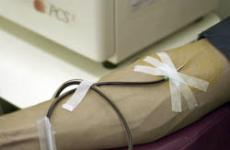
Besides organs and tissue, plasma and whole blood are also in high demand, Worley said. He now works at Western Plasma as the physician that gives the OK to people who want to donate plasma.
Lyndsey Hansen, one of the receptionists who works with Worley at the plasma center, said they can get as much as 905 grams of plasma from a healthy person weighing over 175 pounds. She said plasma is used primarily for making medicines. Plasma is where white blood cells are made, and they help keep you healthy. It’s rarely used for transfusions unless someone has an immune disease like HIV or AIDS, Hansen said.
Donating plasma usually takes between one and a half to two hours per visit, but those who donate are compensated for their time and plasma, Hansen said.
“We pay people as an incentive to come,” she said.
For Ben Thatcher, a sophomore majoring in mechanical engineering, donating plasma is a way for him to make what he calls “fun money.”
“It’s what I do when I want to do or buy something fun, like a bowling ball and shoes,” Thatcher said. He said for him there aren’t any physical side effects like when he donates blood.
Worley said the only thing to be concerned about is replacing those fluids that are taken. Since plasma replenishes in about 24 hours, it’s safe to donate twice within a seven-day period and up to four times a month, Hansen said.
“(Donating) is a good way for college students to make good money and do something worthwhile,” Worley said.
Whole blood, plasma, platelets are a different story. Worley said blood cannot be donated as frequently. There has to be time between donations, usually weeks, so the body can make more blood. Whole blood is used in medical emergencies as well as in surgeries like organ transplants. Worley said a single pint of blood can be used to save multiple lives.
To become an organ and tissue donor, Worley said people can contact a donor registry, and the Utah donor registry can be found at www.yesutah.org. For more information about donating blood or plasma, contact Western Plasma or go online to www.utahblood.org.
-dwkoecher@cc.usu.edu