
The students behind the Zoo
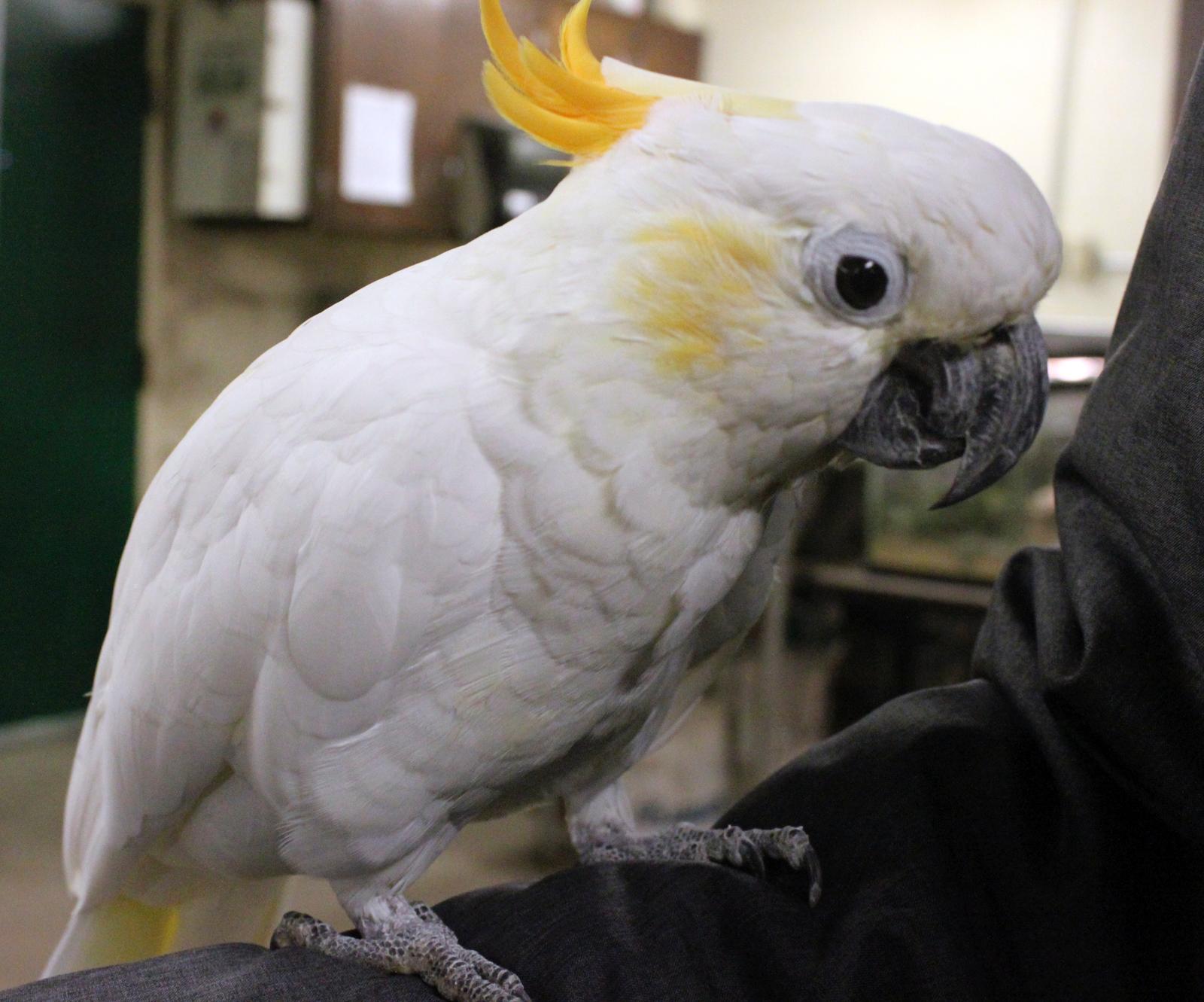
Zookeepers at Willow Park Zoo have a unique work experience every day as they make sure each animal is properly fed and cared for.
Alyssa Rice, a junior majoring in wildlife science, has been working at the zoo for about a year and a half. She began as a volunteer and has since moved up to a paid position.
“I do everything,” Rice said. “I scoop the poo, I feed the animals, I mow the lawn – I take care of the zoo.”
Her other duties include working the admissions booth and interacting with visitors.
“As I’m walking around, I’ll talk to visitors,” Rice said. “They usually have questions, or I can tell them about events that are going on. That’s one of my favorite parts, just talking to the visitors.”
The zoo keepers maintain the zoo and train some of the animals. The zoo is training six birds of prey under the supervision of Nick Anderson, a senior majoring in interdisciplinary studies in the College of Natural Resources. Anderson has been training birds of prey since a young age.
“I remember seeing the bird show at Hogle Zoo, and I just loved how graceful those birds were,” Anderson said. “I came home and told my dad as a little kid, ‘I’m gonna get one of those birds.'”
Anderson was introduced to falconry by an ornithology classmate. He adopted an injured red-tailed hawk and has been training birds ever since.
“I’d always fly my bird in the neighborhood,” Anderson said. “I called it urban falconry. It was cool because all my neighbors would stop by and see my hawk flying from roof to roof and then down to me, and it was a lot of fun. A lot of people would just stop, and you could see their eyes go wide.”
Anderson is training Willow Park Zoo’s birds of prey to become comfortable around people. They use the birds in presentations at schools, clubs and other organizations to educate people about the animals.
Anderson hopes learning about the species of birds will help people to appreciate and respect them.
“With a lot of these birds it’s all about education,” Anderson said. “Getting these birds out there and showing people – making them realize that they are more than just a bird in the sky. We build that connection between them.”
One of the birds, a bald eagle named Indiana, is often requested to be present at Eagle Scout Courts of Honor.
“Getting your Eagle Scout is a pretty big accomplishment, so people think it’s pretty cool to have a live eagle there,” Anderson said.
Because many of the birds were injured and unable to survive in the wild, the zoo takes care of them. They also keep imprinted animals – birds and other animals who have gotten too conditioned to humans, so they are unsafe in the wild.
The zoo owns other animals such as coyotes, bobcats, elk, reptiles, hyraxes, an albino porcupine and monkeys.
Like Indiana, most of the animals have names, such as the boa constrictor Stanley and the monkey Mon Chee Chee.
“The monkeys are probably one of the favorites, just because they’re usually really active,” said Karl Kallmeyer, a USU graduate who majored in Wildlife Sciences and has been working at Willow Park Zoo since 2004.
Feeding the monkeys is different from feeding the other animals because they need extra stimulation to stay physically and psychologically healthy. They are fed through a process called enrichment, which involves placing food inside various containers and hiding them around the exhibit for the monkeys to find.
“It’s a lot of fun to watch,” Anderson said. “I really like to take Coke bottles and put the food in there and lay them out in their exhibit, hide them a little bit and watch them go around and find them and unscrew the lid – or do the easy thing and bite a hole in it.”
Peafowl are also allowed to wander the zoo outside of exhibits.
“They’re ours of course, but they’re so territorial that usually once they pick their territory, they tend to hang around it,” Anderson said. “So these peacocks just roam free throughout the zoo.”
Zookeepers enjoy spending time with the animals and feeding them, Rice said.
“I love the daily interaction with them. We go in their exhibits and we get to see them really close up,” she said. “We get an experience that a lot of people don’t get. It’s that behind the scenes that I really love.”
Recent changes in the zoo include a rotating schedule for the keepers so they have a chance to feed different animals each week instead of focusing on one, Rice said. Experts for each still train their specific animals.
Working at the zoo gives employees a chance to learn unique skills, but they have to be prepared and qualified to work with the animals and keep them happy and healthy.
“The biggest thing when dealing with animals is you want them to feel safe and comfortable,” Anderson said. “If they feel like you’re encroaching on them and they’re nervous, they’ll defend themselves – kind of like a person. So you just want to make them feel as calm and safe as possible.”
Although the Willow Park Zoo used to be run by donations, it recently underwent an administrative change. It is now run by a zoo board instead of the city. This caused some major adjustments to the zoo, the most noticeable of which is the admission price: $2 for adults and $1 for children.
They have also hired a new director, who plans to use the funds from admissions and the gift shop to renovate exhibits and bring in new animals. Some animals they have discussed buying include otters and reindeer, Rice said. The zoo recently bought two silvery-cheeked hornbills, which will be brought to the zoo soon.
One of Kallmeyer’s pet peeves is when students at USU don’t realize they have a zoo so close to the university. It is a great date night activity and is a good place to get off campus, he said.
“We’re really trying hard to make a difference,” Rice said. “We need your support to help us do that.”
– zollinger.heather@gmail.com