
University to open a hun in downtown Salt Lake City
Salt Lake City will be seeing more Aggie Blue Oct. 1 as Utah State University opens an office downtown, President Kermit L. Hall announced last month.
Progressive increases in tuition costs and cutbacks in programs and spending has demonstrated that USU can no longer depend on state funding. The downtown office will create new possibilities, serving as a springboard for USU’s economic development and fundraising in the Salt Lake area.
“It is a tremendous opportunity to move our efforts forward,” Vice President of University Advancement and Development Joyce Albrecht said of the new office, noting that nearly half of USU’s donor organizations’ headquarters are in Salt Lake City. Those offices include several of the Eccles foundations that regularly donate to USU.
“We need the private funding,” Albrecht said.
While it is not common for a university to establish a development office outside of the university, “we do what we need to do,” John DeVilbiss, executive director of public relations and marketing, said. DeVilbiss said he is excited about the increase in media coverage USU may get if they have a representative permanently in the capital.
The 1,601 square-foot office will house from five to seven full-time employees, with desks for administrators and USU executives when meeting in the Salt Lake area. Hall will also be assigning a vice president, who has not been announced, to work there permanently.
Albrecht said she hopes to strengthen alumni chapters in the Salt Lake area by strengthening their connection with USU. Chapters will also be able to hold area meetings in the new office.
“When we strengthen our alumni, we strengthen our university,” DeVilbiss said. DeVilbiss said he hopes to connect and reconnect with lost alumni and build up area chapters.
Sharon E. Larkin, of Holladay, is the president of the Salt Lake County USU alumni chapter. Larkin said she is looking forward to help in fundraising by helping to make connections through third party introductions between an alumnus, USU representative and a possible donor.
“Mainly, we’re there to give each other resources. This [the office] should be a really exciting thing for representation,” Larkin said and hopes the new office will “bring people into the family of USU.”
Larkin graduated from USU in 1974, and said she is proud of her “True Aggie” status.
“I’d like to thank President Hall’s commitment and the generosity of USU alumni, Dell Loy Hansen and Jonathan Bullen, for making this Salt Lake space available,” Albrecht said. She credits Hall for the idea of having an office downtown and making it a priority.
“This [Salt Lake City] is where most of our Alumni reside and so it makes abundant sense for us to be closer to them. By strengthening our relationships with alumni and friends, we cultivate development opportunities,” Hall said in a press release.
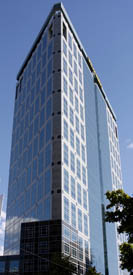
Hansen and Bullen are USU graduates and business partners in Wasatch Properties and owners of the Wells Fargo Building on Main Street, where the new office will be.
Possibilities for better educational and research opportunities with the University of Utah also exist. Innovation Campus is similar to the University of Utah’s Research Park. Both universities have doubled their research revenues in the last decade, making expansion possible though the cooperation between the two universities now is marginal.
“Innovation is a microcosm of what USU can do for Utah, when you have the research, that inspires the innovation,” DeVilbiss said, adding that Salt Lake resources could allow USU to have more opportunities in research.
Almost 40,000 alumni reside in Salt Lake City, the office for university advancement said in a press release.
-natandrews@cc.usu.edu