
USU looking at equity options
Utah State University is currently negotiating three agreements with companies in the engineering field to license technology and receive equity.
Since the passing of Amendment 2, which allows research universities to own equity in start-up companies spurred by the universities technology, USU has been able to look more closely at such options, said Steve Kubisen, vice president of the Technology Commercialization Office (TCO).
The university, however, can not simply buy equity in companies. The equity comes through the license of intellectual property, rights to either be used by a company or to start-up a company, Kubisen said.
Last year, three start-up companies developed from USU technology, two in the area of agriculture and one in engineering. The TCO negotiated license agreements with the companies, two of which included equity donated to the university, Kubisen said.
Above and beyond the money to be made by the university, Kubisen said he feels the passing of Amendment 2 will help economic development in the state of Utah. Not only does it communicate to the business community that there are opportunities in Utah, but 20 times out of 21 a start-up business will stay in the proximity where the technology was made, Kubisen said. When technology is just licensed, it is likely to go to an out-of-state company, and therefore not help Utah’s revenue.
“It really allows us a nice mechanism to help grow the local economy, to provide some funding back into the university and to develop more technology,” Kubisen said.
Students should be especially interested in this, Kubisen said, because there is currently a job shortage for graduating students in Utah and more start-up companies should help the situation. Kubisen said many start-up companies are started by undergraduate and graduate students.
“It is a tough road, but we have a team of experienced entrepreneurs in our TCO that can help coach young entrepreneurs through the process,” Kubisen said.
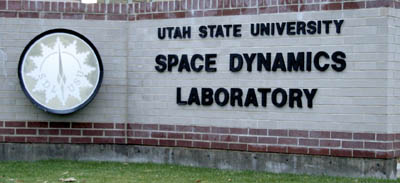
After passing Amendment 2, speculation rose as to the future of the Space Dynamics Lab. Last year, SDL produced $70 million of revenue and currently employs about 400 individuals, Kubisen said. However, Kubisen said he sees the possibility of SDL eventually becoming a private company in which USU could hold equity as very unlikely.
“SDL is sort of like a business, but to spin it out isn’t in the cards because there is such a synergy between the research and the university,” Kubisen said.
Jeff Robinson, a mechanical engineering graduate student who works at SDL, said he agrees.
“I really don’t anticipate SDL to break off from the university because we receive so many benefits from our affiliation,” Robinson said.
SDL is a not-for-profit organization and therefore receives tax breaks and is able to receive government contracts and grants, Robinson said. Also, engineers are able to work with professors and gain experience while the university gains recognition and credibility from their projects. Both sides benefit greatly from their association with each other, Robinson said.
SDL Deputy Director Harry Ames said while Amendment 2 does create interesting possibilities for the university and other companies, SDL itself is a research entity and does not personally license out technology. External licensing connections are made through the USU Research Foundation, which looks at SDL material and decides what could be licensed out.
Kubisen said he hopes that Amendment 2 will encourage those at SDL to look for even more opportunities to spin technology off into a company.
“Equity, in the long run, could have a greater economic impact on the university than licensing revenue alone, but usually it does not,” he said. “Part is luck in getting equity in the right company, part is the right technology with broad market application and part is the right
management team.”
Kubisen said he is grateful Amendment 2 passed in Utah. A similar amendment did not pass in Arizona, which he feels will hurt the state a lot. By voting ‘yes’ on Amendment 2, voters were not only helping universities, but promoting economic development with technology as well, he said.
-hilaryi@cc.usu.edu