
USUSA strikes proposed bill to create “universities studies” senator position
An amendment to create a “University Studies” senator to represent the current 10% of students with an undeclared major was proposed this past week to the USUSA.
Within the preamble of the constitution, it explains its purpose as supporting Utah State University students through “academic representation, uplifting activities, and ensuring a voice.”
“This clearly states that for the betterment of each student, the USUSA must provide academic representation. However, University Studies students are not in an official college, and while they pay tuition, go to class, and are academically involved the same as everyone else, but they have zero academic representation or say,” Colin Hastings, student advocate vice president, wrote in a message to The Utah Statesman. Hastings is the primary sponsor, author and originator of the bill.
While this proposal was a new senator position, there would have been no changes to student fees.
“We are losing three senators, so we can use the money we save to give [the new senator] equal scholarship and budget,” said Max Alder, Executive Vice President and chair of the Academic Senate.
Because of the college merger, five senators have merged into two new colleges. There are three senators now working together with the College of Arts and Sciences and two senators working together for the S.J. and Jessie E. Quinney College of Agriculture and Natural Resources. They were elected before the merger so now they are grouped together for the year.
“We didn’t want to release any of them or force any of them out. We decided to keep them on in honor of what they were elected for,” Alder said. “Those three senators have to meet with one dean altogether, and their councils have essentially combined into one big council. I’ve been really impressed with how they’ve adapted and made the best of it.”
After this year, each college will only have one senator, which means there is leftover funds from the budgets and scholarships of the three lost positions that need to be allocated for the next year.
Where the funds are being reallocated is still being discussed. Each senator also gets the same budget for their college, regardless of their college size.
With the three senators gone, according to Hastings, the change would be easier to make now.
“The budgets and scholarships already exist, and if those positions go away, we’ll have to reallocate those funds somewhere. It’s much simpler to transfer a budget to a new senator now than to carve it back out later,” Hastings said in an interview with the Statesman.
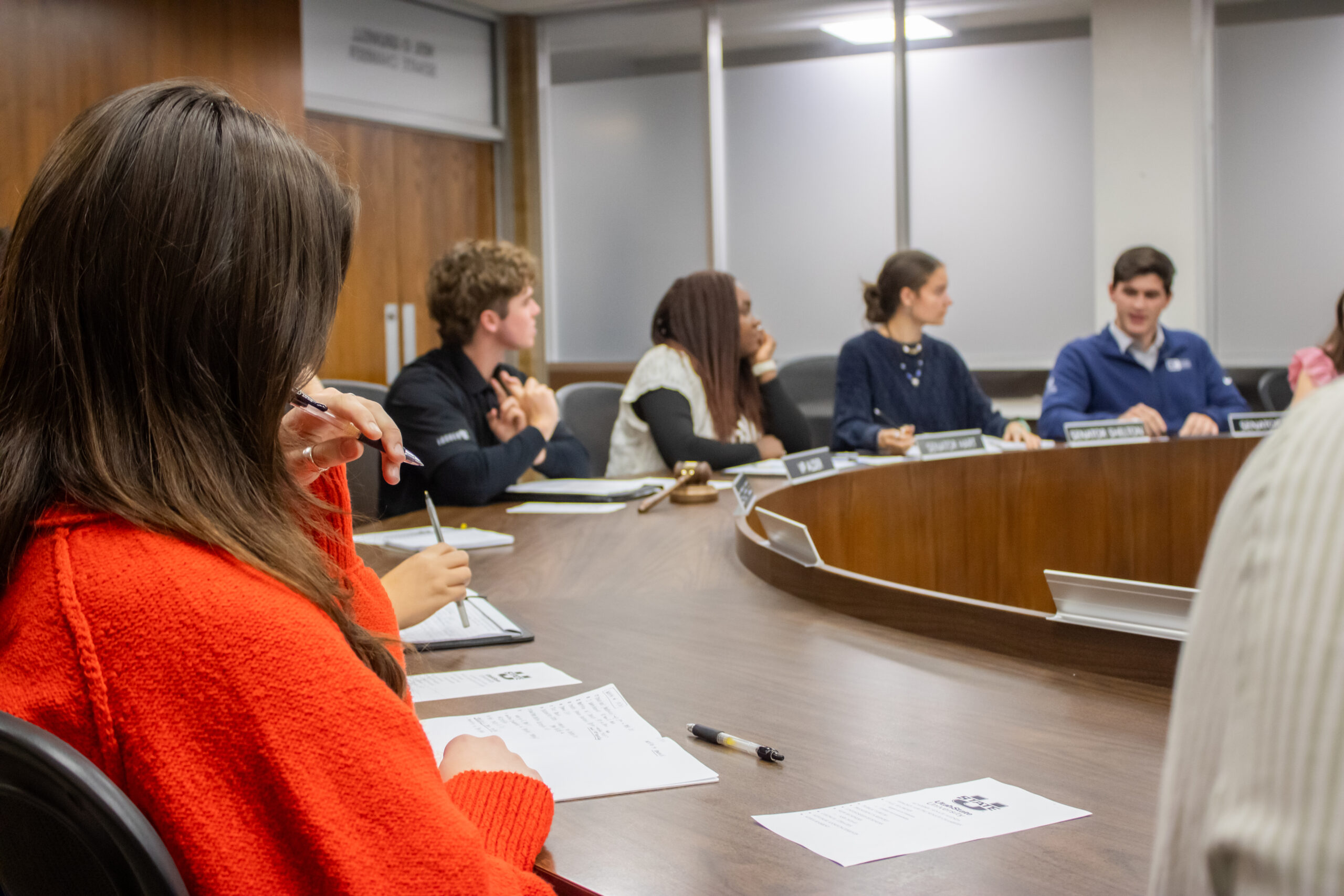
To pass, the bill needed a two-thirds vote from two out of the following three bodies: the Executive Leadership Board, the Logan Executive Council and the Statewide Executive Council.
“[The bill] passed the executive leadership board unanimously, however it failed 3-1 on the Logan executive council … using a secret ballot,” Hastings wrote.
The bill then went to the statewide council, which is made up of each USU campus’ statewide/region vice presidents, the student advocate, the executive vice president and the president, where it was not passed in a three to five vote.
The USUSA Logan Vice President Po’okela Yamakoshi-Sin sits on the Logan council and did not vote in favor of the bill.
“I felt like it was a rushed process with the loss of our senators and our college mergers. I believe there’s a different approach we could have done. Obviously, I think this is a very important manner for our students and their representation itself,” Yamakoshi-Sin said. “While the bill didn’t pass, I do think this is a valuable time to reassess how we can restrengthen our process within student government and determine how we can reallocate these resources. We’re here to enhance the voices of USU and all the students. However, I think this opens up a door. I don’t think this is a failure in any way. I’m glad our Executive Council is thinking about these concerns.”
Yamakoshi-Sin went on to express a statement of peace and encouragement.
“It is critical to realize that this was a conversation, not a confrontation, with our individuals. It’s constructive criticism in a way,” he said. “It’s opening dialogue and collaboration for more opportunities with how we represent these underrepresented students in the best way.”
Although the senate and council are separate bodies and the senate does not vote on constitutional changes, Alder said he wanted to include their input, and during the vote on Oct. 7, Alder voted in favor of the bill.
“I collected feedback from the Academic Senate over email. I sent one email asking for critiques and thoughts about the legislation and another asking for a yes, no or abstain vote. I received three yeses, two noes and four abstentions — so the majority voted in favor, and that’s how I voted when representing them,” Alder said.
In an email to the officers who were voting, College of Humanities & Social Sciences Senator Ryley Cottrell, shared her thoughts on the bill.
“After giving this proposal a lot of thought, I am opposed to this new position for the following reasons: Academic Senate consists of college senators, not department senators. If we create this position, who is to say we can’t create senators for organizations such as Honors? Additionally, the Vet Science college does not yet have a senator. It seems odd to create a senator for a department over a college,” she wrote. “College events are open to all and I feel a separate week just for exploratory events would be unnecessary. I am not wholly opposed to created academic representation for undeclared students. Their voice matters and they do deserve to be heard. However, I feel we could go about it in a way that doesn’t create a whole new position.”
While the proposal for a new University Studies senator ultimately did not pass, there are new conversations happening amongst the USUSA officials with how to reallocate resources and follow the constitution’s promise to be, “established for and by the students for the betterment of each student’s academic experience, student life, and the University community.”