

Utah Conservation Corps celebrates 25th anniversary
In 1999, a group of Logan residents had the idea to create an organization to protect their local environment. Now, over two decades later, their idea is celebrating its 25th anniversary as a leading conservation organization in northern Utah.
Officially beginning its work in 2001, Utah Conservation Corps is a statewide environmental conservation program that aims to protect and improve the vast natural resources of Utah. The organization is based on the Logan campus of Utah State University and garners hundreds of volunteers every year, many of whom are USU students.
As part of the larger AmeriCorps organization — a federal program that helps fund and run local projects such as UCC — the corps works on a case-by-case basis to determine projects that will best serve the current needs of the state. They then send volunteers to work in those fields alongside trained professionals and environmentalists.
There are two volunteer pathways used by the corps: members either join a crew of UCC volunteers to work on a specific site, or they are assigned to an individual placement, where they will be sent alone to work with federal agents or preexisting organizations. According to the UCC website, volunteers commit to a certain amount of service time ranging from a few months to a year and will receive a cost-of-living stipend while they’rein the field. Students who volunteer with the corps are also eligible for an education award, which is a monetary grant that goes directly to schooling costs.
UCC also hosts local nonmember volunteer opportunities through organizations such as Urban Community Farm.
According to the executive director of USU’s Center for Community Engagement and UCC co-founder Sean Damitz, these volunteers have been hard at work across the state this year, having started and completed several successful endeavors in 2025. Notable among them was a project reducing fuel at Bryce Canyon National Park.
“The fuel by these structures was something built up for years and decades — really good about being able to get to that,” Damitz said. “It gave our members a lot of great workforce development skills.”
Volunteers began work on the project last fall and were funded by the National Park Foundation.
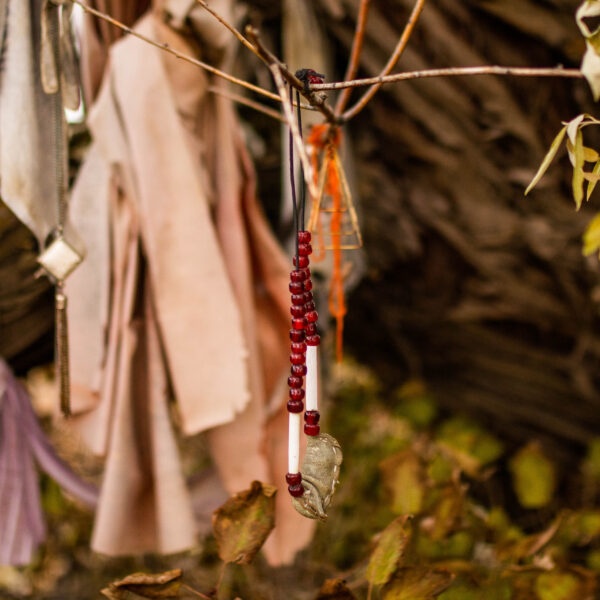
Additionally, UCC has spent the last several years working with the Northwestern Band of the Shoshone Nation at the Utah-Idaho border, helping the community restore historic lands damaged in the 1863 Bear River Massacre.
 STATESMAN FILE PHOTO
 Beads hang on a tree near the Bear River Massacre monument.
“What they’re doing is they are trying to — both from an ecological and a cultural standpoint — restore the area to where it looked and how it functioned pre-settler, pre-colonial,” Damitz said.
For this project, the crew’s main job is to clear out invasive plant species that have taken over the land.
“There’s also been a tremendous support from the community,” Damitz said of the project. “They’ve had planting days out there. I think the last two or three years, in the late fall, we’ve gotten hundreds and hundreds of volunteers all throughout northern Utah.”
Although UCC is based out of northern Utah, UCC AmeriCorps program coordinator Temis Taylor explained it has volunteers in every corner of Utah, allowing its reach to extend far beyond Logan.
“We have members that are serving across the state,” Taylor said. “They run programs like the Rakes and Shovels program and the Harvest Rescue program. We have members serving at Ogden Nature Center, doing environmental education there, Red Butte Garden, Moab Community Gardens.”
This year, UCC is celebrating its 25th anniversary. When asked what has made UCC able to withstand a quarter of a century of service, Damitz and Taylor had a clear answer: the people.
 STATESMAN FILE PHOTO
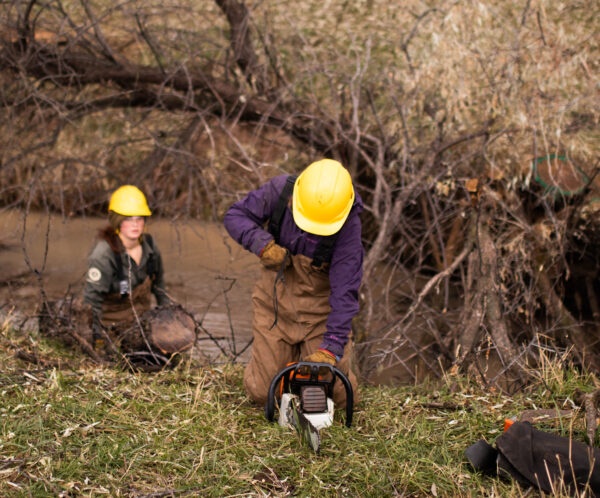
 Anna Smoloen starts up a chainsaw.
“These are incredibly hardworking young people who come — not all of them come from Utah. We get people from all across the country. They come here because Utah is an incredible place. They want to give back to the planet and to support the outdoor access that we have here in Utah. That’s pretty amazing,” Taylor said.
The organization also credits its partnership with USU for its enduring presence in the community.
“We have research in our backyard. We are connected to statewide campuses and the extension program, and not a lot of corps have that,” Taylor said.
According to Damitz, a large number of volunteers for the corps are students who work summer crew positions, gaining on-the-job experience in conservation. He claims many of UCC’s volunteers ultimately take on conservation projects of their own, such as USU’s Aggie Blue Bikes program.
“That’s been really great to see a lot of students go through the pipeline and to help them get through their college experience and graduate with some really good in-the-field experiences,” Damitz said.
Moving forward, Damitz and Taylor hope UCC will continue its work for another 25 years and beyond.
“I think we both hope that this corps will outlast us — that it will establish a durable, sustainable program that’s able to go on into the future,” Taylor said. “We are pivoting to meet the needs of the state, to follow our funding opportunities and to give our members the best experience possible.”