
Utah State Wrestling Club hopes for legacy, inclusion
After several years of on-and-off activity, the Utah State University Wrestling Club has returned with a focus on creating something more permanent than past iterations. Current members say the goal is not just competing but building an organization that continues after its current leaders graduate.
“One of the things I’ve thought a lot about is sustaining it,” said club president Matt Scheer, a junior majoring in psychology. “I want it to be around still when I’m gone, and I think part of that is making it more than just our team but making it everybody’s.”
Interest in reviving the club began when several students independently contacted the university’s club sports coordinator asking whether a wrestling club existed. After connecting, the group organized during the spring 2025 semester and officially launched practices in the fall.
Scheer said a key focus has been creating a structure that allows future members to take ownership of the club.
“It’s not Matt’s team, it’s not just his team, it’s all of our team,” Scheer said. “I think that we’ve been getting there, and I’m really excited to see that.”
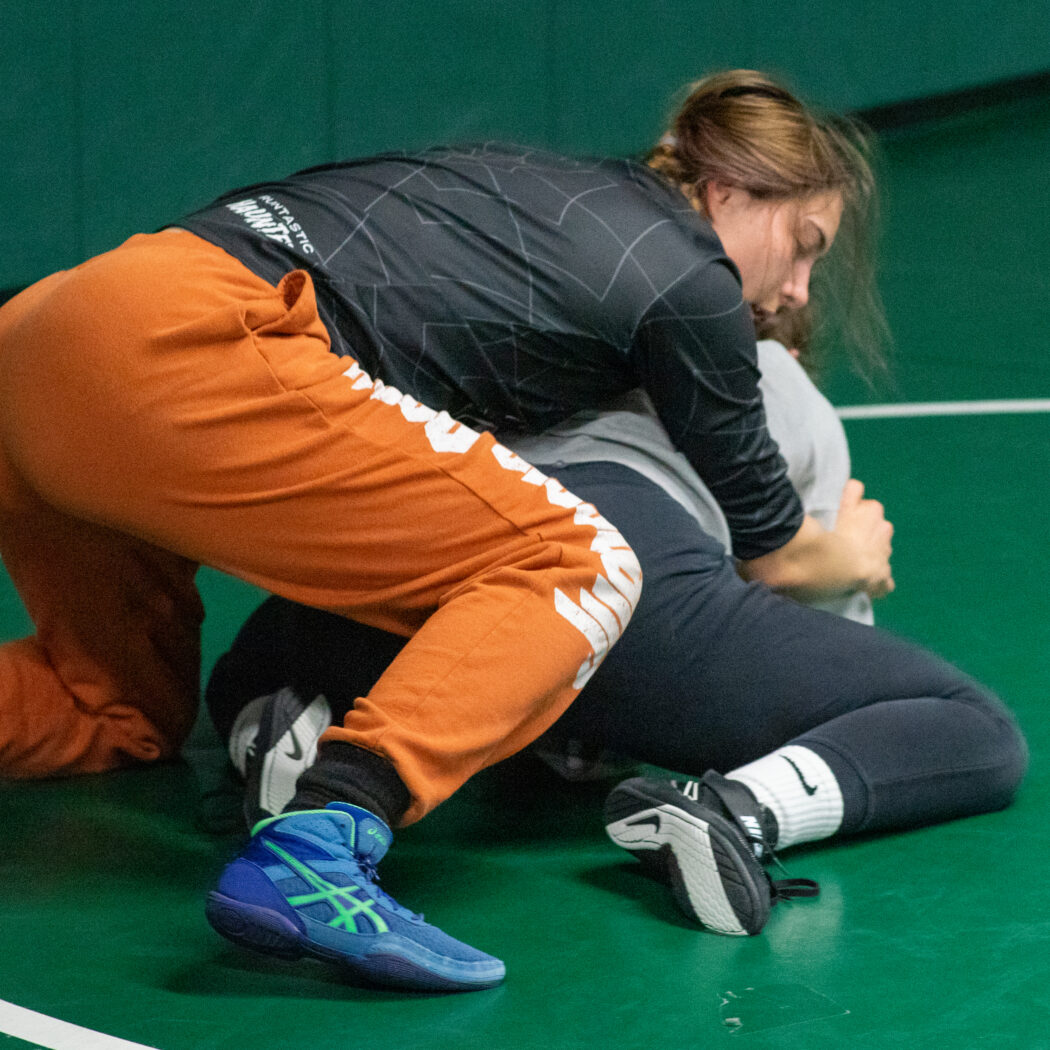
The club currently has about 25 active members, though participation fluctuates as students balance academics, work and other commitments. Members range from longtime wrestlers to students who had never wrestled before joining the club.
“Our vision was to create an environment where people could come and wrestle. A lot of us have been wrestling for a really long time,” Scheer said. “We even have some people who’ve never wrestled before and are coming out, which is really awesome.”
Part of the motivation to restart wrestling at USU stems from the university’s wrestling history. The campus’s George Nelson Fieldhouse is named after George “Doc” Nelson, who established Utah State’s original collegiate wrestling program in 1923 and coached teams to multiple championships.
“One of the things that I love about Utah State history is that we actually should be a really good wrestling team,” Scheer said. “It’s just kind of sad that for the longest time, we didn’t have a wrestling team, and so I would love to see it be something that continues.”
Practices are held multiple times per week, often in collaboration with local wrestling organizations and coaches in Cache Valley. Those partnerships help accommodate wrestlers of different skill levels and grow the community.
“When I’m feeling overwhelmed and my motivation is kind of getting down, but I have my teammates texting me, being like, ‘Hey, are you coming to practice tonight? We want to practice with you’” — that helps give me motivation,” said Jessica Harrison, the club’s co-vice president.
As club leaders look toward the future, they say long-term sustainability depends on who feels welcome and represented within the program. Building a team that lasts beyond its current leadership means creating space for wrestlers of different backgrounds and experience levels to participate and stay involved.
“One of my biggest goals for the club is just recruiting more women,” Harrison said. “Right now, we have a few women who are registered to compete, which has been really awesome, but where women’s wrestling is kind of a newer sport, that was one of the things that I wanted to see.”
Harrison said expanding who feels welcome is part of a broader effort to build something that extends beyond the current roster. Creating a space for wrestlers of different skill levels and experiences helps establish a culture that new members can step into, even as founding officers prepare to graduate, according to Scheer.
“If it’s still here when we’re gone, then we’ve done what we set out to do,” Scheer said.
For members of the wrestling club, success this season has been measured less by competition results and more by whether the organization has created a place on campus where wrestlers can continue to train, connect and belong.