
Winter camping the safe way
Winter camping isn’t for beginners.
At least, that’s what Kevin Kobe of the Outdoor Recreation Center says.
“Winter camping is like a whole new planet,” he said. “Campers need to have a heightened awareness to have a good time.”
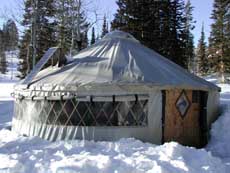
Kobe described winter camping as “graduate level.” For students who would like to be initiated into the experience, a great idea is the Yurt. The Yurt is an eight-person hut maintained by the ORC which can be rented by eight people for $12 apiece. It is equipped with a wood stove and “takes the edge off winter camping,” Kobe said.
Another tip for first-timers is to plan the trip later in the season, ideally March or April, Kobe said. The sun angle is better, the days are longer and the snow pack will be more stable.
Several things can be done to stay warm even in extreme temperatures. Clothing is an important beginning.
“Cotton is a killer in winter – avoid it at all costs,” Cache Valley resident and Scout Scott Wyatt wrote for a Scouting instruction meeting.
Wool, although a step up from cotton, is also a poor choice. Synthetics such as polypropylene, piles, and dacrons absorb less water and will keep the wearer dry.
The clothing should have a loose fit so as not to restrict blood flow. The way insulating clothing keeps a person warm is by trapping air. The tighter the clothing, the less space available to trap air, Wyatt wrote.
Because a camper will not always be mobile, it is important to layer clothing.
“You need to be able to take off clothing so that you can sweat and not get wet,” he wrote.
At least one change of clothing is also needed.
Last of the attire is a hat.
“Fifty to 75 percent of your total body heat will escape from the head if someone is not wearing a hat,” Wyatt wrote.
Because the body will not have to pump so much blood to the head, toes and fingers will be warmer also. Wear the hat all through the night.
To stay warm and have energy, campers need to pay close attention to what they are eating.
Kobe compares good food to a good fire. Kindling is necessary to start the fire, but little use would come from a fire made only of kindling. Sugary foods are good for energy boosts, but don’t last. Kobe recommends “big log” foods that mix fats and carbohydrates well.
One of his favorites is called a Bagel Bomb. After frying bacon or sausage in a pan, the bagel is toasted in the grease. A couple of thick slabs of cheddar complete the big-boost, breakfast sandwich.
Hot chocolate is a good way to start or end the day. Add a big chunk of butter and a big chunk of peanut butter and make it a cup of Power Cocoa.
“It keeps you going,” Kobe said.
A late night snack can keep a camper warm through the night.
“Some people stash a Snickers bar in their sleeping bag to eat at three in the morning,” Kobe said.
Even with the 3 a.m. boost, a camper will never stay warm without a quality sleeping bag. Wyatt recommends a tarp and a sleeping pad between the bag and the ground. The opening of the bag should be sealed. If a bag is not adequate, stuff it into another.
“Two mediocre bags will work well as a great bag,” Wyatt said.
Kobe keeps warm by sleeping with a warm water bottle inside the lower half of his bag.
One precaution of being in the mountains during winter is the possibility of avalanches. At an avalanche safety class last Thursday, Toby Weed of the Forest Service Avalanche Forecast Center, said that 93 percent of avalanches are caused by their victim.
Avalanches can be prevented if people analyze the terrain before they venture. Slides most commonly start on slopes with a 30 to 45 degree angle. Trees supply an anchor and can be safer than the open; however, they are not immune to avalanches.
Many avalanches start during or just after storms. Cold, shady slopes are more prone to avalanches because they are likely to have weak layers underneath their surface.
The best chance of a victim surviving is within the first 10 to 15 minutes. A pack equipped with food, water, a shovel, beacons, and a snow saw make it more possible to rescue or be rescued.
Call 797-4146 or check online at www.avalanche.org for an avalanche advisory updated every morning.
The ORC is happy to explain more about avalanches or show students good places to camp, Kobe said. They also have ideas for prolonged excursions such as building igloos.
“Winter is a magical time to be outdoors,” Kobe said.
-ashschiller@cc.usu.edu