
Poop, the other energy source
Animal waste can be more resourceful than some might think. Conly Hansen, a Utah State University professor, has found a great use for waste by experimenting, and finding a way of turning it into electricity.
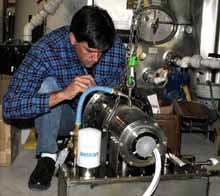
An induced blanket reactor developed by Hansen actually turns swine manure into power. Hansen said he has been working on this project for decades trying to solve the major problem of farmers getting less and less money from their animals.
“It’s the right thing to do. Everyone wins,” said Kevin Pack, a consultant for technology transfer.
Agriculture is tending more to be large family-run farms rather than smaller individually run ones, and farms continue to become larger, Hansen said. Farmers cannot compete and must have another way to earn money.
Hansen said the blanket reactor is a type of anaerobic digester that captures anaerobic bacteria, which is a slow-growing type of bacteria. The bacteria eats certain materials. The reactor is a means of capturing bacteria to hopefully stay, live, and thrive, in a layer with numerous amounts of bacteria. The reactor generates bacteria, making the material into methane, which is like a natural gas, Hansen said. The methane generates heat and electricity from any kind of organic waste material.
Hansen said hundreds of people have been working on this project, many of which are USU students. Ed Watts, a consultant for the project, said it has finally been successful within the last couple of weeks. Watts said people in the Benson area are using the power that is being generated.
It’s a renewable energy source, Watts said. It captures the methane gas and uses it to generate electrical power. Watts said it also allows farmers to control and generate waste.
Carl Hansen, a USU research scientist who has been working on this for four years, said he thinks this will take care of some of the problems in the dairy and hog industry. Carl said it gives farmers the opportunity to make a byproduct they can sell and to get rid of some of the odors on the farms caused by the waste.
Watts said the farm is a 650-animal-unit farm, which means 1,000 pounds of animals are contributing their waste. Conly said the reactor is rated at 80 kilowatts per hour, with payment of about 6 cents per kilowatt.
Pack said doing environmentally good things is what makes this project different. Pack said it will reduce volatile solids, and reduce the odor. There are a lot of energy benefits and Pack said it will help to better commercialize the farm industry.
“We’ve got high hopes. It’s still new technology,” Carl said.
Utah Power is currently paying for the power provided to locals by the experiment.
-amysueh@cc.usu.edu