
Cache escapes with no red days
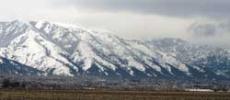
After winter air pollution levels nearly warranted EPA action last winter, Cache Valley escaped this winter without notching a single red day.
“Mother Nature really did her part this year. She provided enough storms and air flow to keep us out of trouble,” said Grant Koford, an environmental health scientist for the Bear River Health Department.
Red days are part of a program used by the health department and throughout the state to define the amount of air pollution present.
Each winter, Cache valley initiates the “Red, Yellow, Green – Keep it Clean” program to alert valley residents of the dangers of air pollution and what to do about it.
“We try to help people cut down on the amount of pollutants they put in the air because people can react badly to it,” Koford said. “It also keeps us out of trouble when it comes to the EPA standards.”
The program uses the red, yellow, green system to help residents understand what they can do to help cut down on the pollution.
Green: It’s OK to drive and spend time outdoors.
Yellow: Make arrangements now to reduce your driving and outdoor activity. Consider carpooling, riding a bus, walking or biking.
Red: Go outside and drive only when necessary. Don’t leave your car idling long to warm up or while waiting in long lines for drive-through windows. Carpool or ride a bus. If possible, work from your home and avoid outdoor activity.
Winter brings an interesting situation in Cache Valley since clear skies and cold weather trap pollutants in between the mountains.
The Utah Department of Environmental Quality explains the situation on its Web site: “A valley is surrounded on all sides by mountains. The right meteorological condition – cold temperatures, no breezes – cause the cold air to become trapped.
“Because the air isn’t moving, the pollution also has nowhere to go and it begins to build up. It is held in place beneath a layer of warm air.”
The trapped pollution includes ozone, or smog, as well carbon monoxide and particulate matter.
These pollutants can affect the respiratory process and other health function, according the UDEQ Web site.
The state and the Bear River Health Department have been concerned with the effects of inversions when it comes to air pollution.
“Around 1983, we asked the state to put some monitoring equipment in the valley to measure the impact. For quite a while they didn’t see anything, but we convinced them to give it one more try,” Koford said.
“Those other years were unusual, but the final try, we got the readings we were expecting. We realized we needed to do something to fix the problem,” he added.
Since then, both groups have been trying to rectify an ever-increasing problem with different programs.
“Our biggest struggle right now is we often have to rob Peter to pay Paul. Unless we violate the EPA standards, there isn’t designated funding to take care of the problem,” said Koford in regards to where they get the funding for their programs.
The Bear River Health Department often has to scrimp and save and use portions of others programs’ funding to support the prevention methods, Koford said.
In addition to the funding, the other issues involve the real treatment for the problem.
“We are putting a Band-Aid on the problem. Inversions will happen regardless and what we are trying to do is make it so it doesn’t affect us as much,” said Koford. “We don’t have perfect solutions right now, but we are researching to find out what to do for something permanent.”
Some of those solutions might include restricting the type or number of motor vehicles allowed to operate or more emissions testing, according to the UDEQ Web site.
In the past, Cache Valley has had severe problems with pollution levels.
The Department of Environmental Quality reported an incredible 25 red days for the 2004-05 winter season, which includes Nov. 1 to March 1.
“We are doing everything we can to help stem the tide. We feel it is our responsibility to help protect the citizens of this valley in regards to the environmental health,” Koford said.
-nebutler@cc.usu.edu