
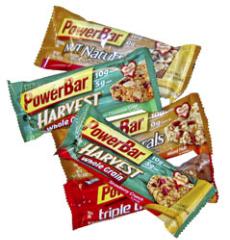
Packages of pure power?
In a world where many students juggle classes, a full-time job, studying and a social life, sometimes the best meal is one on the go.
The stores are full of fast, fulfilling meals claiming that replacing a meal with one of their “super bars” will fill you up while helping you lose weight almost effortlessly.
What they don’t advertise is that these bars are not meant for everyone and can sometimes have harmful effects on the consumer.
Dantley Young, a senior in exercise science, is an endurance athlete focusing on performance triathalons who works out for between two and three hours every day. Young said an energy bar is part of his everyday diet.
“Cliff Bar is what I like,” he said. “In my experience, those are the ones that work best for me.”
Young said he eats at least two Cliff Bars each day, in addition to nutritional meals. Young said he also carries around a packet of Hammer Gel, which is “basically a PowerBar in liquid form,” which he says gives him about 30-40 minutes of pure energy during his endurance training.
The most popular “super bar” on the market, the PowerBar, advertises that their bar will, “enable you to perform at a higher intensity for a longer period of time.”
The technology behind the PowerBar and others like it is based on replenishing carbs while high-performance athletes are competing and training for endurance events.
The problem arises when too many students see the carbs and calories provided by products like PowerBar and choose to replace a meal with a bar, rather than taking the time to find a healthy meal.
Young said although they make a meal replacement bar, he wouldn’t recommend replacing a meal with a bar.
“I can’t imagine a meal replacement bar will give you the vitamins and nutrients that you need and get from a meal,” Young said.
Energy bars are to be consumed only by endurance athletes and are not meant as a meal replacement.
In an article published by Princeton University, it is stated that students who consume energy bars to replace a meal during the day will not gain any more energy than can be gained from an orange, whole grain cereals or even a candy bar.
If the choice comes down to a chocolate chip cookie or a chocolate chip energy bar, the cookie will probably do the same job with fewer calories.
Bill Pierce, who works with runners to run marathons and half marathons on the East Coast said, “Energy bars are a convenient way to consume 200-300 calories, however, so is a bagel or whole-wheat bread and a banana,” as stated at www. roanoke.com.
Students using energy bars as a meal replacement may actually gain weight because they are not performing enough to burn off the calories consumed in a single bar.
Joan Morris, of the Contra Costa Times said, “Unless your body is quickly burning fuel, the extra boost provided by the energy bars just adds pounds.”
Young said it is important to find an energy bar that is made of all-natural ingredients, one that has complex, rather than simple sugars and to find a bar geared for what you are looking for.
“They make bars for endurance athletes, bars for building muscle and meal-replacement bars,” Young said. “I chose Cliff Bars because I like the taste.”
But energy bars are big business and when costs linger around $1 per bar, it’s no wonder why Nestle bought PowerBar and Kraft Foods bought the Balance Bar brand, since there’s plenty of money to be made.
Energy Bars are convenient, prepackaged and portable, but so are granola bars made from whole-wheat sources, which many experts agree are a much better alternative. When combined with a fresh fruit and vegetable, granola bars can provide students much more nutrition and fewer calories than an energy bar meant for athletes.
-etippetts@cc.usu.edu