
Smokeless Signals; Former baseball player gives students something to chew on
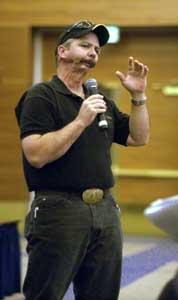
After 13 years of chewing tobacco resulted in cancer that severely scarred his face, Rick Bender said he wants to help people from making the same harmful decisions he did.
Bender, 43, spoke to students and faculty Monday in the TSC Ballroom about his experience while growing up in San Diego, Calif. Bender said tobacco advertisements, peer pressure and baseball all influenced him in his decision to start chewing tobacco at age 12.
“Take a pinch instead of a puff,”-a phrase coined by tobacco advertisers, hooked Bender when his friends were pressuring him to smoke cigarettes as he thought chewing tobacco was a safe alternative.
He said his parents weren’t happy about his chew habit, but they were glad he wasn’t smoking.
“They were basically as ignorant as I was,” he said.
One can of chew tobacco is estimated to have the nicotine content of 30-40 cigarettes, Bender said.
More than $9 billion is spent on tobacco advertisements each year, he said, and much of that is targeted at 12-13 year olds in hopes they’ll use for many years.
“They’re pretty gullible at that age,” Bender said.
Bender speaks primarily to middle school audiences since tobacco use is increasing among young people, he said, though college campuses are his second largest target.
“The day you start is the day you put your body at risk,” Bender said.
Tobacco has over 28 known carcinogens, he said, which is why people who use tobacco in any form have a 50 percent higher risk of developing cancer.
In addition to cancer; heart disease, gum separation, and high blood pressure are other potential ailments people risk developing when they use tobacco, he said.
Bender chewed his tobacco of choice, Copenhagen, all through high school and into his 20’s, he said, when he noticed a white sore on the side of his tongue that hurt when it would rub against his teeth.
He said he had had similar white spots which he figured were calluses from “packing” chew throughout his teens. This one, however, worried him and he considered it “extra inspiration” and stopped chewing his usual 1.2 ounce-can a day in the spring of 1988.
About eight months later, at the age of 26, Bender said he was diagnosed with a very aggressive form of oral cancer and underwent what was supposed to be a two and a half hour surgery to remove the dime-sized bump.
Twelve and a half hours later that bump proved to be just the tip of an iceberg as surgeons had to remove a third of his tongue and “chase” the tumor down his neck, damaging some nerves in the process. Bender said he lost about 25 percent of the use of his right arm due to the damage and a later infection from radiation resulted in doctors removing half of his jawbone.
“I can’t even lick my lips,” Bender said, “I just got to live with it.”
Despite the scars and over $100,000 worth of medical bills, Bender said the worst part about his cancer was what he put his family through.
At the time of his first surgery he had a son and a ten month old daughter. He woke from surgery to see his father crying, he said.
Bender has undergone four major surgeries and said they were “all because of my use.”
His ability to speak fairly clearly is something Bender considers miraculous as most people under age 30 who contract the same type of cancer usually don’t live to talk about it, and many of those who do survive are unable to speak after surgery.
Bender said his main message to students who chew tobacco is to stop and go to the doctor if white spots in their mouth don’t go away within 10 days. He said the product mint snuff contains no tobacco and can help with “oral fixation,” when the user is breaking the habit of having something to chew on, but should only be used for four to six weeks.
-mof@cc.usu.edu