
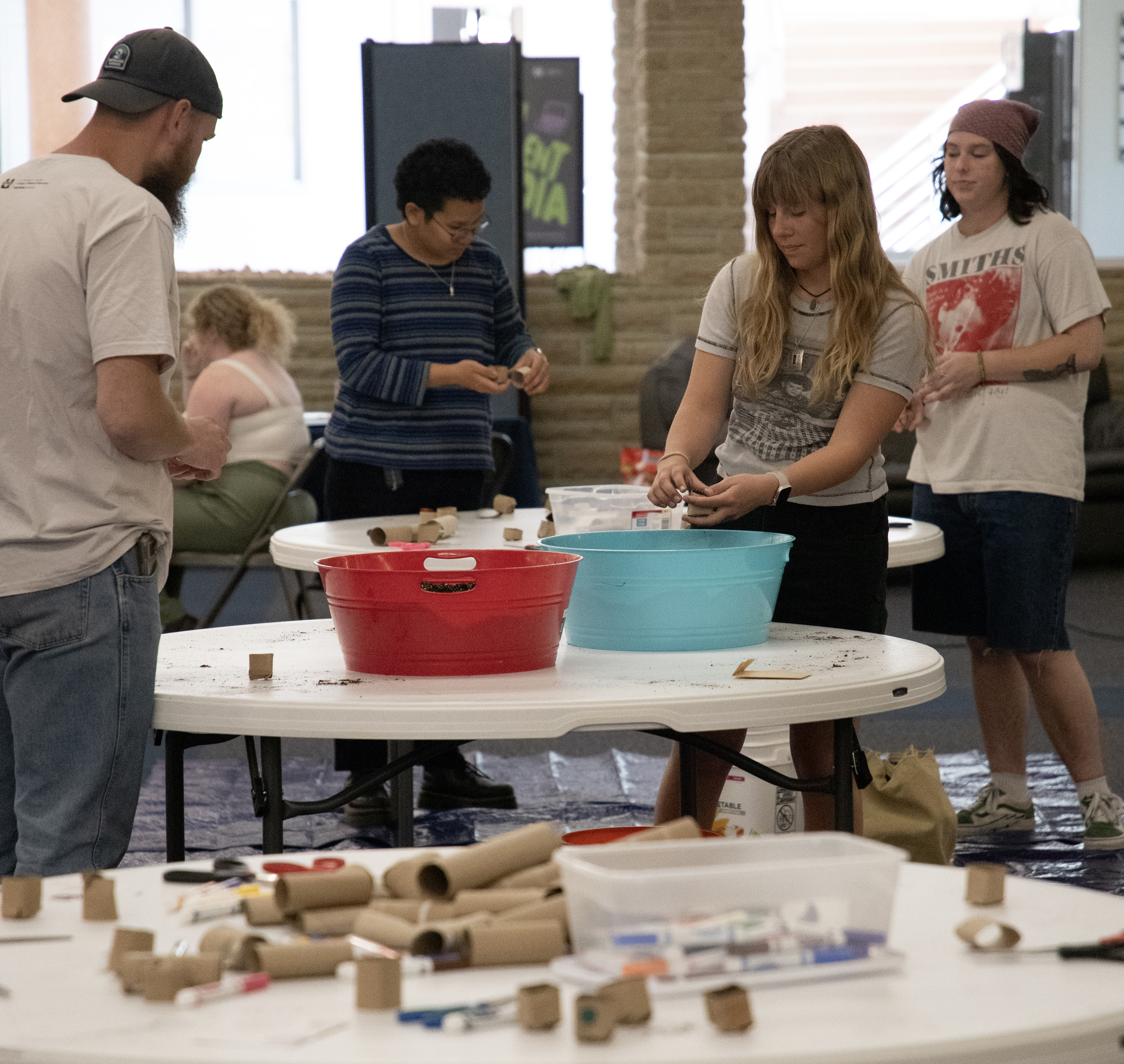
Native seed planting workshop encourages sustainable gardening during Earth Week
Students got their hands dirty for a good cause during the Native Utah Seed Planting workshop on April 14, the first of many hands-on activities hosted at Utah State University as a part of the annual Earth Week celebration.
“Earth Week is a decently old Utah State University tradition that my position has historically planned,” said Ella Leonelli, USU’s student sustainability engagement lead in the Christensen Office of Service and Sustainability and Earth Week organizer. “Through different events and activities, we try to educate students on different ways that they can be sustainable without feeling overwhelmed or like they need to break the bank.”
In this simple and affordable workshop, students crafted biodegradable seedling pots using sustainably sourced materials — all from the comfort of the TSC. Along the way, they learned about the ecological importance of native gardening and how composting can help support a sustainable planet.
“I wanted to do everything local, everything compostable and of course, everything native,” said Kate Anderson, COSAS student lead of USU Harvest Rescue and organizer of the event.
To stress the importance of sustainable sourcing, Anderson and her team collected donated toilet paper rolls for the pots, compost from the university garden for the soil and blue flax seeds from Cache Valley Native Plants for the plants.
“I’m specifically using blue flax seeds because they are native to northern Utah,” Anderson said.
Anderson’s decision to use native seeds wasn’t just about keeping things local but about highlighting the vital role native plants play in fostering more resilient, sustainable environments.
“Native plants have established relationships within their local ecosystem,” Anderson said. “They’ve adapted to their environment, and they’ve adapted to their animals.”
Blue flax plants are biologically engineered by nature to thrive in Utah’s hot summers and cold winters. When they thrive, other organisms in the environment depending on them thrive as well.
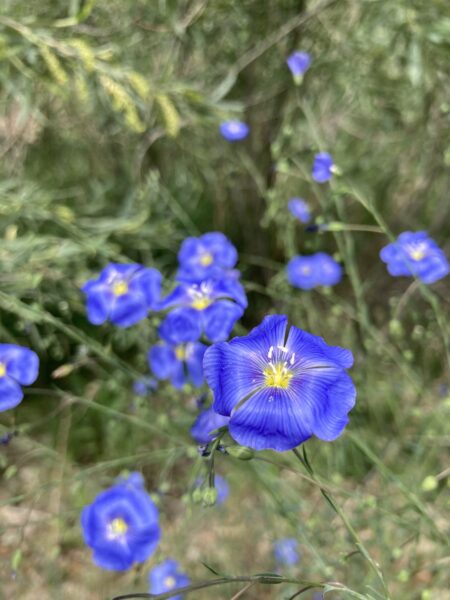
Blue flax flowers growing in Spanish Fork Canyon as seen on May 21, 2024.
“Animals and pollinators depend on these [native plants], and if those are gone, then those species won’t have places for food or habitat,” Anderson said. “It would just destroy the ecosystem.”
Unlike exotic plants that often require additional watering and artificial fertilizers to grow successfully, growing and upkeeping native plants is cheap and easy.
“Once they’ve been established, they don’t need any more watering other than regular rainfall,” Anderson said. “They’ll go great in the yard, they won’t become invasive and pollinators will be attracted to them.”
Students didn’t just walk away from the workshop with their own native seedling plants but with a new outlook on sustainability and how small changes can make large impacts.
“Activities like this just show how easy it is to be sustainable and make a difference,” said Eliza Bonzo, junior studying family consumer sciences. “The whole activity took like five minutes tops, and we’ve already made a start on a change, and I think that’s super cool.”
Other students appreciated the creative, low-cost approach to sustainability.
“I think there’s kind of an idea that making sustainable choices is really hard and really expensive,” said Lauren Knox, senior studying economics, data and finance. “Especially for college students who are on a budget, this is really applicable.”
Several attendees said the workshop was a good way to spread awareness about the importance of ecosystem biodiversity among students.
“A lot of people aren’t born in an environment where they can learn about the world and how native plants work and how our ecosystem works in general,” said first-year student Lily Allen. “A big part of college is getting your degree but also understanding life more, and you can’t do that without learning about all of this.”
The event highlighted the university’s growing commitment to providing students with ample opportunities for environmental awareness and action.
“We have so many fun and very unique events at Utah State, but a lot of them center around the students and what the students want rather than being centered around making an impact sustainably,” Leonelli said. “I think it’s really important that we show it is possible and it is something that everyone can do.”
The workshop was only one part of a larger effort to get students involved in sustainability during Earth Week and beyond.
“What I’m really hoping students take away is an educated understanding of one, the impact of what they plant, and two, the impact that they can have in the future,” Leonelli said. “We can make a difference, we can do something and there is a way for us to make an impact even past college.”