
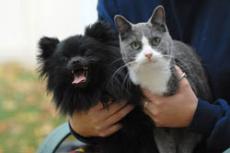
Animals help clients heal
Hitler’s dog probably loved him.
A powerful characteristic about animals is they are less judgmental than most people, said Kathy Klotz, executive director at Intermountain Therapy Animals. She added that animals are extremely therapeutic for people, especially those who have experienced particular hardships.
“Animals are more genuine,” Klotz said. “Pets reflect the best for people. They’re glad to see you no matter how late you are. They don’t tell you what to do. Dogs are always great listeners. There is no pressure or judgment.”
ITA, which is based out of Salt Lake City, is a nonprofit organization which uses animal-assistant therapy to help people with special needs. According to ITA’s Web site, assisted-animal therapy helps promote different types of improvement for people, such as physical, emotional, cognitive and social. Klotz said there are 300 volunteer teams throughout Utah, with some in Idaho and Montana as well. A team is made up of a pet and its owner, and both are trained through a series of workshops and lessons, Klotz said. Pets and owners are taught how to socialize and understand clients at different facilities such as youth detention centers, hospitals, residential care centers and domestic violence centers. According to the Web site, some clients have previously been involved in a serious injury or accident, or are emotionally or developmentally disabled.
Klotz, who has been the executive director since 1997, said she knew assisted-animal therapy would be a good job for her dog, Foster, who has now passed on. Klotz said she now has two other dogs who actually do not enjoy doing animal therapy.
“This is important,” she said. “(To do this job) it has to be a dog that not only has proper skills to be a good doggie citizen, but also needs to enjoy meeting strangers on a daily basis.”
Animals involved in therapy can also range from bunnies to miniature horses, she said.
“(Therapy) is a long-grueling thing for more people,” Klotz said. “Animals re-spark the desire in people to do the hard work of therapy.”
Animals also help lower blood pressure, she said, as well as help people relax. The animal can also help clients accept themselves, Klotz said, which is especially important if the client is missing a limb due to an accident or is trying to relearn something they used to be able to do.
The Web site states animals can often provide something people cannot. Klotz said it is very healthy to be around pets. People who have pets, she said, go to the doctor less often, report less depression and can make friends easier.
USU Counseling Center offers animal-assisted therapy for clients. According to its Web site, http://www.usu.edu/counseling/, this outreach program allows animals to accompany the handler to various counseling activities.
The program was created in 1997 by a predoctoral intern and center director, Mary Doty. Griffin, a dog, and a cat named Tango, both belong to Doty, she said, and are regulars at the center. Doty said Griffin comes every day and she said therapy animals should remain in the presence of their handler for any therapeutic activites. All animals involved in the USU program need to have previously attended an obedience class, display a positive social attitude and have a no-bite history.
For more information, contact the Counseling Center at 797-1012. or visit the office in the Taggart Student Center Room 306. To learn more about ITA or to volunteer, visit www.therapyanimals.org.
-brittny.jo@aggiemail.usu.edu