Oodles of Noodles
In almost every college students apartment, you will find three things: A week’s worth of dishes, a basket full of dirty clothing that is taking over one corner of the room and a case of ramen noodles.
Ramen noodles have been an American favorite since the 1970s, but the curly noodles of fun actually started in China, long before students in America designated them as their own food group.
Ra-men is the Japanese pronunciation of the Chinese characters for lo-mein. Instant noodles were invented in 1958 in Japan by Momofuku Ando, who went on to found the Nissin company and launch the world’s first instant noodle product. In 1948, Ando was faced with scarce food resources following World War II. Ando realized that if he could create a convenient, high quality product, he would be able to help to feed the masses. His goal was to create a noodle that could be eaten anytime, anywhere.
The Japanese food industry initially rejected Ando’s product. Ten years later, instant ramen noodles could be found on every grocery store shelf in Japan. The pre-packaged noodle product was introduced to the United States in 1970 with the name “Top Ramen.”
Since then, students across the country have used ramen noodles as a quick and easy way to a warm meal.
Jessica Rasmussen, a sophomore in nursing, said she consumes about three packages of instant ramen noodles per week.
“It’s like a condensed meal – you have your soup, your noodles and it tastes like meat,” Rasmussen said.
Christina Wallentine, a junior in forestry, said she eats about two packages of instant ramen noodles per week and mostly uses them because they are cheap and easy to cook.
Wallentine said although she believes the noodles have no more nutrients than “A plain piece of white bread with bleached flour,” she still uses them for their convenience.
Siew Sun Wong, assistant professor in the nutrition and food science department as well as a nutrition specialist with USU Extension Service, said ramen noodles do provide some nutrients, but they are nothing to depend on for a balanced diet.
“Being a popular dish, ramen has often been criticized for its potential health risks. Some of these claims are justified, while others could be made against any diet which contains too much of a particular food,” Wong stated in an e-mail.
Wong said that although ramen noodles provide some calories and a trace of vitamins and protein, they are very high in saturated fat and sodium.
The fat in ramen noodles is mostly from the seasoning that goes over the noodles after cooking.
Wallentine said when she eats ramen noodles as a meal, she uses about one third of the seasonings in order to cut down on the fat content and still get the flavor.
Wallentine said she tries to use ramen noodles as an addition to other foods. She uses the noodles as a subsitute for rice in stir fry and sprinkles the noodles dry over salads.
Wong said eating the ramen noodles dry is not a problem because the noodles have actually already been cooked once. Wong said the biggest problem with ramen noodles, aside from the fat content, is the sodium.
One package of ramen noodles gives you almost 60 percent of the salt content you need daily. Combined with the amounts of instant, frozen or preservative packed products students eating, Wong said it is likely that most students are consuming far more sodium than they need.
Wong said those who are African-American, genetically prone to high blood pressure or over 50 years old are salt sensitive, which can put them at a greater health risk.
“The more sodium chloride we consume, the more water is needed to balance the Ph,” Wong said. “Then the kidneys have to work extra hard to excrete the extra sodium.”
Wong said this is the main reason that a product like ramen noodles can make us thirsty.
Wong said high sodium content can also increase the risk of high blood pressure and osteoporosis.
“Think twice before you eat high sodium foods,” Wong said.
Wong said the noodles themselves are not particularly high in sodium, so health-conscious individuals can simply avoid drinking the packet-made broth, or make a more diluted version by using less of the flavoring packet’s contents.
Wong said that students can save some money and increase the nutritional value of their menus if they will add green vegetables to ramen noodles or substite the instant food for a simple sandwich or granola bar.
“However, a typical serving of ramen, even when drinking all of the soup, has less food energy than a fast-food menu consisting of a hamburger, soda and fries,” Wong stated in an e-mail.
Wong said that one way to instantly decrease the health risks of ramen noodles is to cook the noodles in one pot, then cook the seasoning in another pot.
This process reduces the amount of preservatives that comes off of the noodles and sits in the water they are cooked in.
Wong said ramen noodles can have a place in a balanced diet with a variety of foods including plenty of water and physical activity, but as with any product, they should not be overconsumed.
Rasmussen said she continues to eat ramen noodles, although she does realize there is little nutritional value in them and she is often still hungry immediately after eating them. She said she still continues to cook ramen noodles on cold days in the winter.
“I don’t question it, I just enjoy it,” Rasmussen said.
Rasmussen said ramen noodles are more of a comfort food for her.
“They are warm and soft,” Rasmussen said, “It’s like a teddy bear you can eat.”
Ramen noodles have made it possible for college students across the country to have a quick, easy meal right at their fingertips.
Year after year, students will most likely always be sifting through the dishes to find a not-so-dirty bowl, digging through dirty laundry to clothe themselves each day and will continue to go through case after case of ramen noodles.-etippetts@cc.usu.edu
RAMEN RECIPES:
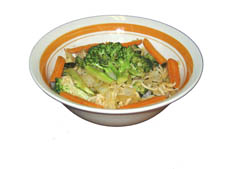
American Migo-rang
2 packs ramen noodles2-3 tablespoons soy sauce1 tablespoon chili sauce1 tablespoon vegetable oil1 small onion, diced2 cups chopped fresh vegetables1 cup cubed meat (optional)
1. Boil noodles, drain and set aside2. Add oil to heated frying pan or wok3. Once oil is heated, add onion, stiry fry for two to three minutes 4. Stir in soy sauce and chili sauce5. Add vegetable and meat if desired, stir fry for another four to five minutes6. Drop in cooked noodles, stir vigorously to break up noodles and mix meat and vegetables throughout the dish
Serves two
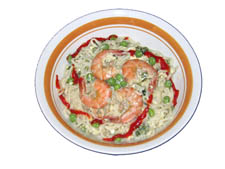
Seafood Soup
2 packs ramen noodles Oriental flavor12 frozen shrimp1 cup frozen peas1 cup dried seaweed (available at Asian grocery strores) 1 egg, beaten1/4 chopped cilantro (optional)
1. Boil noodles along with flavor powder2. Stir in shrimp, seaweed and frozen peas3. When water boils, stir in beaten egg and cilantro4. Remove from heat and pour into serving bowls5. Garnish with chili sauce if desired
Serves two