
Why do Good People Stand By? Inside Utah’s Native American Boarding Schools
Utah’s “Indian Schools” are thing of the past, but a 2024 documentary argues their harm is still around today.
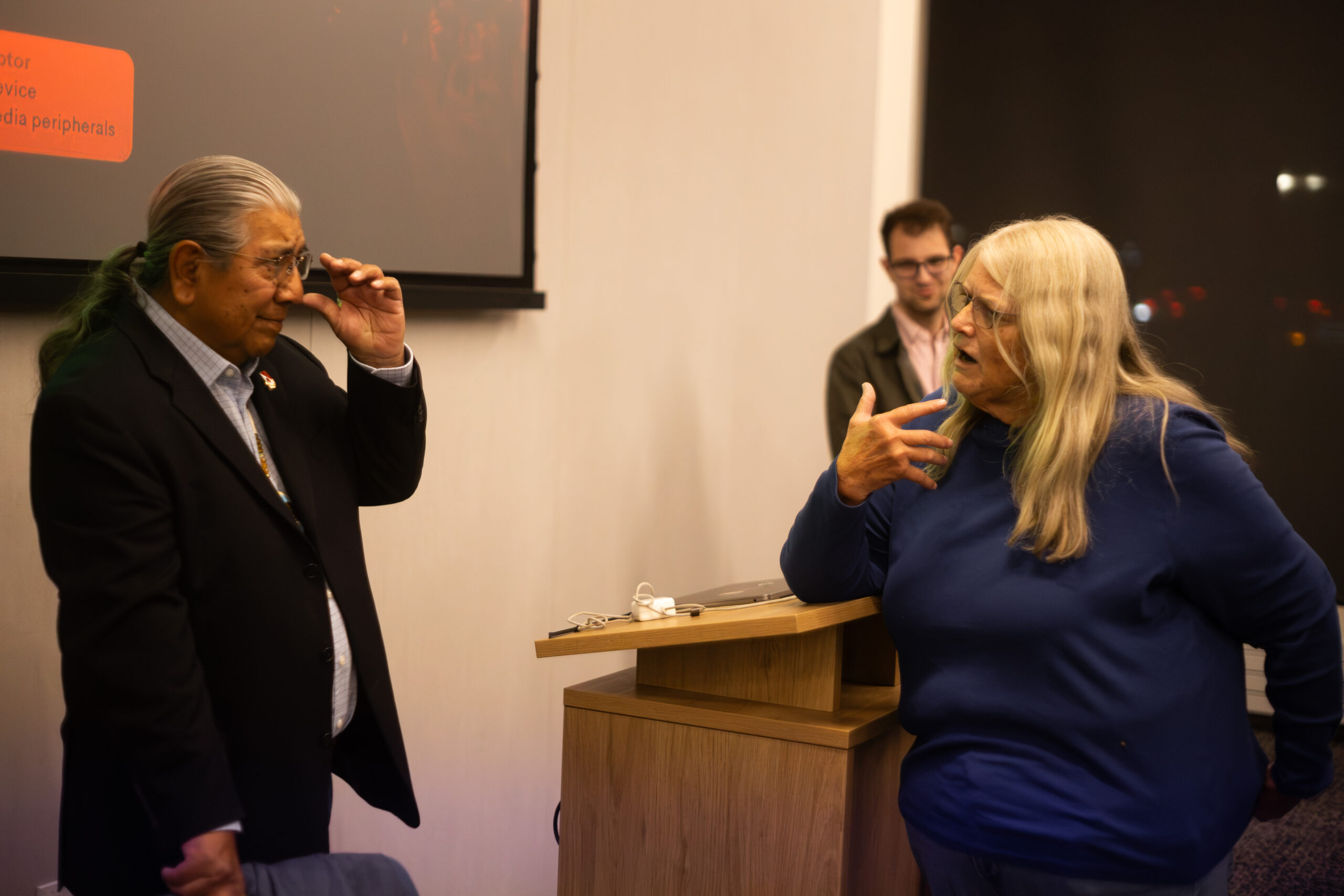
Screened at the Logan Library on Oct. 15, “Tuniyay” is a documentary that questions why good people stood by while Native American children were sent to the Uintah Boarding School in Whiterocks, Utah.
“If there’s ever been a wrong, it doesn’t expire,” said Craig Wirth, the writer and director of the film. “It’s a story that’s still current. Trauma is still current.”
The Episcopal Diocese of Utah film, produced by The Office of The Rt. Rev. Phillis Spiegel, examines the church’s role in the Uintah Boarding School. According to The Salt Lake Tribune, the boarding school opened on Jan. 1, 1881, on the Uintah and Ouray Indian Reservation.
Wirth, who grew up surrounded by reservations in Great Falls, Montana, has worked as a journalist in Los Angeles, New York and Salt Lake City. He said he started the project thinking it was about other people.
“Then I realized, ‘My gosh, I’m part of it,’” Wirth said.
He said as a kid he used racial slurs without thinking about them, and in his Montana school, Custer was a hero and Sitting Bull was “enemy number one.”
The Episcopal Church did not run the Uintah school, but it was closely tied to it. Students were required to attend services at the church Forrest Cuch, a Ute elder who worked with Wirth on the film, now attends and helps lead. Wirth said students’ names are still carved into the backs of the pews.
“We did not run that boarding school, but we were so integrally involved that we own responsibility,” said Kurt Cook, a historiographer at the Episcopal Diocese of Utah who worked on the film. “We were there, and we didn’t stop it.”
Five religious groups in Utah took part in the school, Wirth said, but the film names only the Episcopal Church because its purpose is to examine that church’s own record, not to blame others.
Cuch, a former tribal education director, said the point of the film is not shame.
“You didn’t do it, your ancestors did,” Cuch said. “The point of it all is we want to stop. We don’t want any more harm to our people.”
Wirth said the effects of the schools show up two or three generations later, in broken families and alcoholism on reservations.
“Could you imagine if you were 5 years old and you were sent away?” Wirth said. “Children came home at 18 without knowing how to live in a family.”
Cuch said his people have survived by staying close to the Creator, nature and ceremonies like the Sun Dance and Bear Dance. Language is still the hardest piece to restore, he said.
“I’m proud of the strength of our people to get through our own Holocaust,” Cuch said.
He said the schools might have worked if the government had treated Native people as partners.
“I just wished that long ago they would have seen us as more human,” he said.
Cuch also said the issue isn’t simple, mentioning the boarding schools and the Indian Student Placement Program, which placed Native children in homes of members of The Church of Jesus Christ of Latter-day Saints.
“The world is not black and white,” Cuch said.
Some children found more stable homes, he said, while others faced abuse and were taken advantage of.
Cuch said people today are still standing by, often out of fear. Rather than getting to know Native people, he said, many only tolerate them, which creates what he called a “superficial relationship.”
“We want to be treated like human beings. That’s it,” Cuch said. “We don’t want special treatment. We just want to be treated fairly.”
Wirth and audience members connected the history to present-day issues, including families separated by immigration enforcement and tribes not being consulted on Bears Ears National Monument.
When asked how people can show respect, Cuch said, “Get rid of your fear. If a Native person pulls away, it’s not who we are. That’s trauma.”
He encouraged people to continue reaching out and building connections, even when those efforts are met with hesitation.
Wirth said young people have the tools to keep the story alive.
“They have the resources to do it,” Cuch said. “It’s in your iPhone.”
You must be logged in to post a comment.
There are no comments
Add yours